
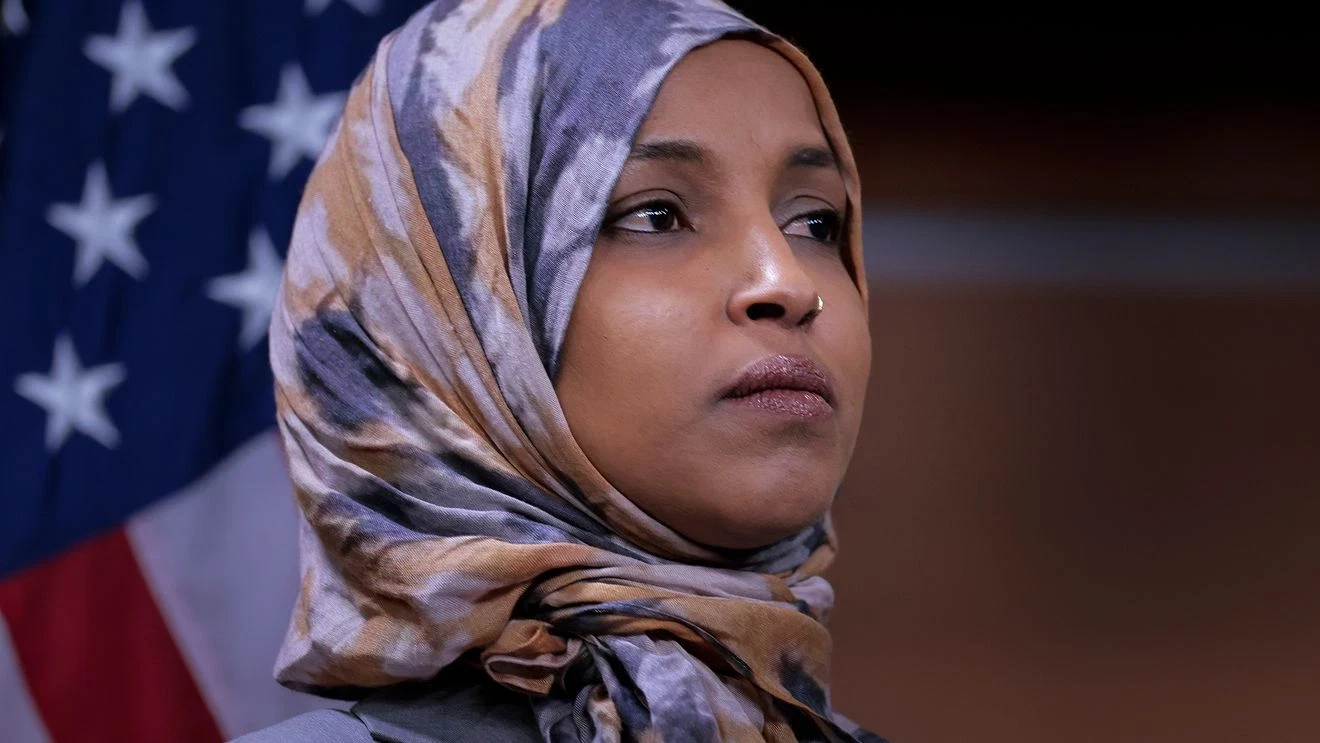
A federal agency’s refusal to release records related to longstanding immigration fraud allegations involving Rep. Ilhan Omar, D-Minn., is fueling new questions about whether federal enforcement proceedings could be underway.
News organizations have sought records related to allegations surrounding Omar’s 2009 marriage to Ahmed Nur Said Elmi. Critics have long alleged the marriage was part of an immigration fraud scheme and have claimed Elmi was Omar’s brother.
Omar has denied those allegations, which have not been proven.
According to the response discussed on The National News Desk, U.S. Immigration and Customs Enforcement declined to release requested records under the Freedom of Information Act, commonly known as FOIA, citing concerns that disclosure could interfere with “enforcement proceedings.”
Washington insider Armstrong Williams said the language deserves attention but cautioned against treating the exemption itself as proof of wrongdoing.
“The public deserves transparency, but we should not confuse a FOIA exemption with evidence of guilt,” Williams said.
Federal agencies can withhold certain law enforcement records under FOIA when releasing them could reasonably be expected to interfere with enforcement proceedings. Such a response does not, by itself, establish that Omar is the subject of an investigation or that the underlying allegations are true.
Asked whether the response could indicate an active federal investigation involving a sitting member of Congress, Williams said those associated with the matters under scrutiny should take the situation seriously, while stopping short of drawing a definitive conclusion.
“I think Omar and anyone associated with her in these programs have cause for great concern,” Williams said. “I’ll leave it at that.”
The controversy comes as Omar continues to face scrutiny from political opponents over her personal history and other matters. She has consistently denied allegations that her marriage to Elmi involved immigration fraud.
The interview then shifted to a separate controversy involving political polling after a 21-year-old college graduate reportedly created a fake polling operation, complete with fabricated results and a website, that was subsequently cited within political and media circles.
Williams said the episode should serve as a warning to journalists, campaigns and voters about accepting polling data without examining how it was produced.
“It is a devastating indictment of the political media ecosystem,” Williams said.
“A poll without transparent methodology should never be treated as news,” he added.
Williams said legitimate polling can provide valuable information about public opinion, but argued that promoting numbers without verifying the methodology risks influencing voters rather than simply measuring their views.
“When campaigns and journalists promote convenient numbers without verification, and that’s what happened, it begins shaping opinions instead,” Williams said.
“They’re shaping opinions, not news,” he added.
The discussion also turned to reports of a private meeting between Jared Kushner, President Donald Trump’s son-in-law and former senior White House adviser, and House Minority Leader Hakeem Jeffries, D-N.Y., with the midterm elections approaching.
Williams characterized the meeting as “strategic outreach” and suggested both sides have reasons to maintain lines of communication as control of Congress remains at stake.
“Kushner understands that the Democrats could possibly capture the House, making Jeffries the speaker,” Williams said.
A Democratic takeover of the House could significantly alter the balance of power in Washington, potentially giving the party control of congressional committees and investigative authority during the second half of Trump’s term.
Williams also argued Jeffries is confronting pressure from the progressive wing of his own party, particularly in New York.
“The meeting expresses both their vulnerability,” Williams said.
He suggested the conversation could reflect an effort to identify areas where the Trump White House and Democratic congressional leadership might eventually cooperate if Republicans lose control of the chamber.
“I think they’ve come to the realization that they have to find a way to cooperate,” Williams said, adding that Trump could need to establish a working relationship with Jeffries if he becomes House speaker.
With the midterms little more than two months away, the three developments highlight different uncertainties hanging over Washington: unanswered questions surrounding federal records, renewed skepticism about political polling and behind-the-scenes conversations that could take on greater significance depending on which party controls Congress.
For now, the ICE response does not establish wrongdoing by Omar or confirm that she is personally under federal investigation. But the agency’s invocation of an enforcement-related FOIA exemption is likely to keep scrutiny of the longstanding allegations alive as reporters and lawmakers seek additional information.












Leave a Reply