
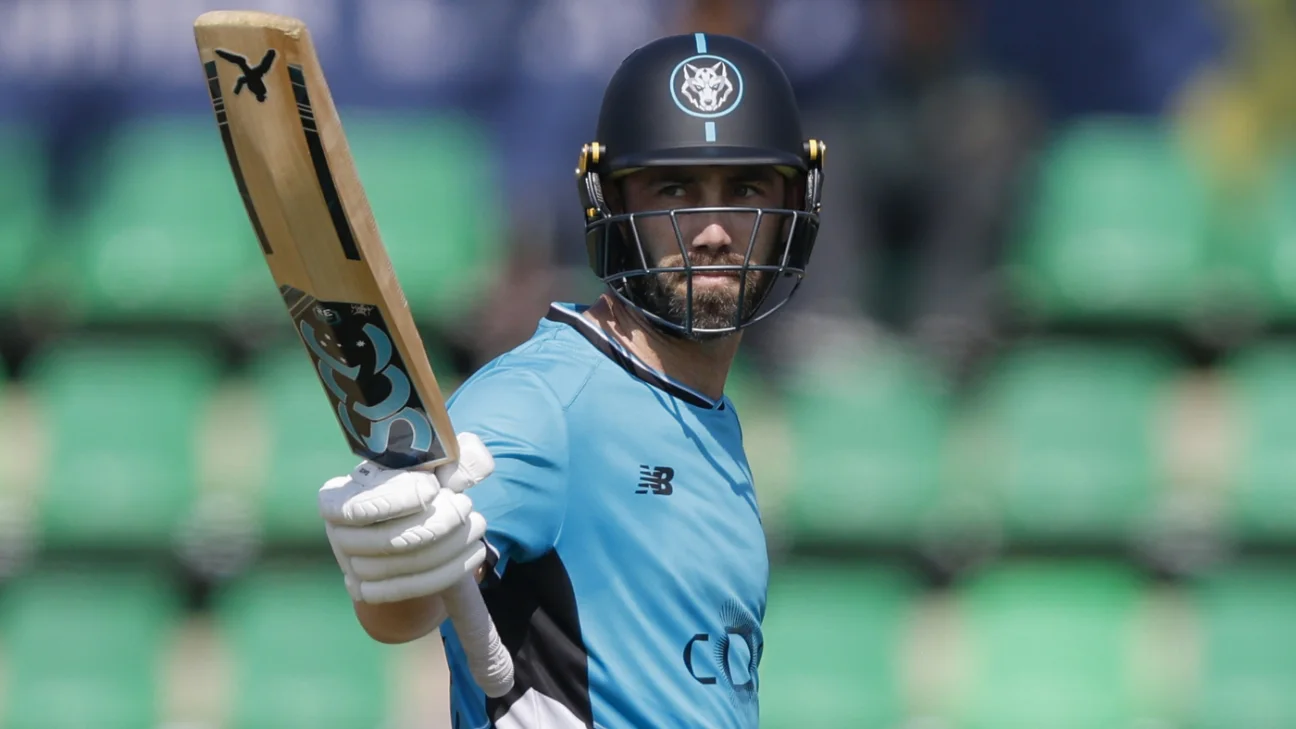
“We probably lost one or two wickets too many at the start,” he said after the game. “So, we had to bat a little differently, took it slightly easy against the spinners, and went for it in the back end.”
Having survived till the death overs, Maxwell scored 36 off his final 17 deliveries, most of them after Chapman perished. His 38-ball 60 pushed Wolves to 184. “About 170-175 was par, so we gave some extra [runs],” opposition captain R Ashwin assessed at the end of the game. By then, Wolves had secured a 52-run win.
So, how did Maxwell manage this acceleration in the death overs? He prefers sitting deep in the crease, like a spring being wound up, his strong forearms ready to recoil. But against a disciplined Guardians attack, he could neither find any room outside off nor pick up deliveries from in front of his pads. The Guardians’ bowlers were sticking to a plan, spearing the ball right at Maxwell’s body but without veering into his favoured leg-stump line.
Then came that old-fashioned catharsis of Maxwell breaking free in the 16th over. It was the result of a minor error in bowling, combined with Maxwell’s remarkably quick shuffle to get inside the line of the delivery. Fast bowler Chris Wood bowled too full outside off. Maxwell went down on one knee and smashed this delivery down the ground.
Wood wanted to hide his next delivery even wider outside off, but his attempted yorker turned into a low full toss. Maxwell arched into an almost supernatural inside-out position, now driving to extra cover for four. Finally, a slower delivery landed on his pads, and Maxwell stayed still while just his hands moved, scything a six towards deep fine leg.
In three deliveries, Maxwell had ransacked 16 runs and put up an exhibition in geometry. His forearms – and an ability to contort the rest of his body to optimise their power – defined his acceleration.
In part, Maxwell knew he could accelerate because death bowlers are only human. They will err in their lines. But take Maxwell’s six in the 19th over. Josh Little looked to bounce him out. He shuffled into the off side in an instant, and one of his hands flew off the bat grip. The ball itself flew over square. How do you counter that?
Maxwell is one of 20 cricketers to score more than 10,000 runs in T20 cricket. Out of them, he is also the quickest: his career runs have come at a strike rate of 154. The best of those have been scored the way they were here, with a bowler’s accuracy suddenly of no concern to him. He kept moving in his crease, and crouched into shapes inaccessible to mere mortals.
He was dismissed soon after in the final over, guiding a wide yorker to backward point. “You’re f****ing kidding me,” he shouted in agony as he threw his head back. Little, the bowler, put a hand up to his mouth to cover his smile at the indiscretion.
Maxwell’s dismissal had elicited the same response from him that his best does from those who watch him. By the time he walked back, his acceleration had shown us a glimpse of old-school Maxwell and laid the foundations for an old-fashioned win.
Abhijato Sensarma is a sub-editor at Cricinfo











Leave a Reply