
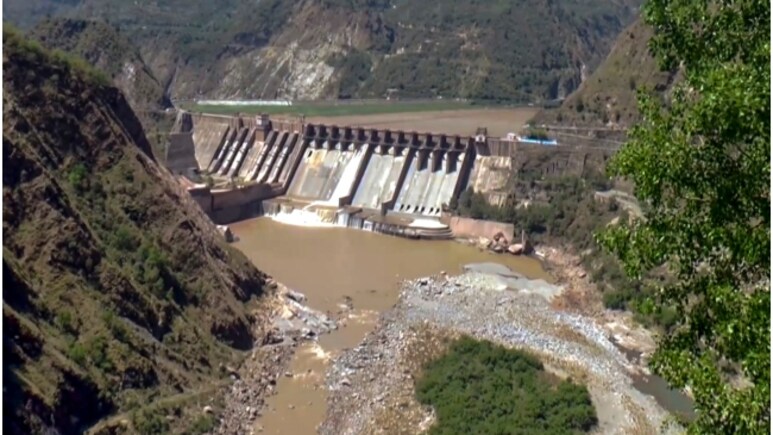
Islamabad: Driven by growing domestic vulnerabilities and diplomatic isolation, Pakistan has turned to the international community following India’s decisive suspension of the 1960 Indus Waters Treaty (IWT).
Addressing a virtual seminar organised by the Pakistani Embassy in the United States, Pakistan Foreign Minister Ishaq Dar raised concerns over India placing the treaty in abeyance, describing water security as central to his country’s national stability while warning of broader regional consequences.
Dar said, “India’s unilateral decision in April 2025 to place the Indus Waters Treaty in abeyance has no basis in the treaty.”
While urging dialogue and cooperation, the Pakistani Foreign Minister also warned of consequences if the treaty is not restored. He said the Indus Basin is the lifeline of more than 250 million Pakistanis, with agriculture, food security, energy production, livelihoods and economic development deeply dependent on the Indus River system.
“Water security for Pakistan is therefore inseparable from economic security, food security and ultimately national security,” Dar said, adding that the issue could affect stability in South Asia and set a broader precedent for international treaty relations.
Dar also highlighted the impact of climate change, saying Pakistan is among the world’s most water-stressed countries. He pointed to declining per-capita water availability, changing precipitation patterns, glacial retreat, floods, droughts and increasing hydrological variability as growing challenges.
Appealing to the international community, Dar warned that any attempt to deprive Pakistan of water allocated under the Indus Waters Treaty would have “profound consequences” for regional peace and security.
“Let us therefore preserve the Indus as what it has always been for the peoples of our region—a source of life, livelihood and civilisation, not a fault line for confrontation. Shared waters must never be weaponised,” he said.
The geopolitical shift follows India’s decision in April 2025 to suspend the water-sharing framework after the Pahalgam terror attack in Jammu and Kashmir, which claimed 26 civilian lives.
Reaffirming its long-standing position that “blood and water cannot flow together”, New Delhi has said treaty operations will remain suspended until Pakistan takes verifiable and irreversible action against cross-border terror networks.
India’s position directly links water cooperation with cross-border security, signalling that diplomatic and resource-sharing frameworks will remain contingent on an end to terrorism.














Leave a Reply