
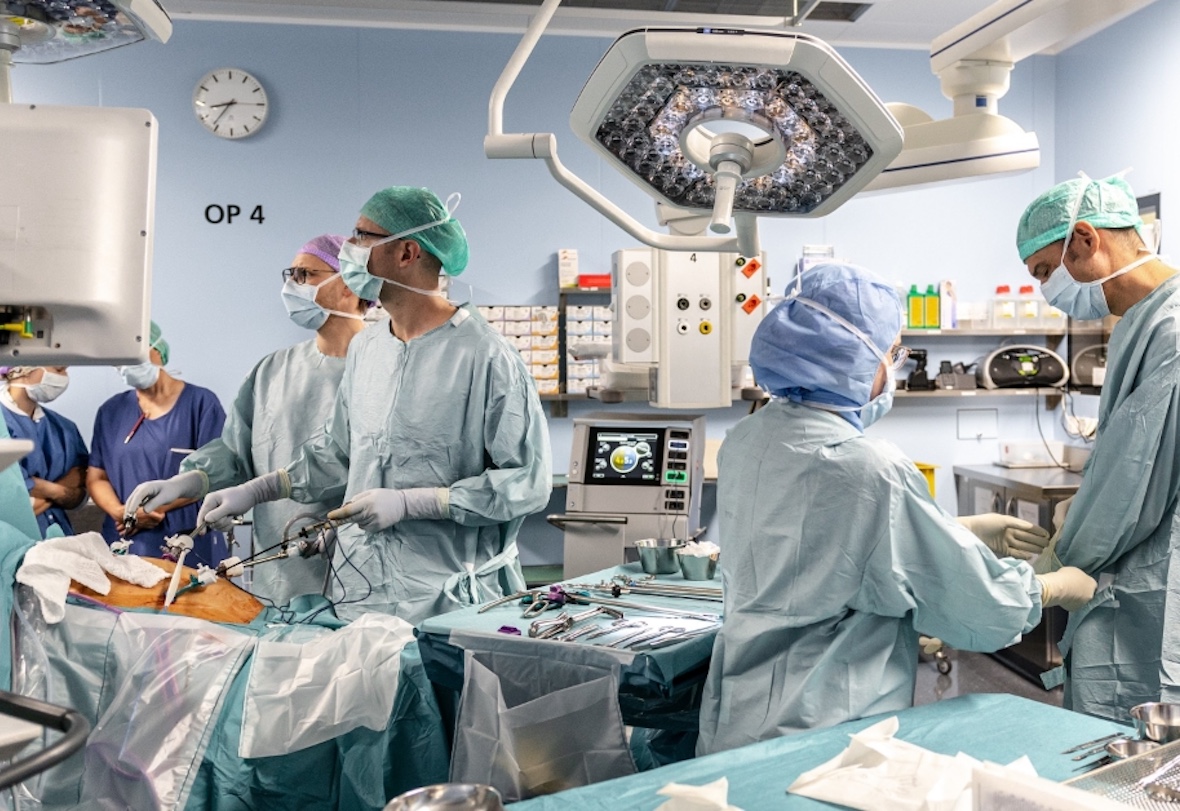
An interdisciplinary team from the University of Bern and Inselspital has developed CARESCORE, an AI model that calculates a patient’s individual risk of postoperative infection within seconds of surgery ending, by drawing on vital signs recorded during the procedure.
Researchers at the University of Bern and Inselspital, Bern’s University Hospital, have developed CARESCORE, an AI model able to calculate a patient’s individual risk of postoperative infection within seconds of an operation ending. The work has been published in the journal npj Digital Medicine.
The period between a successful operation and full recovery is a critical one, during which complications such as wound infections, pneumonia and sepsis must be detected early. Until now, risk assessment has relied primarily on factors known before surgery, such as age, pre-existing conditions and, in some cases, genetic predispositions. The Bern team, which brings together clinical researchers, data scientists and infectious disease specialists, set out to determine whether the body’s responses during the operation itself carry useful information.
For the study, the team analyzed data from more than 10,000 surgeries at Inselspital, combining routinely collected clinical information such as patient age, pre-existing conditions and the type and duration of surgery with vital signs monitored continuously during the procedure, including blood pressure, heart rate and oxygen saturation. According to co-study leader Guido Beldi, chief of visceral surgery at Inselspital, specific patterns of blood oxygen saturation and changes in heart rate proved to be associated with a higher rate of complications.
The resulting model predicts infection risk with greater accuracy than approaches based on preoperative data alone, allowing at-risk patients to be monitored and treated earlier. The researchers describe it as a support for medical care rather than a substitute for clinical judgment. CARESCORE has so far been developed and tested exclusively on data from Inselspital, and must now be validated in other hospitals and under different surgical conditions before it can enter routine clinical practice.











Leave a Reply