
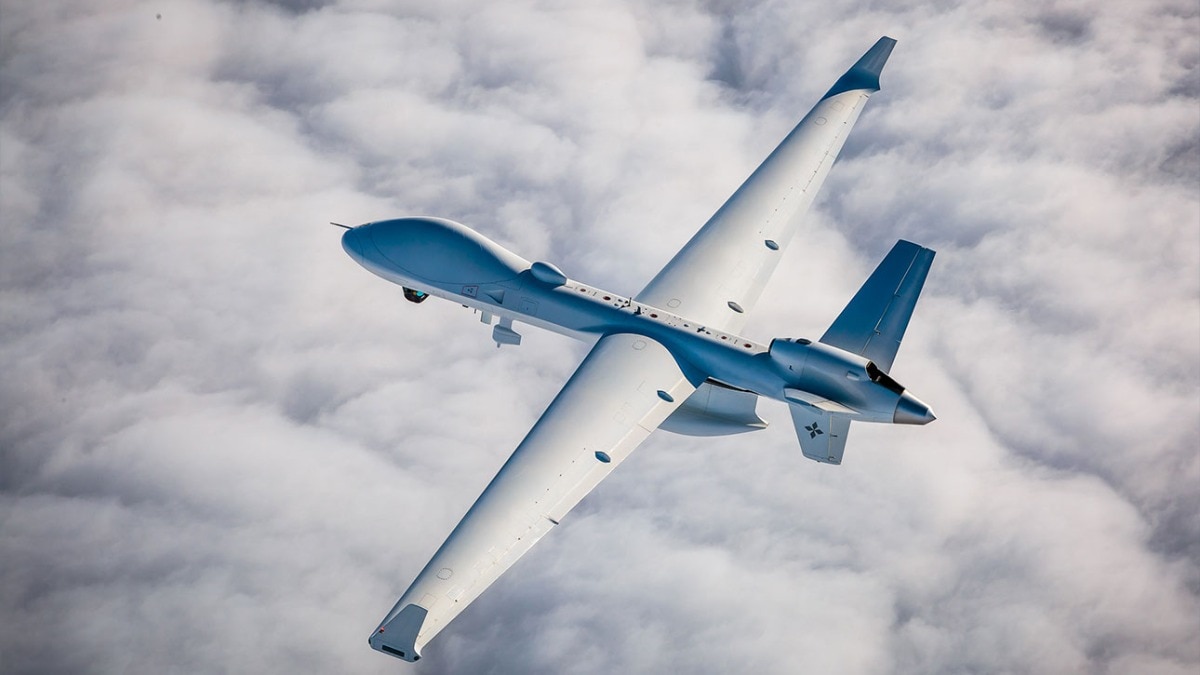
Iran’s Islamic Revolutionary Guards Corp (IRGC) has shot down an American MQ-9 Reaper, reported the state-backed outlet, Mehr News Agency. A variant of the advanced US drone is also operated by India, which recently leased two MQ-9B Sea Guardians, and has multiple more on order.
An MQ-9 Reaper, which was claimed to have been shot down, costs $50 million. For context, the F-35 Lightning, the most advanced jet in US service, costs between $82.5 million to $109 million a piece. The Reaper’s $50 million sticker price makes it more expensive than even fighter jets. For instance, JF-17, used by Pakistan, costs around $25 million a piece. Meanwhile, the HAL Tejas Mk-1A used by the Indian Air Force, costs between $40-$45 million a piece.
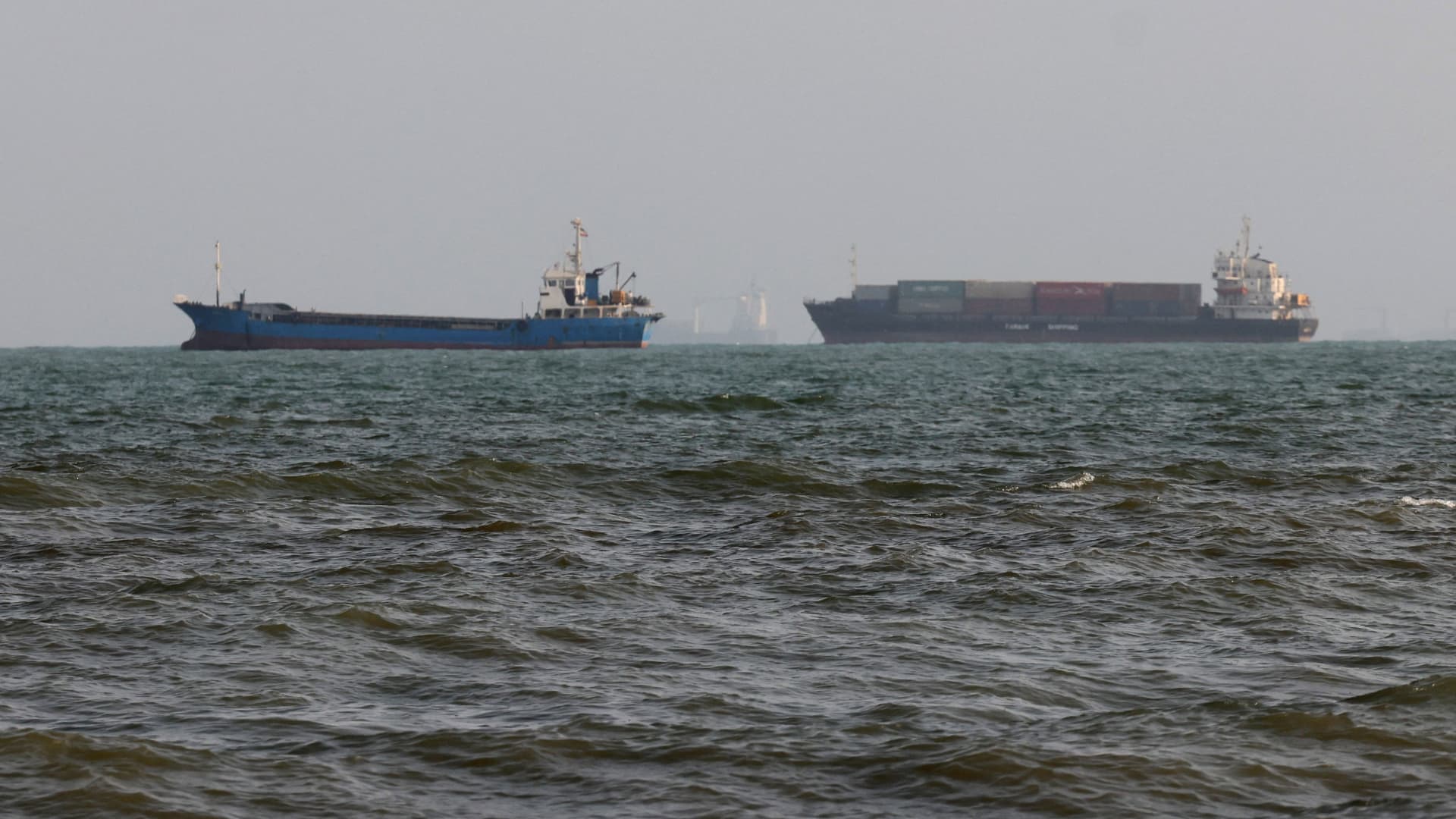
According to the Mehr News Agency report, the IRGC claimed it had shot down the MQ-9 Reaper drone over the Strait of Hormuz on Monday, with the unmanned aircraft plunging into the depths of the Persian Gulf. In a statement reported by the outlet, the IRGC public relations office stated that the “ever-watchful fighters of the IRGC’s modern air defence” hit the long-range US drone with missile fire early on Monday. The US has yet to confirm or deny the same.
This comes as the US launched attacks on Iranian targets for the first time in over a month. The Financial Times reported on Monday that American forces had struck two Iranian rocket launchers on an island in the Strait of Hormuz. Iran retaliated by firing missiles and drones targeting US air bases in Jordan.
The MQ-9 Reaper, which the IRGC claimed to have sent into the waters of the Persian Gulf, is an advanced US-made Unmanned Aerial Vehicle (UAV) capable of both long-range reconnaissance and surveillance operations, as well as launching precision strikes. It, however, differs significantly from the MQ-9B Sea Guardian, two of which were recently leased by India for 30 months.
WHAT IS THE MQ-9 REAPER UAV?
Before we examine how India’s Sea Guardians differ from the MQ-9 the IRGC claimed to have shot down on Monday, let us first have a quick look at the Reaper.
The MQ-9 Reaper is a medium altitude long-endurance UAV developed by the American aerospace manufacturer, General Atomics, and costing up to $50 million a piece. Operated primarily by the US Air Force, the Reaper is used primarily for intelligence collection and precision strike missions.
According to General Atomics, the Reaper can remain airborne for about 27 hours, fly at speeds of up to 240 knots (about 444 kilometres per hour), operate at altitudes of up to 50,000 feet, and has a 3,850 pound (1746 kilogram) payload capacity that includes 3,000 pounds (1361 kilograms) of external stores.
Its sensor and communications systems allow it to conduct persistent surveillance, while its weapons capability (AGM-114 Hellfire missiles, GBU-12 laser-guided bombs and GBU-38 JDAMs) allows it to transition from tracking a target to striking it.
Crucially though, the MQ-9 Reaper has no dedicated capability to defend itself against air-defence missiles or fighter aircraft. It is designed to operate well beyond the range of enemy air defences, or in areas where these defences have been sufficiently suppressed.
As such, in the ongoing US-Iran war, Reapers, which are heavily used for surveillance around the Strait of Hormuz, have suffered heavy losses. According to a report in The Washington Post published earlier in August, the US Military has lost at least 45 MQ-9 drones since the war started in February, or about 25% of its entire Reaper fleet.
HOW DO INDIA’S SEA GUARDIANS DIFFER FROM THE MQ-9?
The MQ-9B Sea Guardians, two of which were leased by India’s Ministry of Defence at a cost of Rs 1,943 crore earlier in August, differ significantly from the MQ-9 Reaper which was allegedly shot down by Iran on Monday.
Unlike the Reaper, which is designed to track and destroy targets on land and sea, the Sea Guardia is designed primarily for maritime reconnaissance. According to General Atomics, the Sea Guardian has a longer wingspan than the Reaper (79-foot), higher take-off weight (5,670 kg) and a longer endurance (30 hours compared to the Reaper’s 27 hours).
The Sea Guardian is the maritime version of the MQ-9B family and carries a complement of sensors explicitly designed for watching over large swathes of ocean in all weather conditions. It is also being developed to possess the capability to detect and track submarines, something that is relatively rare when it comes to UAV’s.
A Sea Guardian can spend hours in the air watching a patch of sea, following a vessel or maintaining surveillance across distant approaches without needing to put an aircrew through the constraints of endurance. And unlike the Reaper, the Sea Guardian is designed to operate from civilian airports.
Furthermore, the Sea Guardians operated by India lack the offensive capabilities of the Reaper. At the end of the day, the drone is designed to track vessels, both on the surface and submerged, for long periods of time, while staying out of the range of enemy air defences.
The Indian Navy is currently operating four Sea Guardians, which were leased starting in 2020. In October 2024, New Delhi signed a deal to acquire 31 MQ-9Bs, 15 Sea Guardians for the Navy and 16 Sky Guardians for the Army and Air Force, for around Rs 32,000 crore, with the first deliveries scheduled for early 2029.
Hence, while the US MQ-9 Reaper allegedly shot down by Iran on Monday is designed for reconnaissance and precise strike missions, the MQ-9B Sea Guardians being acquired by India are used for long-range maritime surveillance.
– Ends







Leave a Reply