
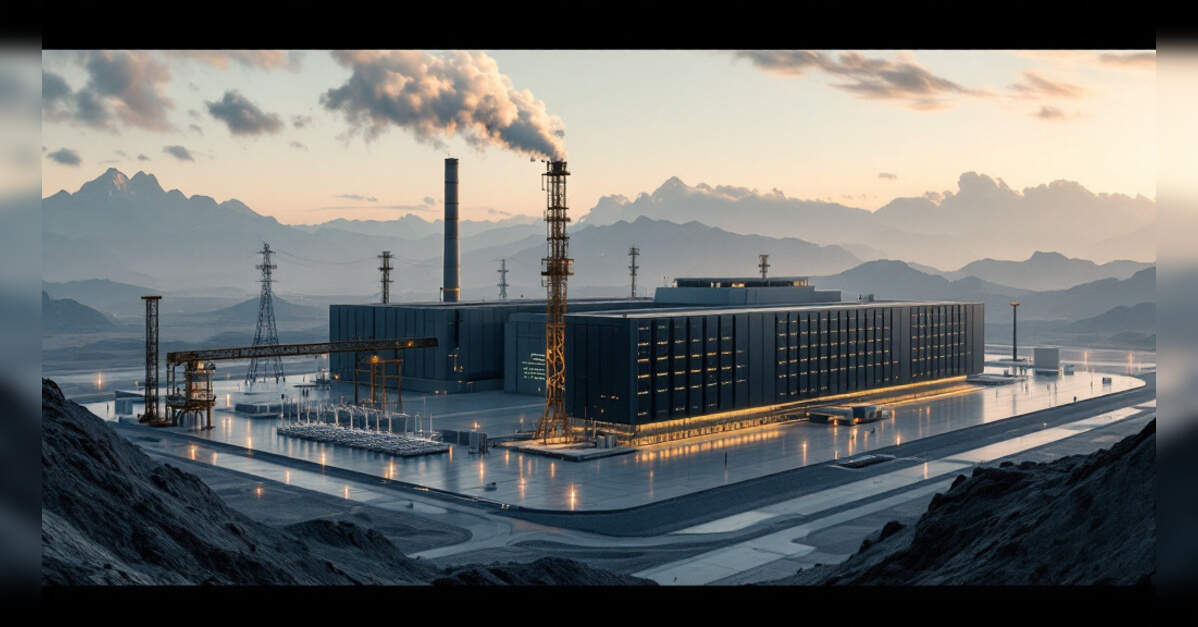
The rapid acceleration of artificial intelligence (AI) is compelling data center developers, architects, and engineers to fundamentally reimagine infrastructure, with traditional approaches to power, site design, and facility architecture no longer adequate for AI’s escalating demands.Power requirements from AI data centers in the United States alone could surge more than thirtyfold by 2035, potentially reaching 123 gigawatts (GW), according to Deloitte’s 2025 AI Infrastructure Survey. This projected growth highlights grid stress as a primary obstacle to data center development, prompting a shift towards alternative energy sources and advanced design.
Alternative Power Solutions for AI Workloads
Training sophisticated AI models and running inference for systems like ChatGPT necessitate power densities far exceeding typical data center norms. To address the limitations of existing utility grids, developers are increasingly considering on-site generation systems and low-carbon energy sources such as nuclear power, including small modular reactors (SMRs). Goldman Sachs reports that tech companies have signed new contracts for over 10 GW of potential new nuclear capacity in the past year.Chris Hastings, Power Group Managing Principal at Vanderweil Engineers, noted that planning beyond traditional utility service allows facilities to meet customer needs without being bottlenecked by local grid capacity, a critical differentiator as AI adoption accelerates.
Evolving Data Center Design and Cooling
The high energy demand, power density, and complex AI workloads are rapidly changing data center design. Optimising a facility for AI involves more than just adding server capacity; it requires redesigned sites and floor plans to handle high-density computational needs, with integrated cooling, power distribution, and flexibility for future upgrades. Rack densities are escalating dramatically, from 25-30 kilowatts (kW) per rack to as much as 600 kW per rack, leading to significant changes in building size and site area.This increase in density makes rooftop cooling solutions infeasible, pushing support spaces like utility power supply rooms outside the main building. Dutch Wickes, Principal and Global Mission Critical Practice Leader at Ci Design, Inc., highlighted the complexity, stating that site and building planning are now inextricably linked to mechanical and electrical system design, making traditional rules of thumb obsolete, especially with on-site power generation.
Strategic Site Selection and Collaboration
Beyond conventional criteria such as connectivity and proximity to users, data center site selection must now account for the ability to accommodate off-grid power infrastructure, access to alternative fuels, and supportive regulatory environments. Mason McPike, Executive Director of Vertical Development & Delivery at Provident Data Centers, observed a trend towards more remote locations with less strained grids, though adequate power interconnection remains a challenge.McPike emphasised that successful site selection requires strong relationships among end users, government entities, utility companies, and local communities. Facilities generating their own off-grid power via technologies like fuel cells, batteries, renewable energy, and SMRs may offer a more sustainable solution for both the environment and surrounding communities. Early collaboration between end users, developers, architects, and engineers is crucial to position data center projects for long-term resilience and growth in this evolving landscape.







Leave a Reply