
In the fast-evolving world we live in, artificial intelligence has become part of our lives and one of our most common sources of information. A delegate preparing for a UN meeting, a Model UN student researching the organization, and a researcher looking for a background on its work might all turn to AI for answers.
But understanding the United Nations requires more than a quick summarized response.
The United Nations works across a wide range of issues that shape the lives of people around the world, from peace and security and human rights to humanitarian action and economic and social development. With its many organs, funds, programmes, agencies and areas of work, the organization can be complex to navigate.
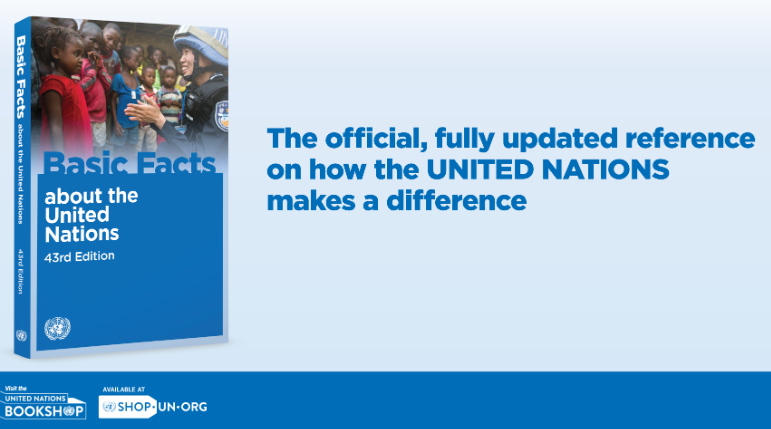
The 43rd edition of Basic Facts about the United Nations provides an accessible guide to the organization, its history, structure, and work. It gives readers context to understand how the UN works, what it does and why it matters, while reflecting significant developments within the organization and the wider multilateral landscape.
Basic Facts has introduced generations of readers to the United Nations. This new edition has been revised to reflect major developments in the world and within the organization. It explains the roles of the principal UN organs and related organizations and covers the organization’s work across peace and security, economic and social development, human rights, humanitarian action, international law and decolonization.
In the publication’s foreword, Melissa Fleming, Under-Secretary-General for Global Communications, reflects on the organization’s enduring purpose:
“Eight decades on, the United Nations remains a beacon for all those who believe in working together for a better world; one in which everyone lives in peace, dignity and equality on a healthy planet.”
She also notes that the UN, with its convening power and capabilities across peace, development, humanitarian action, and human rights, has “never been more needed”. As the multilateral landscape continues to change, understanding the United Nations and its work is increasingly important. As Fleming writes, this edition considers “the future of multilateralism at a moment of seismic change”.
The 43rd edition of Basic Facts about the United Nations is now available at the UN Bookshop in New York and Geneva, as well as on shop.un.org.











Leave a Reply