
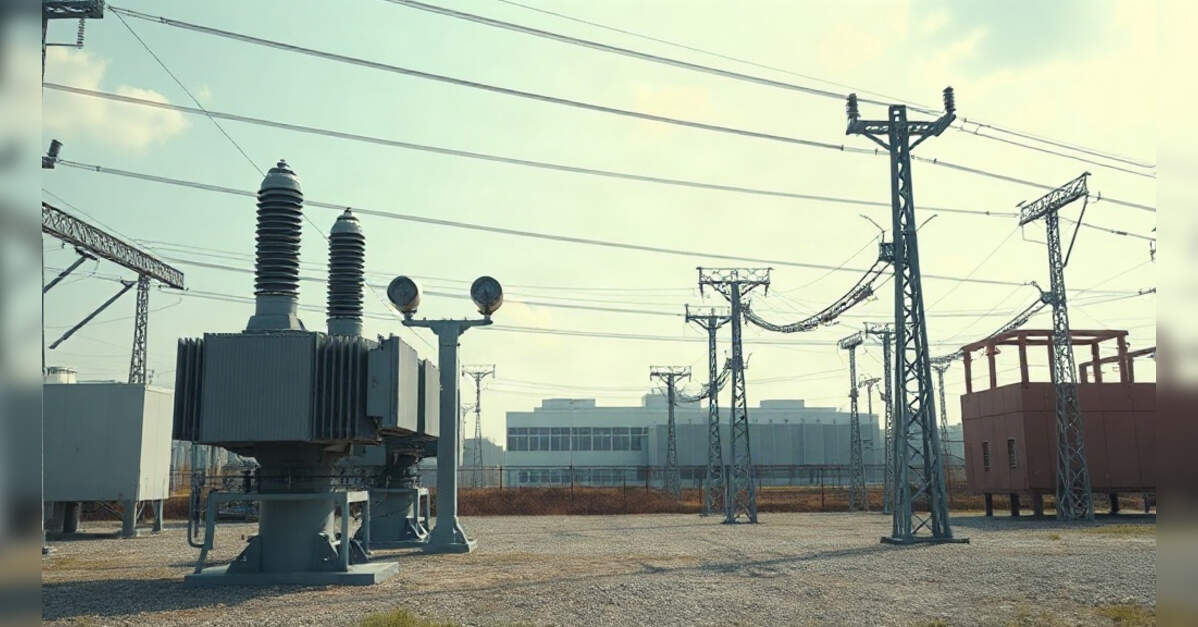
AI data center developers and operators must address not only power draw but also the rapid surge and collapse of demand, which creates frequency excursions that can impact the grid. Panelists at the Data Center World Power conference warned that sudden drops in AI power draw could trigger wide-area disturbances if unmitigated.The modern grid, designed for predictability, struggles with AI workloads that spike and subside in seconds. This requires a coordinated effort among chip providers, data center operators, utilities, and infrastructure providers.
Managing Rack-Level Load Swings
Nvidia‘s principal electrical design engineer, Sai Somayajula, noted the rising rack power density. Conventional racks previously used 5-10 kW, while Nvidia’s Blackwell-class systems reached roughly 150 kW, and Vera Rubin generation targets around 240 kW per rack. Somayajula projects up to 1 MW per rack with future 800-volt DC distribution.Nvidia has incorporated rack-level storage and controls to smooth fast excursions within the rack, maintaining AC input within grid requirements. Somayajula emphasised that Nvidia cannot solve these problems alone. He stated that “AI workloads, rack density, and power dynamics require a rethink of how we have been designing the data center.”
Right-Sizing On-Site Generation
Oracle Cloud’s core infrastructure engineering architect, Rajesh Gopanath, discussed implementations at Oracle’s Abilene, Texas, AI facilities. The Stargate data center complex is 60 per cent to 70 per cent operational, with campuses planned at a gigawatt scale. Oracle is bringing more energy and power-generation expertise in-house due to compute demand outpacing grid build-out.Gopanath suggested smaller building blocks, like 30 MW, could improve resilience for gigawatt-scale campuses. He also warned about subsynchronous oscillations. These frequencies, below the US grid’s 60 Hz, can cause mechanical resonance and catastrophic failure if excited by AI data centers.
Layered Grid-to-Chip Approach
David Roop, leading power systems engineering at Mitsubishi Electric Power Products, stated that supporting AI workloads requires coordinated investments at substation and grid levels. A chip-to-grid approach, considering energy storage, harmonic performance, power quality, and local grid characteristics, is crucial. Roop added that “New guidelines, new standards, and new compliance criteria are being introduced so we can deal with instability much faster.”










Leave a Reply