
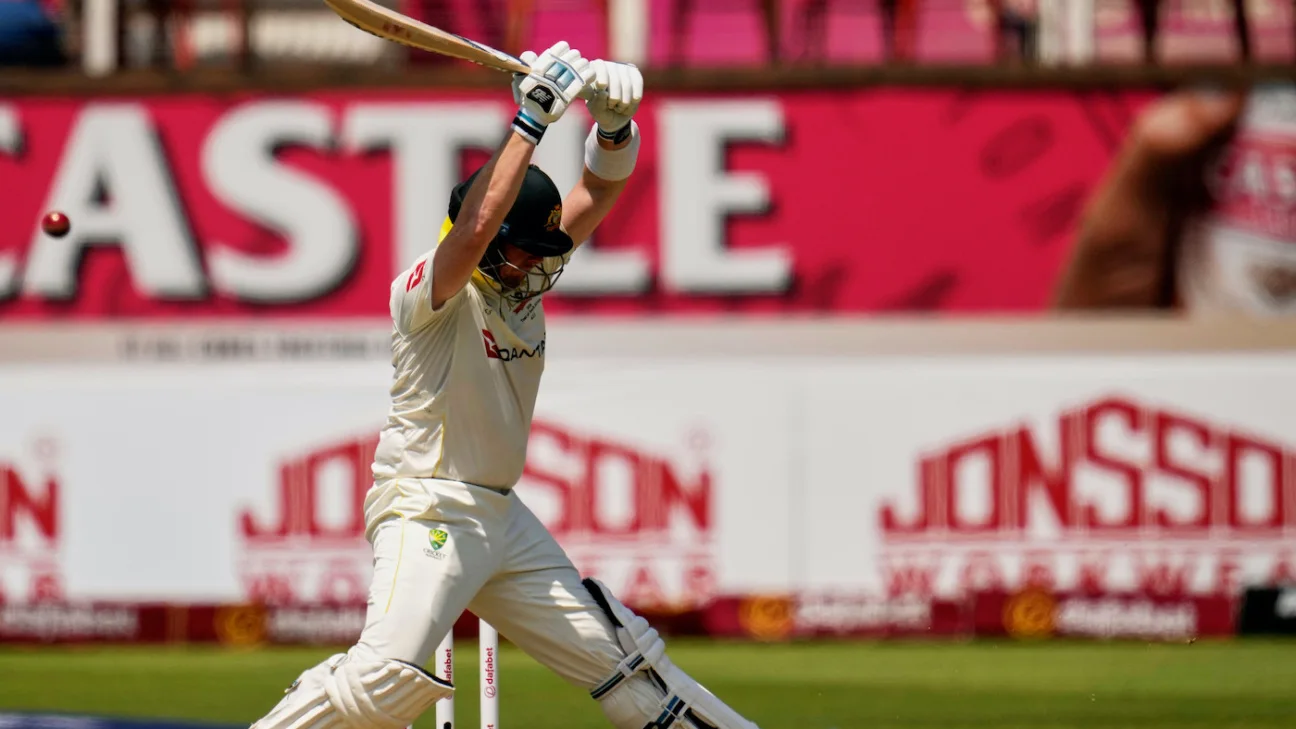
Late in the afternoon, two further wickets, those of Alex Carey and Beau Webster, fell in the space of three balls against Anrich Nortje to suggest South Africa could rattle through the visitors inside two sessions.
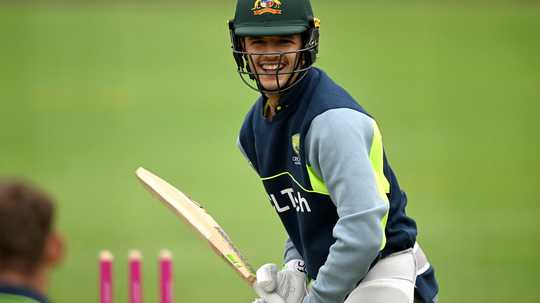
“I think all five of them [the South Africa bowlers] show a lot of different challenges; [a] left-armer, Nortje bowling quick, Mulder bowling nice, swing and seam and then you’ve got the two spinners, so provides a lot of different challenges for us,” Renshaw said. “I think there were moments in the game there where I felt like we were getting close to having the foot on the throat.”
For Labuschagne, the story has been a career on the edge: more than three years since a Test century and an average under 26 in that time. The fact he is trying to save his place back in the country of his birth adds to the story. Early in this innings, facing his fourth ball, South Africa went up for an lbw appeal when Jansen swung one into the pads. Temba Bavuma called for the review, but it was comfortably missing leg stump.
Labuschange got an early boundary away with a firm clip through midwicket and after drinks drove Jansen straight down the ground, although later in the same over saw a thick edge run through the cordon. On the whole, though, he looked settled and played with a good tempo. Before the match, Cummins had urged Labuschagne to keep things simple and not look to play the perfect innings.
Then he reached the final over of the session, bowled by Mulder. Five deliveries were safely negotiated but the last ball was an expertly crafted wobble-seam which nipped back at Labuschagne, after a series of away-swingers, beat the inside edge of his forward defensive and took him around the knee roll of his front pad.
The finger went up from Richard Kettleborough. Labuschagne called the review, but it always felt more in hope than expectation. Smith wasn’t waiting around, making a beeline for the dressing room leaving Labuschagne watching the big screen forlornly as his fate was confirmed with an umpire’s call on impact and the ball smashing the stumps.
Forty minutes later, Smith reemerged down the steps with Renshaw for company, but it was not a partnership which lasted long. The first ball of the session by Jansen was wide outside off from around the wicket, allowing Smith a comfortable leave. The next was anything but comfortable.
A back-of-a-length delivery reared sharply at Smith and hammered into his bottom glove. He veered away from the pitch, dropped his bat and ripped off the glove. For a split second it looked serious. But it didn’t take long for Smith to compose himself, and Australia’s physio didn’t even need to make an appearance in the middle.
He prepared to face Jansen again. The key for a fast bowler after striking a blow on a batter is to make them play, or feel like they have to. Jansen angled a good-length ball into Smith, who pushed from crease, sending a thick edge to gully. Smith marched off at a similar pace to the one he left the field for the lunch break.
In the space of four balls, Australia had lurched towards another batting crisis. That it was arrested, in part, by Renshaw, who in his previous Test was an opener and learnt of his shift to No. 5 on the eve of this match, only goes to reinforce what a significant period of uncertainty it is for Australia’s top order.
Andrew McGlashan is a deputy editor at Cricinfo





Leave a Reply