
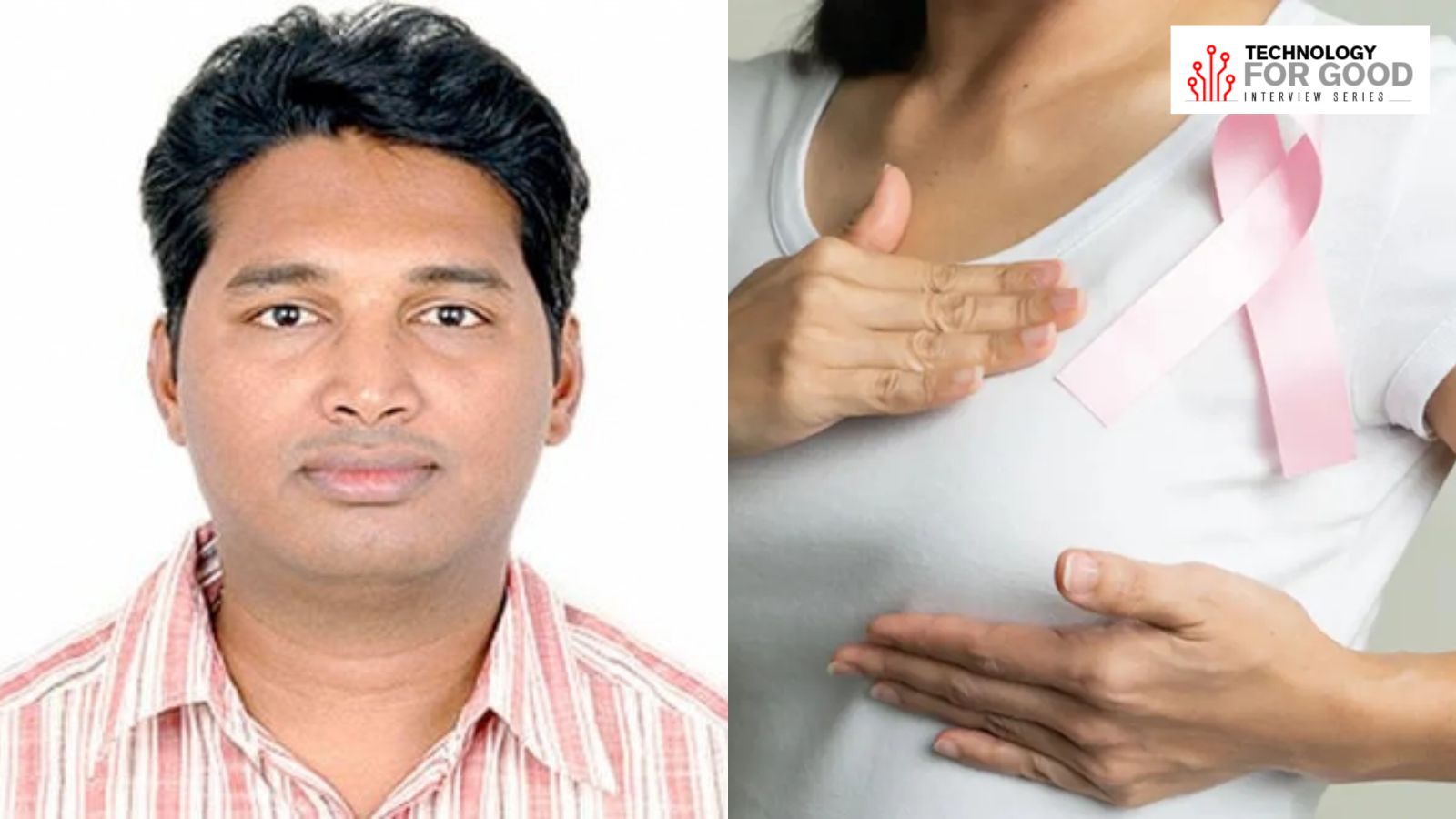
Prof Phaneendra K Yalavarthy is the Chief Project Manager of Translational AI for Networked Universal Healthcare (TANUH), an AI Centre of Excellence in Healthcare at IISc, Bengaluru, and a professor in the Department of Computational and Data Sciences (CDS).
TANUH, a non-profit, develops and deploys AI-driven diagnostics and decision-support tools for early detection and management of non-communicable diseases across India.
Phaneendra’s research interests include AI for medical imaging, computational methods in medical imaging, medical image processing, and Cyber-Physical Systems.
A postgraduate in Physics from Sri Sathya Sai University, he also has an M.Sc. in engineering from IISc, and a PhD in Engineering Sciences from Dartmouth College, USA.
Phaneendra spoke to indianexpress.com on the goals of TANUH, efforts to fight non-communicable diseases in India, using AI to fight oral and breast cancer, and building a digital public infrastructure layer to support neurological healthcare. Edited excerpts:
Venkatesh Kannaiah: Tell us about the origins of TANUH and its areas of focus.
Prof Phaneendra: The Indian Government felt that sector-specific solutions needed to be developed at scale, with AI as the enabler. TANUH was set up as an AI Centre of Excellence focused on healthcare.
It is one of four such centres. Others are focused on education, agriculture, and sustainable cities and are located in various cities.
We focus on non-communicable diseases, as around 70% of the current disease burden in India is from them. We are building AI applications for health workers like nurses or ASHA workers involved in primary care with a community focus. Our focus is not on patients or doctors per se.
We focus on two of the three cancers that the WHO has identified as requiring population-level screening: oral cancer and breast cancer.
We also work on retinal and vascular diseases. Vascular diseases encompass liver and kidney diseases, cardiovascular risk, and diabetes. Gestational diabetes, mental health, and neurology are other interest areas.
On the neurology side, we are working with the Centre for Brain Research at IISc to develop a foundation model for the Indian brain.
Venkatesh Kannaiah: Tell us about what TANUH seeks to achieve.
Prof Phaneendra: Our goal is early detection, prevention, and management of non-communicable diseases through AI.
We try to build AI solutions at scale that can be used by frontline health workers. The user interface of our products is multilingual, intuitive, and gesture-based. They are also voice-based. We call this point-of-care design: tools built specifically around frontline health workers and to work in the field, unlike a hospital, which is a controlled setup.
Venkatesh Kannaiah: Tell us about your cancer screening tools.
Prof Phaneendra: There is Aarogya Aarohan, an oral cancer and pre-cancer screening solution used by frontline health workers.
India has a huge burden of oral cancer, as people chew tobacco, paan, or gutkha. They develop lesions that are indicative of a potential for cancer, but there are no other symptoms.
We use a mobile phone app to take pictures of the lesion to identify whether it is pre-cancerous. This AI-based solution has won many awards, and we have screened more than 70,000 patients.
The cancer registry indicates to us the places with a high incidence of oral cancer. Varanasi and Mathura in Uttar Pradesh, Dakshina Kannada district in Karnataka, and Thanjavur in Tamil Nadu are among the affected regions. Our work is also focused on these regions.
As for breast cancer, women above 40 years of age are expected to undergo screening. In India, around 20 crore women are in this age group, but we only have around 3500 mammogram machines, and each machine can only do about 20 screenings per day. Hence, only around 1% of the target population is getting screened.
Moreover, if you compare with Western societies, Indian women get breast cancer earlier. Our highest incidence is between the ages of 40 and 50, whereas in the West, the incidence is between the ages of 50 and 60. That also means that we should screen them earlier. High-risk patients are about 4 to 5 per cent of the general population.
We have built a tool to predict breast cancer risk. We have a questionnaire that is reinforcement-learning-driven, and we can find out whether they are high- or low-risk. It is an India-specific risk stratification for breast cancer. We are trying to identify those at higher risk and then get them to mammogram screening. It is not a fixed questionnaire. Depending on how they answered the previous questions, it keeps changing the next question, but only 10 questions are asked.
Venkatesh Kannaiah: How confident are you about your predictions on breast cancer?
Prof Phaneendra: We are about 83% accurate compared to a mammogram. There is something called Negative Predictive Value (NPV), meaning that when we say someone is not at high risk, we are 97 per cent confident.
When we identify someone as high risk, it is called Positive Predictive Value. That number is low. For us, it is only about 60% to 65%. There is no risk to a patient even if he is wrongly referred for a mammogram test, and if the patient is high risk, the mammogram can confirm the same.
Venkatesh Kannaiah: Tell us about other tools under development.
Prof Phaneendra: We also do retinal vascular screening. Seventy percent of our current disease burden in India is either from diabetes, cardiovascular disease, liver disease, or kidney disease.
They overlap in many ways. Someone who is a diabetic is also at very high risk for cardiovascular disease or a kidney problem.
As of now, all non-communicable disease clinics at Community Health Centres and district hospitals run the test for diabetes and cardiovascular disease.
With a special handheld camera (Fundus Camera), we can take a picture of the eye without dilating the pupil and find out whether the person has diabetes, cardiovascular disease, liver disease, or kidney disease.
Ideally, one should do a blood test to identify if the patient has any of these four diseases. Now, with merely an image, we can tell whether they should be tested for any of these diseases.
We also try to give what are called biochemical parameters. For kidney disease, you need to know eGFR (estimated glomerular filtration rate). If your eGFR is below 60, you are considered to have chronic kidney disease. We also try to give an estimate of what the eGFR could be, so that they can be referred for a kidney test.
In the Pradhan Mantri Jan Arogya Yojana (PM-JAY) scheme, which provides health insurance coverage, 30 per cent of the budget goes towards dialysis, and it’s quite a burden. It is also open to abuse and fraud. We are developing an AI-based anti-fraud tool.
We take an ultrasound image of the kidney, which indicates whether the patient needs dialysis, so that those who don’t need it should not be able to claim the funds. This is not visible in a normal ultrasound. You need to run it through an AI tool to get the result. This tool is now being rolled out in various states.
Another issue is with gestational diabetes. It is currently detected at around 24 weeks into the pregnancy. Using AI, we are trying to predict it within the first 14 weeks.
There are what we call modifiable risk factors that have an impact. The age at which women become pregnant has been pushed a little further. If you are older, you have a higher probability of developing gestational diabetes. Nowadays, a high percentage of pregnant women in India are being diagnosed with gestational diabetes. We are now building a tool for early prediction and early intervention.
For mental health, we are building a tool to identify whether someone is depressed or whether someone has Alzheimer’s, dementia, and other conditions, using voice as a biomarker.
Venkatesh Kannaiah: Do you build all these tools in-house?
Prof Phaneendra: We build all these tools ourselves. We have around 50 clinical partners and hospitals to help with collecting the data. Tool building, app building, and tech are managed and owned by us. Once the solution is ready, we plan to make it a digital public good.
Venkatesh Kannaiah: Explain IndiNeuroFM and what it seeks to achieve.
Prof Phaneendra: IndiNeuroFM is a sovereign, India-specific, multimodal foundation model for the Indian brain. This work is being done in collaboration with the Centre for Brain Research at IISc Bengaluru.
The brain structure and brain age are important factors here. The trajectory of brain age in India is entirely different compared to Western societies.
India has very specific brain disease patterns. There is something called neuro TB, or parasitic brain infections, which are not common in the West and hardly anyone gets them. In India, it is one of the top five brain diseases. We are also one of the countries with nutritional deficiencies, and they also affect the brain.
With IndiNeuroFM, we are building India’s first AI-based Digital Public Infrastructure for neurological healthcare.
For example, any trauma case involving a head injury will typically have a non-contrast head CT. The problem is that these scans need to be read by a neuroradiologist, and they are in short supply in many Tier 2 and Tier 3 cities.
So, we are building models that can provide what we call findings, rather than a diagnosis. For example, the model might identify a skull fracture or a possible brain bleed. The treating physician can then look at these findings, make the diagnosis, and decide on the treatment. In that sense, we are providing a digital public infrastructure layer to support neurological healthcare.
Western tools, methods, or machines do not integrate India-specific conditions into their analysis, and we are trying to rectify that. The clinical environment too is different. Most brain MRIs in the West are done on 3 Tesla scanners and above. In India, 70% of the MRI scanners are 1.5 Tesla scanners. The slice thickness — the thickness at which people store the data — is also different. We also have a disparity in terms of resources. If you ingest Indian data into a Western model, it may not give appropriate results, as such data is not represented in the model when it was built.
So, we are tackling two problems. The first is the problem of India-specific brain diseases and conditions. Secondly, we are also integrating it with potentially low-resource environments.
So far, we have collected data from more than 20,000 patients. We have an ambitious plan to collect data from 60,000 patients.
Venkatesh Kannaiah: Tell us about BODH and SAMVIT.
Prof Phaneendra: We have a mandate for building benchmark open datasets for healthcare. The problem is that most models have not been tested on Indian data.
So, as an AI Centre, we are building a Benchmarking Open Data Platform for Healthcare (BODH), where people can test their models on Indian datasets in a confidential manner.
It is a national platform hosted by the Ministry of Health. We host it and run it as a project management unit. It is for helping researchers and companies to come up with better products and solutions.
SAMVIT (Scale, Automation, Monitoring, Validation, Integration, and Tracking of AI in Healthcare) is TANUH’s platform that provides the infrastructure needed to deploy and scale AI screening programmes operated by community health workers across diverse health systems. This helps health systems move from AI pilots to sustainable AI programmes.
SAMVIT is a platform where we host all our tools and solutions. It is an integrated platform, and anyone can integrate their solutions easily onto it.
Venkatesh Kannaiah: What is the DPI aspect of TANUH’s work?
Prof Phaneendra: While we were building many of the tools, we found that even among our partners from Tier 2 and Tier 3 cities, there was a digital infrastructure gap. So, we started building tools to bridge this gap.
For example, our IndiNeuroFM partners are supposed to give us anonymised MR images after removing the patient data and other identifiers. In Tier 2 and Tier 3 centres, they don’t have any tools to do this. So, we built a tool for them.
All this becomes an interoperable building block for us, which is reusable and open source.
Venkatesh Kannaiah: How do you partner/work with the Indian health ecosystem?
Prof Phaneendra: We have partners at every layer. Ministry of Education, National Health Authority, PMJAY, Ministry of Health, ICMR institutes, and state health departments. On the clinical and research side, we have many hospitals partnering with us.
SAMVIT is open to anyone who has a solution. It is also well tested for the Indian population and Indian settings.
We have an innovation challenge, and we are an innovation hub for startups because of the network of partners we have. Any startup can come in and plug into our platform, and if they have a solution, we connect them with the right partners. We have 60 large partners.
Venkatesh Kannaiah: What is your biggest bet?
Prof Phaneendra: The SAMVIT platform is our biggest bet. We are developing it as a Digital Public Infrastructure, and we are hopeful that it will be used by many stakeholders.
BODH is where we keep the datasets for evaluation. SAMVIT is the platform where we host our solutions. My view is that it will become a trusted India-specific platform in the future.










Leave a Reply