
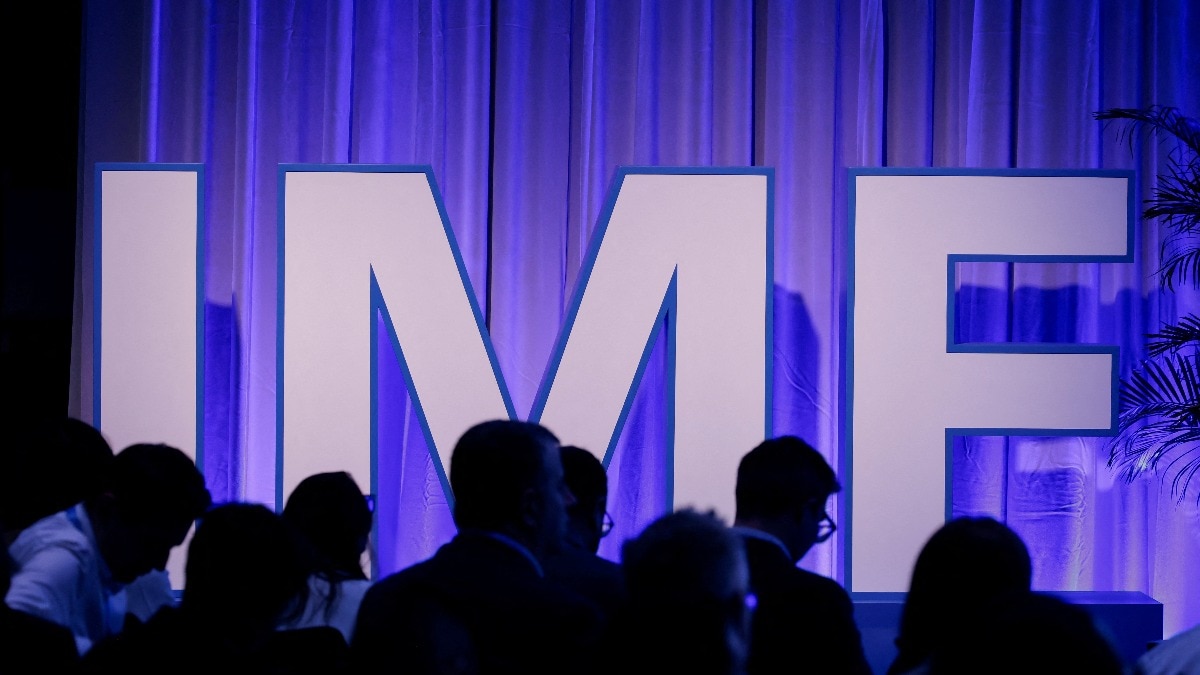
The International Monetary Fund (IMF) has warned that a sharp correction in the artificial intelligence (AI) investment boom, a prolonged Middle East conflict and rising government debt could pose major risks to the global economy, reported Reuters.
In its latest World Economic Outlook report, released in Bangkok on Tuesday, the IMF projected global economic growth of 3.1% in 2026, slightly higher than its July forecast of 3%. Strong investment in AI infrastructure has helped support growth despite higher oil prices caused by the Middle East war.
The IMF expects global growth to reach 3.4% in 2027. However, this forecast depends on the Strait of Hormuz reopening by March and shipping conditions returning to their pre-war situation by October 2027.
AI INVESTMENT BOOM COULD TURN INTO A RISK
The IMF warned that a sharp fall in AI investment could hurt financial markets and slow economic growth if the technology fails to deliver the expected gains in productivity and profits.
In one downside scenario, a major pullback in AI investment could cause global GDP to fall by 1.1% by 2028. US economic output could decline by 1.8% under this scenario.
The IMF also highlighted these risks in its Global Financial Stability Report, warning that policymakers should not become complacent about the possibility of falling AI investments and stock valuations.
Jason Wu, assistant director of the IMF’s Global Markets Analysis Division, said doubts about the ability of AI companies to generate revenue could reduce the value of equity investments, make debt repayments more difficult and prevent companies from meeting future revenue commitments.
An AI market correction could also affect the wider economy by pushing down asset prices and reducing consumer demand as households feel poorer, according to Athanasios Vamvakidis, deputy director of the IMF’s Monetary and Capital Markets Department.
AI SLOWDOWN COULD HIT GLOBAL TRADE
The IMF also warned that a slowdown in AI-related investment could affect global trade.
Trade in AI-related goods grew by 29% between 2023 and 2025, more than three times the 8.3% growth recorded in global trade during the same period.
Without trade in AI-related goods, overall global trade growth would have been only 4.6%, IMF chief economist Silvana Tenreyro said.
However, the IMF does not expect even a sharp fall in economic output under its downside scenario to push global growth into a recession.
Petya Koeva Brooks, the IMF’s deputy research director, said the projected decline was unlikely to bring growth down to levels associated with a global recession.
IMF Managing Director Kristalina Georgieva also cautioned against taking the global economy’s resilience for granted, saying continued efforts were needed to maintain it.
PROLONGED MIDDLE EAST WAR COULD SLOW GROWTH
The Middle East conflict remains another major risk to the global economy, particularly through its impact on oil prices and shipping.
The IMF’s growth forecast for 2027 assumes that the Strait of Hormuz reopens by March and shipping conditions return to their pre-war situation by October 2027.
However, if the conflict worsens and oil prices remain above $130 per barrel through the first quarter of 2027, global economic growth could be 0.5 percentage points lower next year, the IMF warned.
Higher oil prices could add to inflation pressures and make it harder for economies to maintain growth.
The IMF also highlighted growing cybersecurity risks linked to AI. The warning comes as banking regulators increase their scrutiny of how financial institutions use advanced AI models and prepare for potential risks.
High public debt and rising bond yields are adding to the pressure on the global economy, according to the IMF. Higher borrowing costs and inflation could increase the amount governments spend on debt payments, leaving them with less room to support growth.
Taiwo Oyedele, Nigeria’s Finance Minister and chair of the Group of 24 developing nations, said debt vulnerabilities remained a major barrier to inclusive growth.
He said estimates showed that developing countries were paying $500 billion more towards debt than developed countries, even as they faced growing budget deficits.
The IMF has urged governments to take steps to bring public finances under control, even if these measures are politically difficult.
It praised Britain for being the only major advanced economy to have set out clear plans to reduce government borrowing over the coming years, while urging it to continue with those plans ahead of its upcoming Budget.
However, many governments are yet to act on calls to reduce borrowing. Josh Lipsky, vice president of international economics at the Atlantic Council, said major economies such as France, Germany and the US needed to control their finances but were moving in the opposite direction.
He warned that a crisis might be needed to make governments recognise the importance of reducing their borrowing.
– Ends








Leave a Reply