
By all accounts, the passengers on FlyDubai Flight 1073 narrowly avoided disaster. Even before the plane took off from Dubai International Airport, major security failures had already taken place. Hammami, the flight’s twenty-nine-year-old co-pilot, had not been properly vetted. Two years earlier, his prior employer, Oman Air, had found online posts and a browsing history that suggested he had extremist views. The carrier banned him from flying, sent him to a deradicalization program, and gave him a desk job. Later, in 2025, he was selected for a preëmployment training program at Morocco’s national airline, before getting hired by FlyDubai, which is owned and operated by the Emirati government, and only screened him for prior criminal convictions, failing to look for any history of radicalization. Inside the plane, Hammami seized advantage of an airline-safety rule enacted after September 11, 2001, which mandated that pilots must be able to lock the cockpit from the inside to prevent hijackings or other external threats to the plane. The plane fell, “like a massive turbulence, like a massive g-force, for twenty or thirty seconds,” one passenger said. If Machchhar, although gravely wounded from Hammami’s attack, hadn’t unlocked the cockpit door, and if the courageous passengers, crew members, and off-duty pilots hadn’t taken action to stop Hammami, the Israel-bound plane would likely have crashed, almost certainly killing everyone on board just days before the country was set to commemorate the third anniversary of the October 7th attacks. The Emirati attorney general on Friday said Hammami, inspired by the 9/11 attacks, intended to crash the aircraft into the passenger terminal at Ben Gurion “with the aim of causing the greatest possible loss of life.”
Even after Hammami was tied up (passengers used headphone cords and plastic zip ties), the passengers and crew were in danger. The nosedive was so swift that a large part of the plane’s rudder was ripped off the tail. Aviation experts were surprised the plane didn’t completely come apart. “Once the airplane is descending like that, faster and faster and faster, it’s gaining more and more inertia,” Jeff Guzzetti, a former N.T.S.B. air-safety investigator, told me. “And at some point it’s just impossible to recover, to pull back smoothly on the yoke before you hit the ground, or to pull back and not separate the wings or the tail surfaces. You can structurally overload the airplane by making abrupt control movements at high velocities like that.” He added that it was “miraculous that they were able to get that assailant out of the cockpit and then recover the airplane after it had exceeded its maximum design airspeed.”
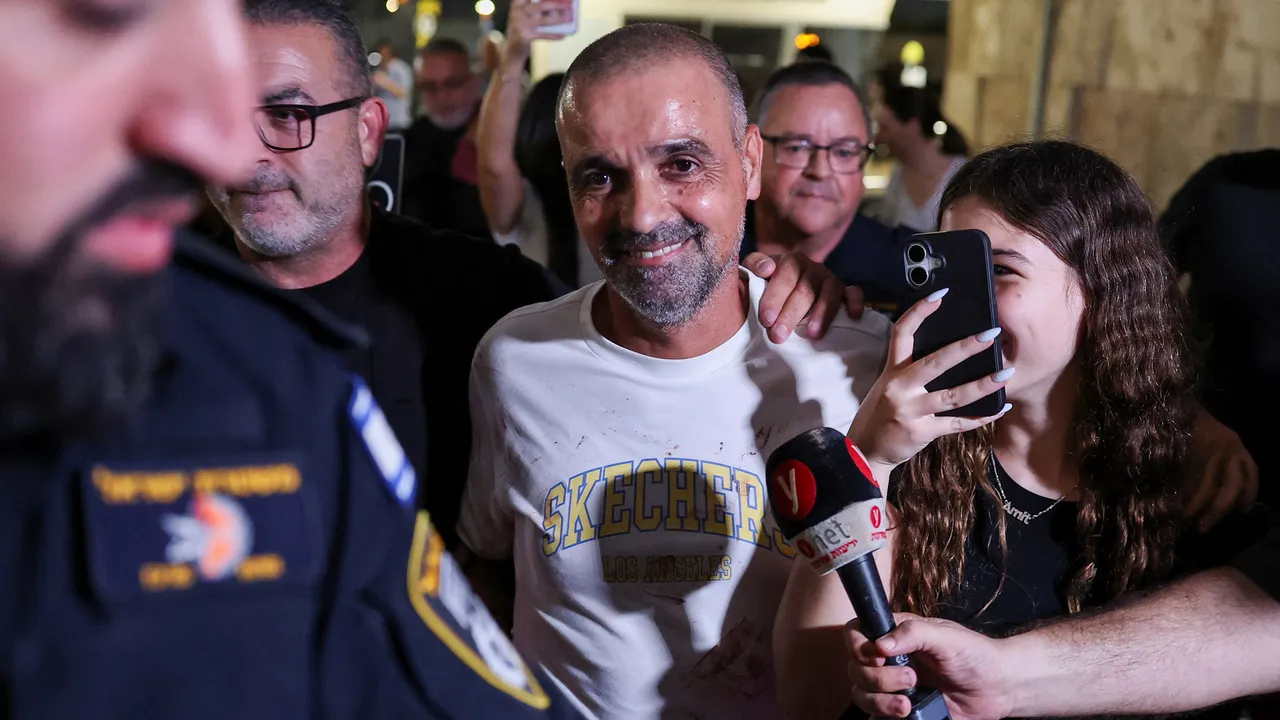
In an interview with Israel’s public broadcaster, KAN, Hayun said he learned from watching “A.C.I.” that “you have to pull the yokes when the plane’s nose is down.” When asked if he ever imagined doing this in real life, he replied, “No way! . . . I have never been in a cockpit.” He pulled the yokes “for a few seconds” and then said one of the off- duty -pilots took “control of the situation.” (Hayun did not respond to multiple interview requests.)
Did Hayun’s decision to pull back on the plane’s yoke make the difference? Guzzetti is skeptical. “Yes, it might have helped, but, I mean, it also could have hurt,” he said. “When you’re in an unusual altitude like that, heading down at such a high rate of speed, in such a dramatic fashion, could instinctively grabbing the yoke and pulling back have been a benefit? I don’t know. I find it a bit hard to believe.” Bystram, too, is unsure whether Hayun saved the day, but he believes his actions helped. “If nothing else, he gave the pilots behind him a little bit more time to get into that seat and figure out what was going on, take control of the airplane, and land it,” he said. “When a plane is heading towards the ground at ten thousand feet per minute, every second counts. And if this guy bought them a couple of seconds, then that was probably valuable.”
Shota Musaev, a dentist on the last leg of his return from a vacation in China with his wife, was among the passengers who rushed toward the cockpit. He told me that he spotted Machchhar covered in blood with severe cuts on his head and hands, and that he immediately began pressing on the wounds to stop the bleeding and monitored the pilot’s pulse. The situation was chaotic, he explained, so he didn’t see Hayun pull back the plane’s steering control, but he later spoke with Hayun, who told him he had helped stabilize the plane before the off-duty pilots entered the cockpit and took over. “I don’t know what would have happened if he touched nothing,” Musaev said. “I don’t know what would have happened without the help of Yaniv. We remember only parts of the moments. The plane’s black box will make all these moments clear.”







Leave a Reply