
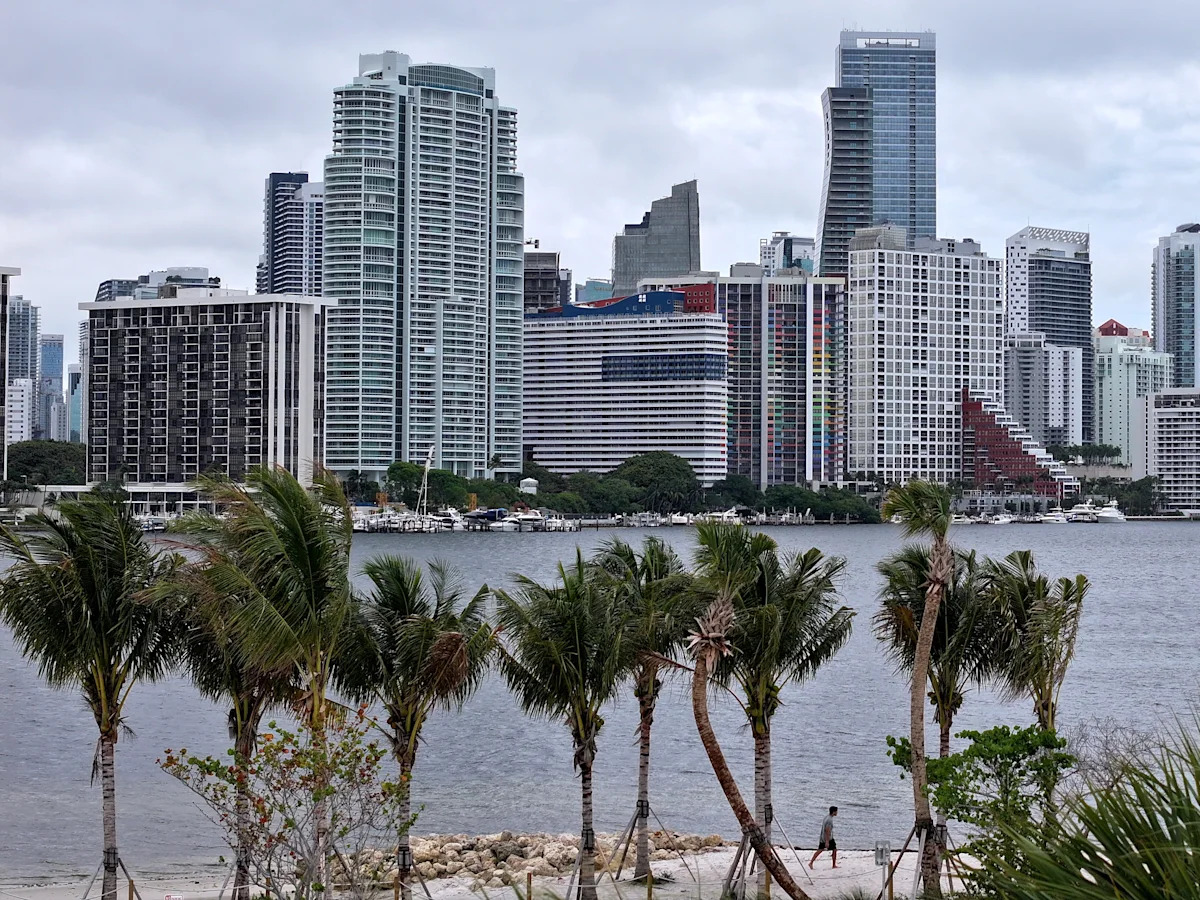
Florida’s hot season may be getting longer, with higher maximum temperatures.
By 2050, some spots in Florida could see “70 hot days annually,” according to a study led by Golmar Golmohammadi, assistant professor at the University of Florida (UF), defined as days that are 91 degrees or warmer.
Rather than “just a few hot days spread out over the summer,” Golmohammadi said that Florida is “starting to see longer stretches of extreme heat.”
The study indicates that the number of hot days has increased “across all regions of Florida,” with the state’s average maximum temperature also on the rise.
Shop hot weather essentials on Amazon
How many more hot days did Florida see on average?
The study showed that Florida’s average maximum temperature had increased by about 0.12 degrees Celsius over the “past decades,” paired with an average rise of about 2.5 hot summer days per decade.
Parts of northwest and central Florida saw “the most significant increases,” and southern Florida “also experienced relatively large increases,” according to the study.
Researchers used data from 28 meteorological stations “from Pensacola to Key West,” according to the University of Florida, with data from 1959 to 2022. Some stations only had data available “from the 1960s to 2022.”
The increase in high temperatures and their duration is attributable to global warming, which brings with it “disrupted climate patterns, increased flooding and droughts, reduced biodiversity, and accelerated species extinction rates,” says the study.
South Florida saw ‘unusually’ hot, dry summer
South Florida saw an “unusually” hot summer with below-average precipitation, according to the NWS. Several areas experienced some of their driest summers on record.
“Relatively low rainfall values placed many sites among the top 10 driest summer seasons on record, and came at the heels of a dry spring,” read a Sept. 1 weather summary by the NWS Forecast Office Miami-South Florida.
Several areas also broke established heat records, according to the NWS, with Fort Lauderdale and West Palm Beach experiencing their hottest summers on record, along with the whole of the United States. Records in both cities both go back “well over 100 years.” Miami tied 2023 for its hottest summer.
Many official reporting sites saw summers within their top 10 driest on record, according to the NWS.
For instance, Homestead General Airport saw its 10th driest summer, NWS Miami-FIU saw its third driest summer, Opa-Locka Airport saw its 10th driest summer, Miami International Airport saw its eighth driest summer and Fort Lauderdale-Hollywood International Airport saw its eighth driest summer.
Although the document doesn’t point to a “single weather feature” as the cause of the dry heat, the region “experienced trends similar to those observed over much of the Caribbean region,” which is “a common feature during El Niño episodes in the summer.”
“This prevented prolonged periods of tropical moisture from affecting South Florida for long periods of time,” the summary added.
Drought persisted for longer, with “conditions which normally end in June,” including extreme drought, which lingered in the “southern Everglades” through the end of the summer. The dry summer also resulted in “several lightning-triggered wildfires,” which lasted from a week to nearly a month.
Sarah Perkel is a South Florida Connect Reporter for the USA TODAY Network’s Florida Connect team. You can get all of Florida’s best content directly in your inbox each weekday day by signing up for the free newsletter, Florida TODAY.
This article originally appeared on USA TODAY: Florida’s hot season is getting longer, and it’s not slowing down
Our editors independently choose our recommendations. Some content is produced with paid support from a third party, however our editorial decisions remain independent. If you buy through our links, the USA TODAY Network may earn a commission. Prices and availability may change.











Leave a Reply