
Probabilistic Bias Correction delivers more reliable two-to-six-week projections, unlocking big benefits for farmers, resource managers, and disaster responders.
At a glance
- Weather forecasts are stubbornly unreliable in the two-to-six-week window, leaving a crucial gap for decision-makers across a wide range of industries and public agencies.
- Probabilistic Bias Correction (PBC) is a new machine-learning framework developed by Microsoft Research that learns from a weather model’s past mistakes and helps correct them, making its forecasts more accurate and reliable.
- In early testing, PBC took top honors in a global competition aimed at improving extended-range, or sub-seasonal forecasting. It’s also showing promise in real-world deployments, notably helping improve critical monsoon forecasts for farmers in Kenya.
Today’s weather forecasting has become highly dependable out to two weeks, while longer-term climate forecasts are also increasingly accurate. But a critical gap persists in sub-seasonal forecasting between two and six weeks, where current models come up short. Better predictions in this window would improve crucial decisions related to farming, managing wildfires, allocating water and energy, and preparing for weather extremes.
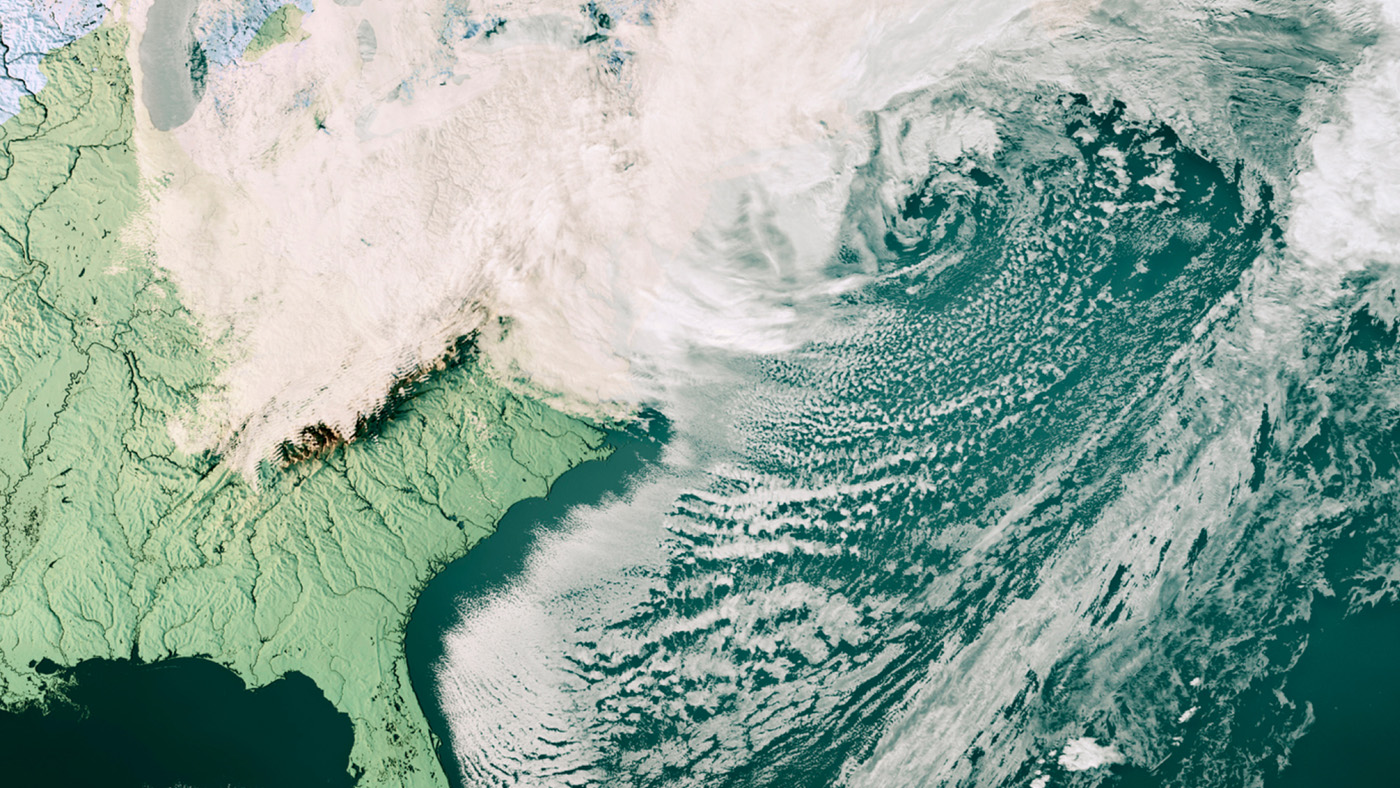
Image Credit: Cooperative Institute for Research in the Atmosphere at Colorado State University and the National Oceanic and Atmospheric Administration (CSU/CIRA & NOAA)
For years, researchers from Microsoft and external collaborators have pursued this challenge. But instead of building another new model to compete in a crowded field, they began to focus on correcting predictable errors in existing models. They called this new approach Probabilistic Bias Correction (PBC). In initial evaluations, this research effort is showing how it could help deliver more actionable – or skillful – sub-seasonal forecasts of temperature, precipitation, and atmospheric pressure.
Physics-based models measure the weather today and then simulate future weather using scientific equations that govern how the atmosphere and oceans behave over time. Newer AI models train on lots of data, instead. And they both do well out to about 10 days. But, in the two-to-six-week time scale, both physics-based and AI-based models struggle due to compounding errors and the complex interactions of global earth systems and local weather systems.
“Our new pipeline (PBC) takes your favorite model as input and learns in what ways it tends to make errors. It then corrects those errors, yielding a better output forecast for the sub-seasonal range.”
– Lester Mackey, senior principal researcher at Microsoft Research New England
A recent paper (opens in new tab) published in the scientific journal Nature outlines how PBC uses a lightweight machine learning system that can examine any model’s historical forecasts to find systematic bias. PBC has boosted performance of the world’s leading operationally debiased sub-seasonal model — from the European Centre for Medium-Range Weather Forecasts (opens in new tab) (ECMWF) — for 98% of precipitation, 92% of temperature, and 91% of pressure targets. It also doubled the accuracy of ECMWF’s AI Forecasting System (AIFS).
In August 2025, ECMWF kicked off the AI Weather Quest (opens in new tab), a real-time competition aimed at improving probabilistic sub-seasonal forecasting. The MicroEnsemble team, with researchers and scientists from Microsoft and external collaborators, deployed a PBC-based solution that took top honors. Their entry, dubbed MicroDuet, applied PBC to the industry-leading dynamical model from ECMWF and to a hybrid (AI+dynamical) model, PoET (opens in new tab), that improves the skill of probabilistic forecast ensembles using transformers. In the inaugural three-month season, MicroDuet placed first for every weather variable and lead time, outperforming six leading operational forecasting centers and the forecasting systems of 34 teams worldwide. MicroDuet also delivered the most accurate results over a full year of real-time forecasting. It even anticipated two brutal winter storms (opens in new tab) that struck the United States in early 2026 — 19-26 days in advance.

“The AI Weather Quest provides a unique real-time benchmarking platform for sub-seasonal forecasts. Contributions from Team MicroEnsemble spotlighted how machine learning can enhance the skill of traditional dynamical forecasting systems through post-processing,” said Dr. Joshua Talib, scientist in sub-seasonal forecasting at ECMWF.
ECMWF continues to develop predictive systems and tools that enhance the skill, reliability and usability of sub-seasonal predictions, alongside advances in fully data-driven forecasting approaches.
Image Credit: NASA Earth Observatory / Lauren Dauphin, using GEOS data from the Global Modeling and Assimilation Office at NASA GSFC.
Putting PBC to work in the real world
Outside of the lab, PBC is also beginning to address real-world challenges, notably in East Africa. Genevieve Flaspohler runs Rhiza Research, (opens in new tab) a small nonprofit focused on improving AI-powered weather forecasting. She advises the Kenya Meteorological Service Authority (KMSA) (opens in new tab) and works with scientists at KMSA, the Climate Hazards Center (CHC) at University of California, Santa Barbara, and the Karlsruhe Institute of Technology (KIT) in Germany to deliver forecasts that are critical to the success of smallholder farmers.

“A good weather forecast, delivered at the right time, on the right communication channel, can be a big differentiator for agricultural outcomes,” Flaspohler said. “That’s especially true in East Africa, where they have been seeing whiplash swings between the driest years on record and the wettest years ever.”
Flaspohler is helping Kenyan forecasters test and pilot AI models, including PBC, as one of Kenya’s two rainy seasons gets underway. Accurate forecasts can mean the difference between success and failure for farms in this region, which largely lack irrigation and rely on rainfall. Decisions on which seeds to buy, when to plant, and when to fertilize all ride on the forecast. The sweet spot is a stretch of steady, gentle rain, without harsh dry spells or deluges that can ruin young seedlings.
“Because we are in the midst of the warmest El Niño ever on record, there is a lot of fear among governments and in the climate science community about how that will manifest,” Flaspohler said. “There is a huge need for simple forecasting methods that work robustly.”

This rainy season, PBC is helping the KMSA team spot the chance of very heavy or very light rain as they prepare weekly forecast updates for Kenya’s weather service. Dr. Phillip Okello, a KMSA principal meteorologist who has tested PBC, sees real promise in the method.
“Most bias correction just adjusts how much rain a forecast predicts. PBC corrects the probabilities themselves, and across the Greater Horn of Africa it improved our forecasts more than any other method we tested. The next step is to sharpen its forecasts of heavy rain and dry spells, which matter most to farmers.”
— Phillip Okello, principal meteorologist, Kenya Meteorological Service Authority
For Flaspohler, the swings of recent years make that work more urgent.
“As the rains get harder to predict, we have to keep getting better,” she said. “That means continually rolling out new methods and better science to get farmers the best information possible.”
The recent success of PBC shows that groundbreaking forecast improvement may be possible. It’s still early in the growing season, but initial reports seem promising. The rains this season are heavily anticipated by the Kenyan public, and PBC subseasonal forecasts, which are trained to improve local performance per locality, can help local forecasters make best use of global model outputs in their country.
“That has made a big difference in terms of readiness for this rainy season and getting information out to farmers,” Flaspohler said.

What’s next for PBC
With PBC showing promising results in both research evaluations and early real-world deployments, Microsoft continues to explore how the technology can be applied and extended. This includes looking at which applications could benefit most from PBC-related tools and which weather models can be substantially improved using PBC’s machine learning correction. These efforts will in turn surface new research questions that could inspire further enhancements to the technology.
One example is Microsoft Weather’s sub-seasonal-to-seasonal (S2S) model, which provides weekly probabilistic sub-seasonal guidance up to six weeks ahead. The model has been operationalized to run in real time and is now in private preview, opening to select customers for testing as part of Microsoft Weather’s broader suite of weather solutions.
Microsoft Weather is the AI-based forecasting team powering weather experiences across Windows, Bing, Copilot, Edge, MSN, and other Microsoft products, while delivering high-quality weather data that helps enterprise customers make critical operational and business decisions. If you are interested in exploring the S2S model for commercial or organizational applications, please contact the Microsoft Weather team.
PBC is also available today (opens in new tab) as open-source software, allowing researchers and developers to explore, evaluate, and build upon the framework. The team hopes that continued collaboration with the broader forecasting community will help advance both the technology and its potential applications.











Leave a Reply