
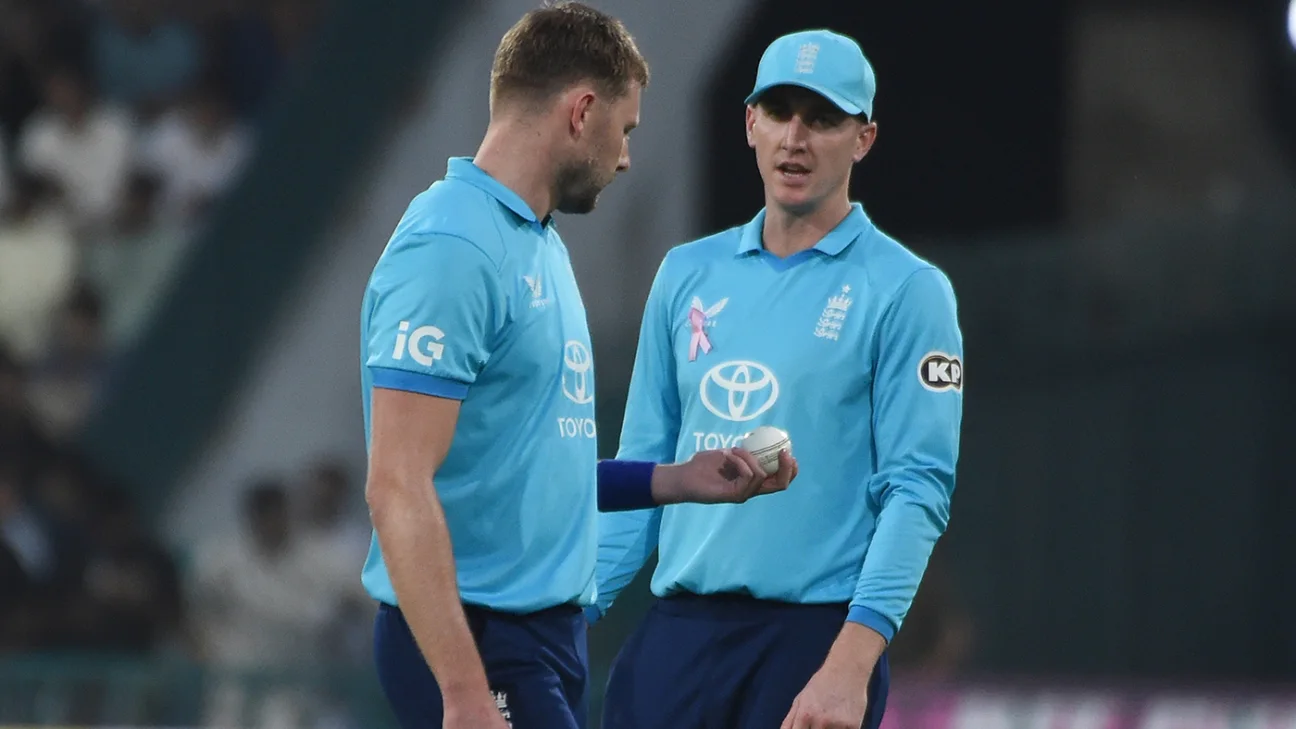
A move inspired by the New Zealand rugby union side that won the 2011 and 2015 World Cups, it essentially involves mapping out worst-case scenarios that could kibosh a successful campaign, such as losses of form, injuries, and other intangibles. For the All Blacks, that included details as minute as getting the “wrong” referee in the final, who might impact their usual style of play.
Considering England’s poor record in ODI World Cups – 2019’s success the anomaly – such planning has plenty of merit. But however much detail McCullum might already have down on paper 12 months out, problem areas have already emerged over the last week that need addressing.
The glory belongs to Pakistan but England must look inwards at the gore of another capitulation under pressure. They have time to do so before returning to action against Sri Lanka on Thursday, though they may be out of contention by then.
They were 120 for 1 chasing 303 against Pakistan in their opening match in Rawalpindi before being dismissed for 215. Captain Harry Brook lamented a lack of intent with the bat, and practised what he preached with a double-century that propelled England to 429 for 4, only for the bowlers to cower in the defence. On Sunday, deficiencies with the bat and ball combined.
Duckett’s fifth ODI century aside, England’s top order failed to negotiate extra bounce on what remained a pristine batting track right to the end. And that consistency of play highlighted a distinct lack of high-calibre pace and nous from the visiting attack.
“We’ve been open to admit we need to get better and get experience into these guys. It would be nice if these experiences were winning games [from positions] like we’ve found ourselves in the last three. But it’s not the case”
Brendon McCullum
“I don’t think we went wrong with the ball,” Brook said afterwards. “We probably didn’t quite get enough runs on the board. The effort the boys put in with the ball in the field was absolutely phenomenal, I couldn’t ask for any more.”
It is a fair assessment. Duckett provided the only non-single-figure score from the top five, and all bar Brook – run out for 1 after slipping at the non-striker’s end when turning for a second, then failing to dive – were caught in the outfield. It was also the second time during this tournament that Pakistan have bowled England out inside 50 overs.
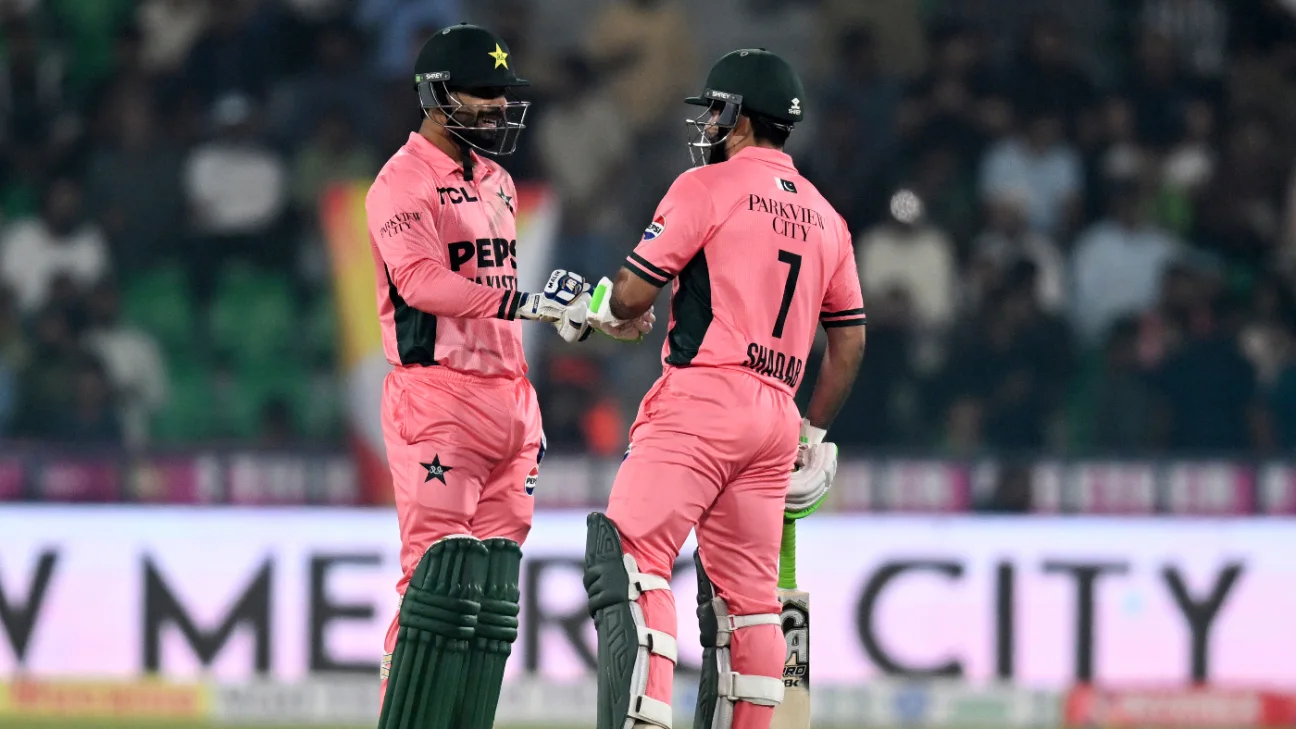
Overton’s pace and lift, coupled with Dawson’s wiliness, were lacking elsewhere. And that only truly became evident when Shadab took it upon himself to go hell for leather. Both had completed their respective allotments after 39 overs, with Pakistan needing 55 from the final 66 balls. Those runs were knocked off with 17 to spare.
Gus Atkinson, off the back of a handy cameo of 36, bowled well up front to remove Fakhar Zaman and Babar Azam and was unlucky to not have won the game for England after seemingly trapping Shadab lbw before a speculative review saved the batter on 97. Atkinson’s misery was compounded by seeing his final over taken for 15, including a brace of fours and a towering six from Shadab, which left three to get.
It was Sam Curran, however, who might have the most to rue, despite seemingly respectable figures of 0 for 32 from his eight overs. A knock of 42 in a vital rebuilding stand of 93 with Duckett was followed by another uninspiring performance with the ball, with no wickets and no real jeopardy. It was noticeable how Shadab and Rauf were able to play him with ease, particularly the latter.
Brook and McCullum regard Curran as a vital cog in this set-up, due to his left-arm seam as part of the all-round package. But he has been unable to replicate his form against India earlier this summer. He missed the Sri Lanka series in September with a groin injury but his return has seen him swing the ball less and even pack away his “moon ball”, seemingly because batters have wised up to that dramatically slower variation. This tri-series, his 22 overs have produced just three wickets at an average of 58.33 and an economy rate of 7.95.
Looking at England’s depth charts, there are potential options across the board to shake things up without causing major shifts to a group that had begun to look settled in 2026. Extra pace in Josh Tongue and Sonny Baker are available on the ground, and Jofra Archer is only absent through rest.
Jacob Bethell is due to return to the batting ranks for next month’s Australia tour, and the vastly experienced Adil Rashid, sat out for the second match in a row, is available to add more craft to the attack. Glamorgan legspinner Mason Crane could also be brought in as part of medium- to longer-term succession planning.
When England lost the 2nd ODI of their recent series to Sri Lanka, there was a quiet delight among the management because it set up a winner-takes-all bout at the Kia Oval. Defeat had an upside. England went on to take the series comfortably, riding high into the winter having earlier seen off India, the world leaders in the format.
There were similar thoughts ahead of this tri-series. The presence of a final in Lahore, potentially against the hosts – now confirmed – and the atmosphere that would bring, would provide a meaningful test of the robustness of this team. A crucial check point in the cycle going into next year’s 50-over tournament.
Now, they need a favour from Sri Lanka, who face Pakistan on Tuesday, to keep them in the hunt. It is a desperate situation they did not envisage a month ago.
“On the calendar in 12 months time there is a big World Cup, which for us to be serious challengers at, we’ve been open to admit we need to get better and get experience into these guys,” McCullum reiterated an hour after the dust had settled on a famous Pakistan win and another dispiriting England loss.
“It would be nice if these experiences were winning games [from positions] like we’ve found ourselves in the last three. But it’s not the case.”
Wholesale changes seem unlikely. But McCullum will be tempted to pull the cord on some of his potential worst-case-scenario remedies sooner than he would have liked.
Vithushan Ehantharajah is an associate editor at Cricinfo






Leave a Reply