
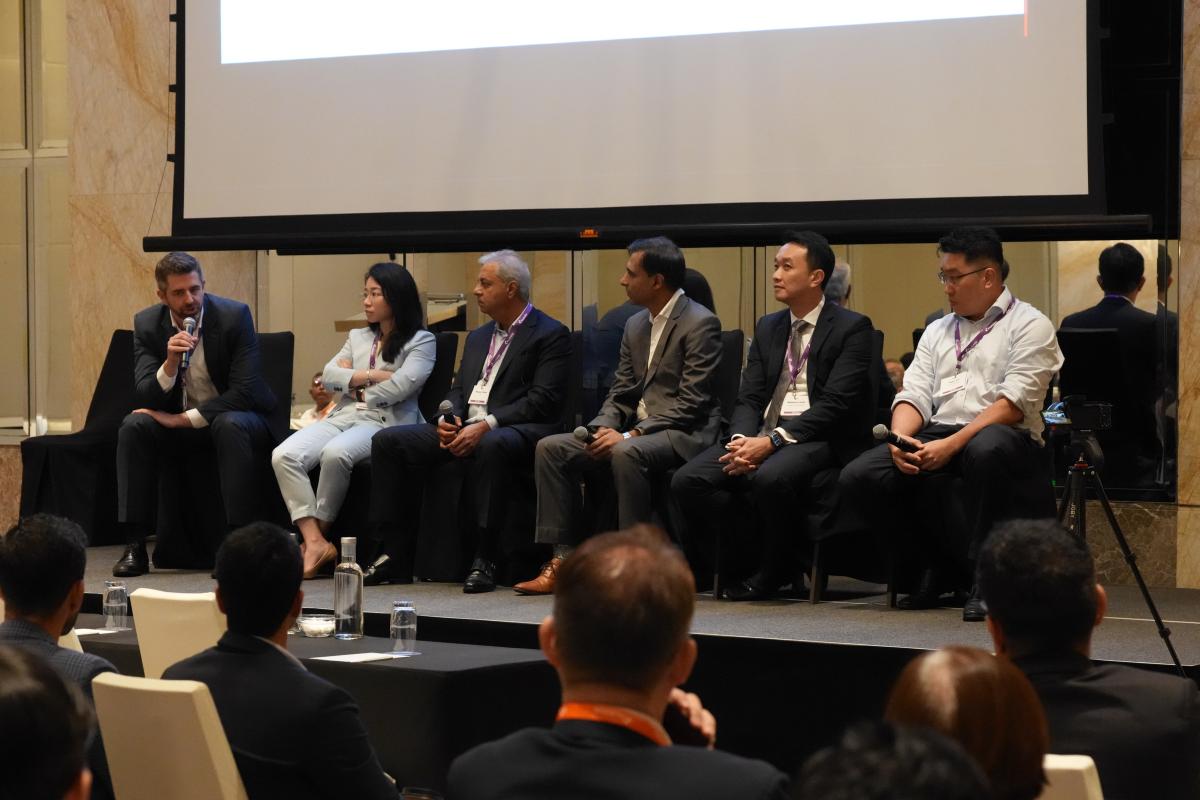
At the Hubbis Digital Wealth Forum in Singapore on 21 October 2026, the opening panel explored where artificial intelligence (AI) should sit in the wealth-management business model. The discussion brought together established private banks, digital wealth platforms and an online brokerage, revealing different approaches to the same change in client behaviour: investors increasingly arrive with research and portfolio analysis they have generated themselves.
There was no single preferred destination. Some firms want the adviser to remain the principal interface, supported by better information and faster analysis. Others start with a digital platform and introduce human judgement when a client needs it. Across those models, the practical questions were how to make advice more accessible, secure genuine adoption and control the information on which AI relies. A digital starting point did not remove the need for people, while a human-led proposition did not justify slow or fragmented service.
Chair: David Wilson, Managing Director, Banking Industry Lead, SEA, Wealth Industry Lead, Asia, Accenture
Panellists
- Amanda Ong, Singapore CEO & Global Partnerships, Arta Finance
- Nayeem Khan, Chief Operating Officer Asia, Pictet
- William Leow, Chief Operating Officer, Bordier & Cie Singapore
- Yujun Lin, CEO, Singapore, Interactive Brokers
- Ritesh Ganeriwal, Managing Director, Head of Investment and Advisory, Syfe
Key Takeaways
- AI adoption is changing what clients expect advisers to explain, particularly the context behind a portfolio decision and its relevance to their needs.
- Human-led and digital-led models can both use AI extensively. The distinction is where the client encounters the technology and when a person becomes involved.
- The need for human advice can depend on a particular decision or moment, rather than simply the client’s age or wealth segment.
- Wider investment access is giving way to a greater focus on guidance, portfolio-specific insight and faster responses to client questions.
- Adoption requires attention to working habits. An onboarding example showed how a familiar manual route within an AI tool helped hesitant advisers become comfortable using it.
- Traditional institutions need coherent data, platforms and controls, rather than a collection of disconnected AI pilots.
- Client-facing AI and adviser tools require defined information sources, appropriate limits and the ability to acknowledge when an answer is unavailable.
The Business Model Determines Where the Human Sits
The opening exchanges established that an AI-native heritage does not necessarily imply a fully automated client relationship. One participant described a hybrid model spanning direct investment services and agentic capabilities supplied to banks. AI was present from the start, but its use varied with the service being delivered.
The traditional private-banking perspective placed greater emphasis on improving what employees and clients can do, rather than replacing either group’s role. The priority was to establish the data, platform and controls before expanding the offering.
“We’re not in that race,” said a panellist of the pressure to launch an AI product first.
A digital wealth model approached the question from the other direction. The platform could help clients manage cash and invest over time, with advisers available when a decision called for judgement. That allowed human advice to reach clients who might not otherwise have had access to it, without requiring every interaction to pass through an adviser.
The brokerage perspective added a further distinction. Automation had long been central to the business, and AI was another way to make the service more efficient and useful. Self-directed clients and advisory firms using the platform did not necessarily want an AI proposition for its own sake. They wanted tools that helped them achieve an investment or servicing outcome.
Better Informed Clients Require Better Explanations
Clients’ use of consumer AI tools was already changing the advisory conversation. A private-banking participant described greater scrutiny of portfolios and a corresponding need for investment advisers to explain decisions in context.
That raises the quality threshold for a human-led service. An adviser needs to understand the client’s circumstances and offer more than information that is readily available elsewhere. The panel saw pressure from informed clients as one reason adoption had become necessary, even for firms committed to retaining a predominantly personal relationship.
Digital platforms were also encountering investors who had researched an idea before arriving. Their task was to meet that curiosity with a usable route from information to a decision, while helping clients understand their options.
For some investors, the question was basic: how to get started or make cash work harder. For others, it involved exploring an investment theme or understanding a change in their portfolio. A service designed only around a product recommendation would miss much of that demand.
The Moment Can Matter More Than the Demographic
The panel resisted treating digital comfort as a simple division between younger and older clients. Younger investors were described as more inclined to research through AI, but one platform’s direct clients were heavily drawn from technology and financial services and were comfortable with the tools across age groups.
Another participant argued that the point at which a client needs help is more useful than a fixed segment label. Questions about diversification, the balance between cash and equities or how to begin investing can require human judgement regardless of how the relationship started.
“We are digital first, but that does not mean there is no one home,” said a panellist.
The challenge was to make that support available at the relevant moment, while also helping clients become more confident using the platform independently.
The wealth-transfer discussion added a different nuance. A private-banking participant described clients who were comfortable experimenting with a portion of their wealth through technology while leaving the larger share in a traditional arrangement. Greater digital confidence did not necessarily mean moving the whole relationship to a new model. Firms could be serving different preferences within the same family’s wealth.
Investment Access Is Giving Way to More Useful Guidance
One digital wealth participant described a progression from broadening access to investments towards improving the advice and guidance around them. Fractional investing and easier access to asset classes had addressed an initial barrier. The next question was how quickly the platform could help clients identify and understand relevant opportunities.
A thematic stock search illustrated the change. In a traditional service chain, a client might ask a banker, who would consult an investment counsellor and then a product specialist before returning with a selection. A natural-language search could shorten that process by producing relevant investments and helping the client narrow the result.
The participant was careful to distinguish relevance from the final decision to trade. A list of securities matching a theme still has to be evaluated by the client. Speed alone does not establish that the result is the right investment.
Portfolio-specific market commentary provided a second example. Rather than waiting for a relationship manager to interpret a general morning note, the platform could relate market developments to positions the client actually held. This moved the service closer to the question an investor wanted answered: what did the market’s movement mean for my money?
Similar capabilities were discussed from the brokerage perspective, including portfolio and news summaries, investment themes and tools that help advisers explore a wider universe of investments. Across the examples, value came from making information more relevant and easier to use.
Adoption Can Require a Familiar Route Into a New Tool
The panel’s most detailed adoption example concerned an onboarding agent introduced at a long-established private bank. Younger advisers used it readily, but some older advisers were slower to change their working habits.
The bank responded by adding a manual flow inside the same interface. An adviser could open the tool and complete the onboarding form in the familiar way, with the agent available alongside that process. This allowed users to become accustomed to the environment before relying more fully on automation.
“They were not forcing it on the adviser,” said a participant. “They allowed them to kind of ease into it in their own time.”
The speaker reported more successful adoption after the alternative route was introduced. The lesson was specific: removing a familiar process too quickly can obstruct the use of a new capability, even where the technology itself works.
Another panellist argued that adoption was being underestimated across the industry. Launching tools is a different achievement from making them useful enough for employees to incorporate into daily work. The success measure therefore has to extend beyond whether a product has been released.
A Human Led Service Can Still Remove Several Layers of Delay
For traditional institutions, the panel cautioned against attaching AI solutions to fragmented systems without deciding what outcomes the architecture should support. A succession of pilots may create activity without producing a coherent service.
One private-banking participant described a deliberate effort to establish data and platform foundations, with the institution’s long-term ownership model giving it room to set its own pace. That did not mean waiting for every structural issue to be resolved before doing anything useful.
AI-based investment and portfolio analysis was already being made available to relationship managers. The chain between a client question and specialist analysis could be shortened while keeping a human responsible for interpreting and communicating the answer.
“It’s about enabling the human to respond faster, to respond better, and with more quality output,” said a panellist.
The same participant described a future extension to clients within a controlled mobile environment. The distinction between current adviser tools and the intended client-facing service was important. The goal was to let clients ask questions within the firm’s own context and safeguards, rather than simply exposing a general-purpose chatbot.
Controlled Sources and Clear Limits Matter More Than a Generic Interface
The enterprise perspective reinforced that concern. Supplying a generic language model to a private bank is not the same as designing an agent for a regulated activity.
A banker asking an investment question may need an answer grounded in the institution’s own chief investment office research or approved knowledge base. The system should not freely assemble an apparently authoritative response from unrelated material or invent a source when it cannot find one.
One participant emphasised that a tool must be able to say it does not know. Defined guardrails and evaluations were described as central to the difference between a specialised implementation and a generic model connected to an existing platform.
This brought the discussion back to the business-model choice. Firms can place AI directly in a client’s hands or use it through an adviser. Either approach needs a clear purpose, an interface people will use and controls suited to the decisions being supported. The strongest examples showed how those elements could work together: faster answers and broader access, with human judgement available where it remains valuable.












Leave a Reply