
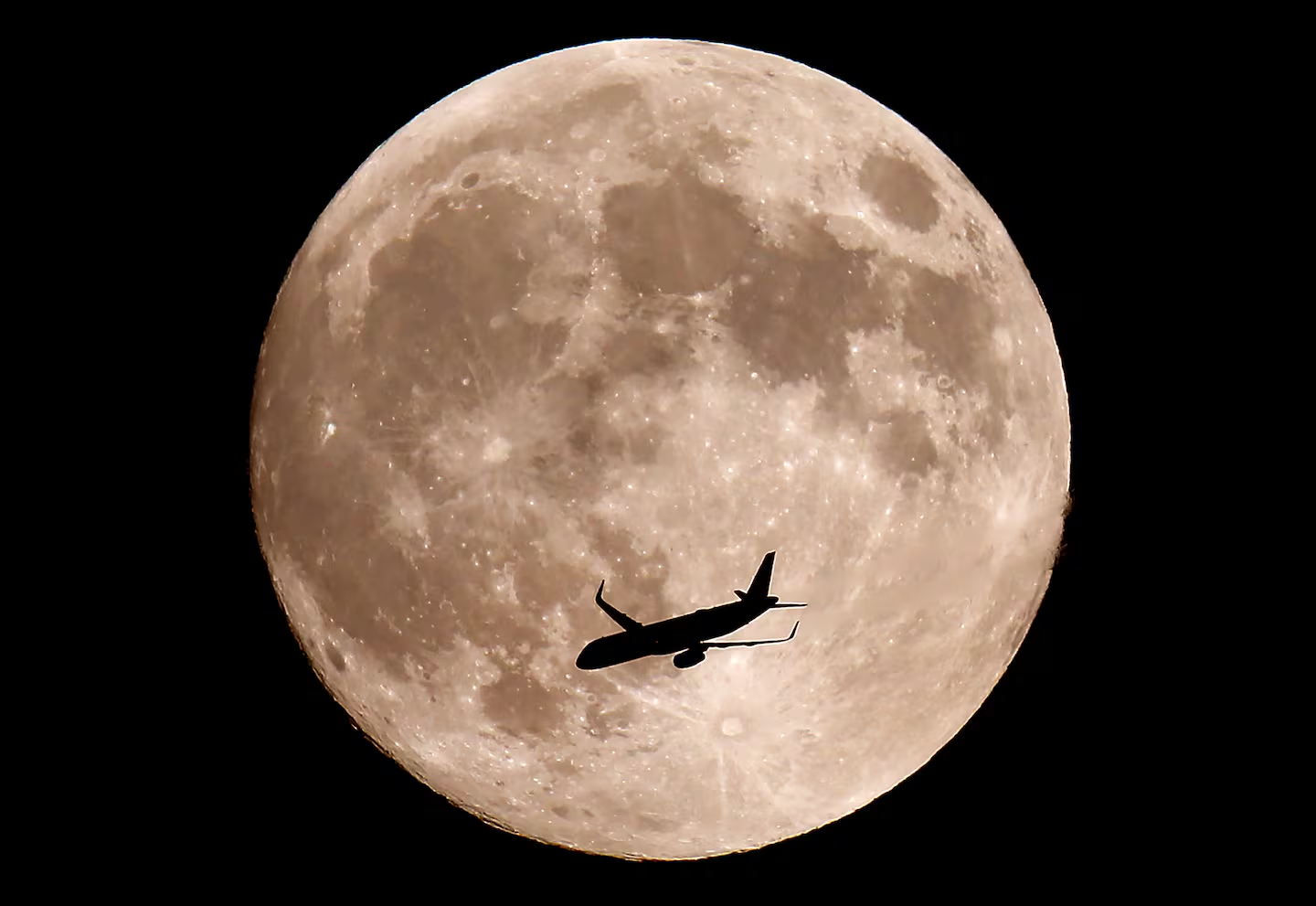
The Hunter’s Moon is set to grace the night sky on Sunday, when this month’s full moon reaches peak illumination just after midnight.
But you won’t have to wait that long. Some of the best viewing will arrive at sunset, around 5:45 p.m. in the Boston area, as the moon takes on an orange-reddish glow as it rises low, just above the horizon in the east.
With clear skies forecast across New England, this celestial treat combined with the lingering Orionid meteor showers should offer some spectacular views. Exact peak illumination is at 12:11 a.m., Monday. The Orionids, produced from the dust and debris shed by Halley’s Comet, peaked last week, but cloudy skies at the time blocked much of our view here in the Northeast.
Where does the name originate?
October’s full moon is traditionally known as the Hunter’s Moon to signal the shift from gathering crops (during September’s Harvest Moon) to catching game to stock up for the long winter.
“The bright Moon rising soon after sunset provided extra evening light, allowing hunters to track game longer into the night,” according to the Old Farmer’s Almanac. Also, the deer and other wildlife are easier to spot in the cleared fields and amid the bare trees.
Indigenous peoples of North America have called this moon Falling Leaves Moon, Freezing Moon, Migrating Moon, and Drying Rice Moon.

For those who will miss peak brightness tonight, the moon will still appear full through Tuesday as it enters its waning gibbous phase. Even though the moon is technically full tonight, there will be a negligible difference as it rises over the next couple of evenings.
Next full moons are supermoons
The next two full moons, the Beaver Moon and the Cold Moon, will offer an added special treat as back-to-back supermoons. That’s when a full moon is at or near its closest approach to Earth, called perigee, during its 27-day elliptical orbit.
According to NASA, a supermoon can appear about 30 percent brighter and up to 14 percent larger than the faintest moon of the year, when “it’s farthest from Earth in its orbit.” Supermoons only happen three to four times a year, and always appear consecutively.
We had one supermoon in January and our final ones for 2026 will appear Thanksgiving week, on Tuesday, Nov. 24, when the full Beaver Moon reaches peak illumination at 9:53 a.m. EST, and another one reaches peak fullness on Dec. 23 at 8:28 p.m. EST. The latter will be the closest and brightest supermoon of the year.
Sign up here for our daily Globe Weather Forecast that will arrive straight into your inbox bright and early each weekday morning.
Marianne Mizera can be reached at marianne.mizera@globe.com. Follow her @MareMizera.













Leave a Reply