
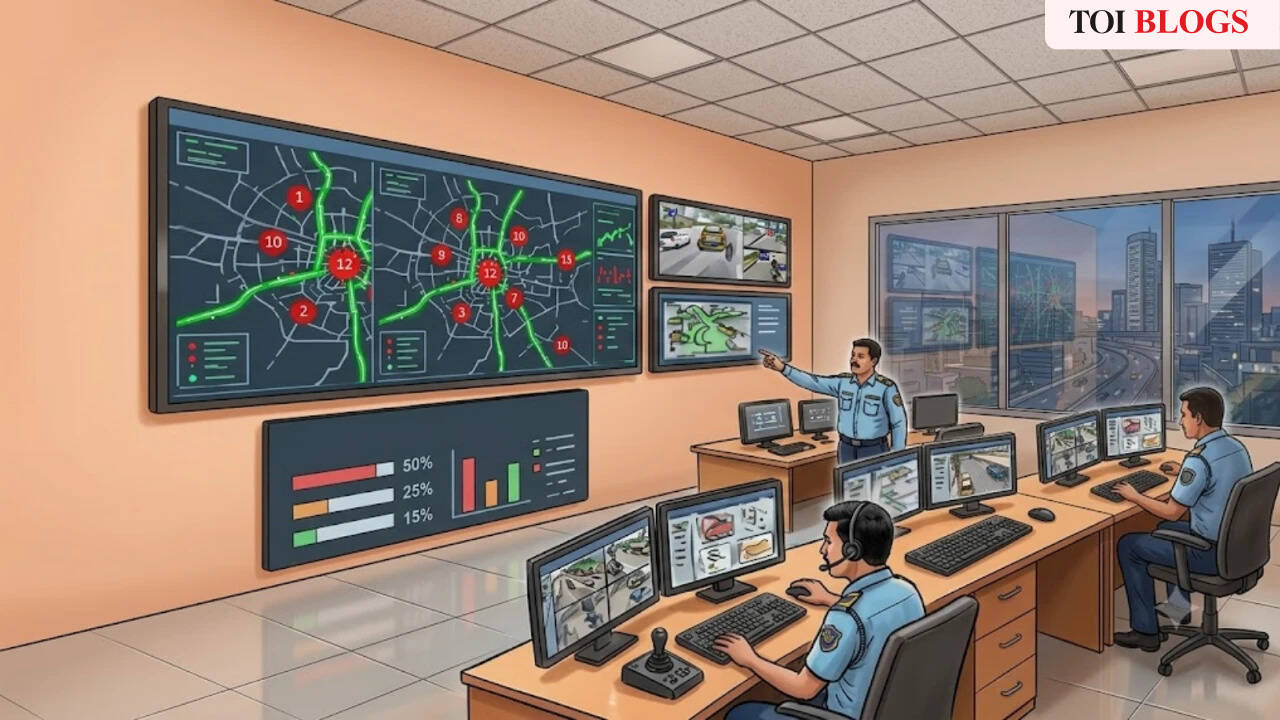
India lost 1.83 lakh people on its roads in 2025. AI can help halve that toll, and the tools already exist.On 22 October, a bus hit a roadside tree in Chhattisgarh’s Manendragarh district. Six people died. Outside that district, the news lasted an afternoon. With Diwali and Chhath near, crores of us will soon take the highways home. Not all of us will reach. Nowhere can AI save more Indian lives, faster, than on the road.In 2025, India recorded 5.13 lakh road accidents and 1,83,382 deaths. That is 21 lives an hour, one every three minutes. Japan lost 2,547 people on its roads in 2025. India loses that many in about five days. We promised to halve road deaths by 2030. We are moving the other way. Yet every death leaves data behind: a time, a place, a vehicle, a cause. Reading such data is what AI does best.National highways are 2 per cent of our road length but carried 36.6 per cent of road deaths in 2024. State highways, about 3 per cent, added 22 per cent more. Five per cent of our roads produce nearly sixty per cent of our funerals. An AI model reading crash records can tell a district which kilometre will kill next.Using AI tools built at IIT Kanpur, the government has mapped 6,358 black-spot corridors. After repairs and more speed cameras, deaths on national highways fell 4 per cent in 2025, the first fall since the pandemic. On all other roads, deaths rose nearly 8 per cent. That gap is the case for scaling up. Next come grey spots, where nobody has died yet: a truck that crosses two toll plazas too fast has already flagged itself through FASTag.I have seen these patterns up close in my various postings as District Collector. Danua Ghati on NH-2 in Hazaribag is a stretch every district officer learns to fear. At dawn in June 2019, a Patna-bound bus ploughed into a truck there; eleven people died. In Deoghar, a bus of kanwariyas met a gas-cylinder truck head-on at Jamunia Chowk before sunrise on 29 July 2025. Six devotees never finished their pilgrimage. Speed, heavy vehicles, the hours before dawn.Same pattern, every time. We tracked such patterns with registers and memory. Today every collector could get an AI dashboard each Monday ranking the district’s ten deadliest kilometres, open for citizens to see. But there is a part no dashboard shows: the compensation files on my desk, a widow’s thumb impression where a signature should be. I have signed too many of those files to call road safety a technology story. It is a story of grief, but technology now offers a way out.AI’s first job is inside the vehicle. Since July 2024, every new vehicle sold in the European Union must have intelligent speed assistance and a drowsiness alert. Brussels expects these rules to save over 25,000 lives by 2038. In Nagpur, iRASTE buses with driver-assistance systems had 41 per cent fewer accidents than the rest of the fleet. India’s 2025 draft vehicle rules propose norms for such systems. They need dates. Transport commissioners need not wait: cameras on state buses and gas trucks can catch a nodding head or a phone in hand. And since riding without a helmet killed over 54,000 Indians in 2024, two-wheelers cannot be left out. DTOs can do the same at the licence test: in Dehradun, an AI system marks the driving test, and only about half pass.AI’s second job is enforcement, with cameras that never blink. Section 136A of the Motor Vehicles Act and Rule 167A, in force since 2021, already require states to watch highways and big cities through cameras and number-plate readers. Yet in 2024 the Supreme Court found the law had stayed on paper for three years. French road deaths fell 48 per cent between 2000 and 2010; the government credited speed cameras with about three-quarters of the fall. From 2019, AI cameras in Australia’s New South Wales began catching drivers holding phones; offending fell from one driver in 82 to one in 497 within three years. Closer home, after Kerala switched on 722 AI cameras in 2023, its road deaths fell from 4,084 to 3,733 by 2025. The rule must stay simple: AI flags, a human decides, and the cameras watch traffic, not citizens.But a camera is only as good as the challan that follows. India has issued e-challans worth Rs 49,194 crore and recovered only Rs 26,175 crore, the Supreme Court was told last month. Kerala alone has over one crore challans pending, at about Rs 900 each. An unpaid fine teaches contempt. This is where AI does the dull, decisive work: tie every unpaid challan to the vehicle’s insurance, fitness and registration, with no checkpost and no negotiation. Drivers obey rules they believe are blind.AI’s third job is the golden hour after a crash. Since May 2025, every road accident victim is entitled to cashless treatment of up to Rs 1.5 lakh for seven days. But a scheme moves only as fast as the ambulance. New car models in the European Union must carry eCall, which dials 112 by itself after a serious crash. India already requires trackers and panic buttons in public service vehicles. Wire them to an AI dispatch desk that picks the nearest ambulance, and a crash on Danua Ghati at 3 am need not wait for a passer-by.None of this needs a new law. It needs clear deadlines for driver-assistance systems in new vehicles, cameras in state buses, challans linked to the Vahan record, a weekly AI map for every district, and one 112 screen for all panic buttons and crash alerts. Most of it needs only a tender and regular follow-up.AI will not drive the bus for us. It will tell us, early and honestly, where we are failing. Japan has cut its road toll by 85 per cent since 1970. Nobody there calls it fate. This Diwali, the best gift the machine age can give an Indian family is simple: everyone reaches home.
Disclaimer: Views expressed above are the author’s own.








Leave a Reply