
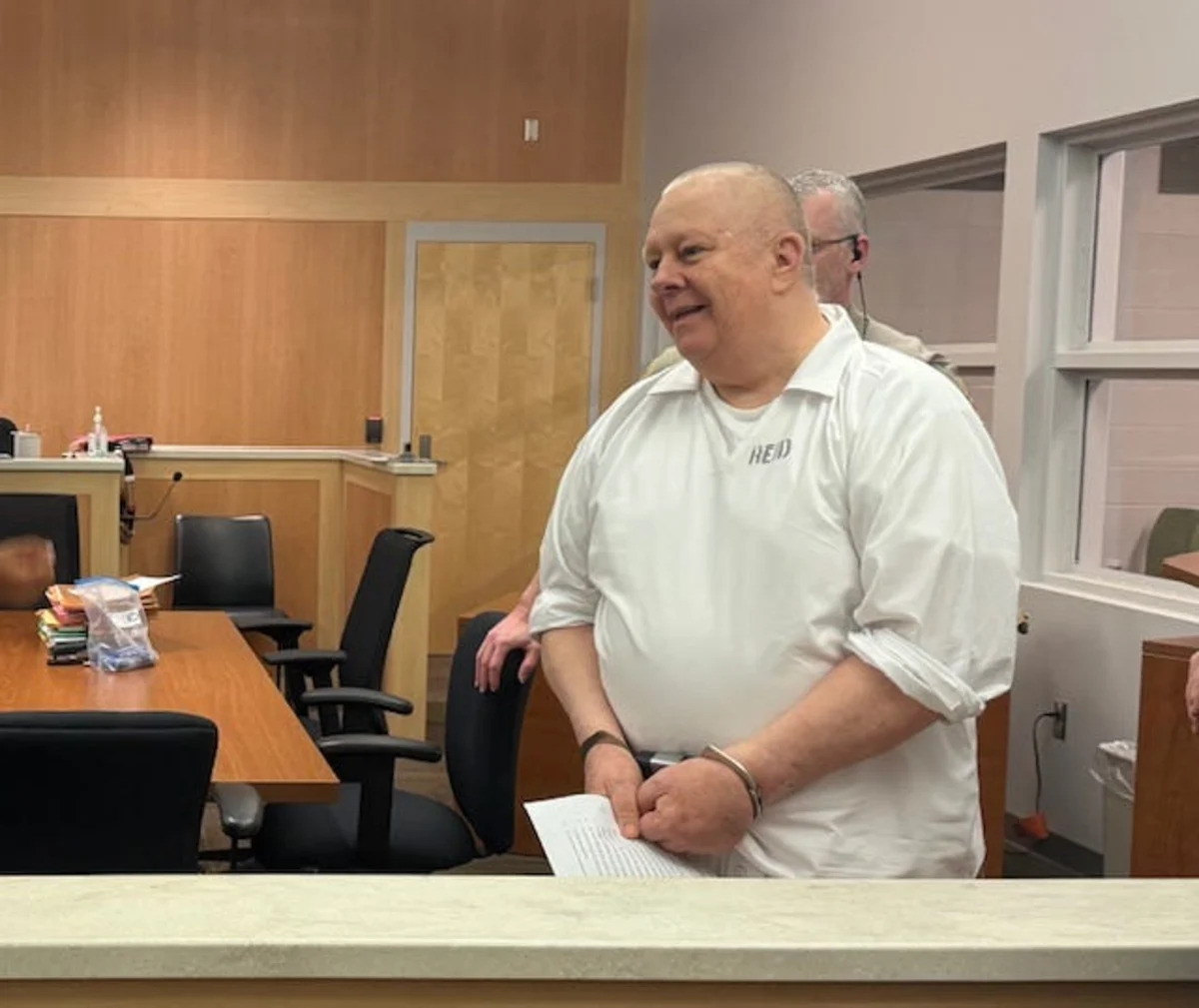
An Arkansas death row inmate agreed to a deal that replaces his death sentence with life in prison, according to the anti-death penalty group Execution Intervention Project.
Eric Reid, 66, agreed to the deal in Garland County Circuit Court in Hot Springs, Arkansas, on Oct. 26, according to a news release. He was sentenced to death in 2018 for the 2015 shooting deaths of his wife and daughter.
His attorney, Lee Short, told USA TODAY that the deal came after new evidence was presented to the Garland County Prosecuting Attorney’s office.
“Eric Reid is not the worst of the worst. As it turns out, he is far from it,” Short said. “The death penalty is a deeply flawed process, and credit is due to the Garland County Prosecuting Attorney’s office for righting this wrong.”

A handout image of Arkansas inmate Eric Reid in court.
Rev. Jeff Hood, Reid’s spiritual advisor and anti-death penalty activist, told USA TODAY in an interview that the plea deal allows the state to punish a murderer but “move past murder,” referring to the death penalty.
“Arkansas has created this space for Eric to be a part of building a future to all who have been affected by this, instead of continuing along a path of destruction that would include executing him,” Hood said.
USA TODAY reached out to the Arkansas Attorney General and the Garland County Prosecuting Attorney’s office for comment.
Reid was one of 23 men on Arkansas death row, according to the state’s Department of Corrections. The state has not carried out an execution since April 2017, when then-Gov. Asa Hutchinson ordered eight executions over an 11-day period in April 2017, according to the Death Penalty Information Center.
Veteran faces execution for cop killing. Was it PTSD or murder?
Eric Reid case
On October 19, 2015, Reid got into an argument with his daughter, Mary Ann Reid, at his home over the way she parented her son, according to the court records. Following the argument, Reid retrieved a pistol from his bedroom and shot his wife, Laura Reid, three times.
He also shot at Mary Ann Reid several times, according to court records. Following the shooting, Eric Reid walked to the driveway of the home and waited for police.
His lawyers argued that Reid committed the killings under extreme emotional disturbance, according to court records. On appeal, Reid’s legal team challenged the jury selection and argued that evidence was improperly allowed into the record.
The Arkansas Supreme Court denied Reid’s appeal in December 2019 and his request for a rehearing in January 2020. The U.S. Supreme Court declined to hear his case in October 2020.
Deal comes amidst death penalty scrutiny
Reid’s deal comes as the death penalty faces renewed scrutiny in the wake of the failed execution of Christa Pike in Tennessee and the upcoming firing squad execution of Nidal Hasan.
Hood said that the new attention on the controversial punishment did not factor into Reid’s decision to take the deal.
Reid was initially resistant to taking the deal, according to Hood, who attributed Reid’s reluctance to “Stockholm syndrome” stemming from conditions at Varner Supermax Prison, where Arkansas’ death row is housed.
“Our corrections system takes these folk’s brains, it takes their spirits, it takes their ability to think,” Hood said.
Hood, who has served as a spiritual adviser to 14 people who were later executed, said stories of former inmates who turned down deals helped sway Reid.
“I had to spring his mind from death row in order to convince him to spring himself from death row,” Hood said. He noted that while there is no “closure” in capital cases, the deal allows for “healing.”
“Eric ultimately realized that this was a way that he could be a part of putting things back together,” Hood added.
This article originally appeared on USA TODAY: Arkansas death row inmate who killed wife, daughter to serve life in prison










Leave a Reply