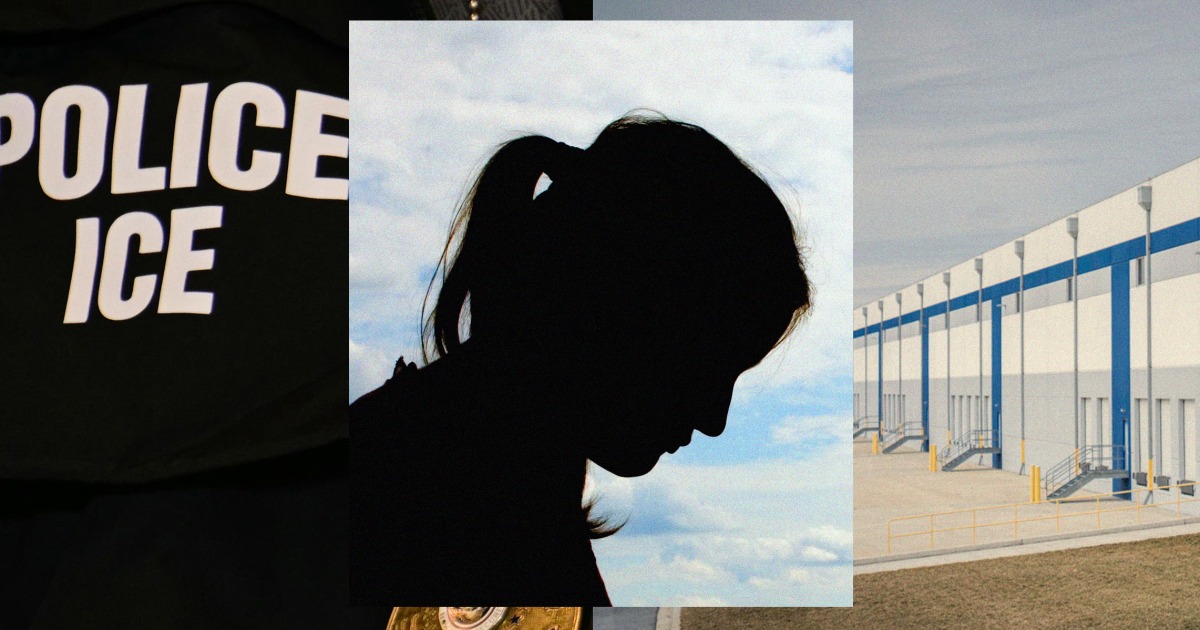
They were offered a path to a green card reserved for young immigrants who experienced abuse or abandonment in their countries of origin. Then the Trump administration detained and deported them.
From Jan. 20 to Dec. 22 of last year, ICE detained 265 and deported 132 young people with Special Immigrant Juvenile Status (SIJS), according to a letter the Department of Homeland Security sent to Sen. Catherine Cortez Masto, D-Nev., obtained exclusively by NBC News.
“They are tearing them away from the stability that they’re in, the lives that they’re building on their pathway to permanent protection,” said Rachel Davidson, the director of the End SIJS Backlog Coalition, part of the National Immigration Project.
Congress created the SIJS pathway to legal residency in 1990 to protect immigrant minors who have been victims of abuse, abandonment or neglect in their countries and give them a way to remain in the U.S. and obtain green cards. They must be under 21 when they petition for the status.
Because of a backlog of green card applications, since 2022, the youths were also typically protected by a policy for immigrants with SIJS known as deferred action. That shielded them from deportation and allowed them to work legally in the U.S. as they waited in a visa backlog to be able to apply for green cards. In June, the Trump administration ended deferred action for SIJS recipients, but that policy is on hold as it makes its way through a court case.
U.S. Citizenship and Immigration Services said in June that Congress “did not expressly permit deferred action and related employment authorization” for SIJS recipients. It also said the lack of immediately available visas, owing in part to a backlog, and juvenile courts’ saying the youths should remain were not “sufficiently compelling reasons” to allow them to stay under deferred action.
Cortez Masto told NBC News: “We have specifically identified them because they are fleeing their countries in horrific conditions. We do not want them to be further harmed or exploited in our country, so we have created specific provisions under the law so that we are looking out for their best interest.”
Emma Israel, senior policy analyst at Kids in Need of Defense, a nongovernmental organization advocating for unaccompanied and separated children, said the figures DHS shared were “much higher than we expected.”
DHS said the 132 who were deported were accused of immigration violations such as being in the country without admission or not having visas. Federal data did not disclose whether any had faced criminal charges or convictions.
In one case, attorneys are fighting for the return of a 16-year-old who was deported to Guatemala in May despite having been granted special immigrant juvenile status in July 2024.
Elias came to the U.S. alone at 14 in 2023 after having suffered “severe physical and emotional abuse and neglect at the hands of his mother,” according to court documents petitioning for his return to the U.S. He was released from immigration custody and sent to live with his father and other relatives in Louisiana.
“The physical abuse that he suffered was so severe that he was admitted to the hospital for his injuries,” the complaint said. “The neglect he faced was constant: Elias was often left alone for days or even weeks at a time without access to food. Although other family members tried to help as best as they could, Elias lived in fear of his mother and her partner, and his home became a place of anxiety and danger.”
Last April, USCIS terminated Elias’ deferred action “without providing any advance notice or an opportunity to respond, and without any explanation,” the complaint said.
The next month, his father was briefly detained by ICE and told to return to Guatemala in May with his children.
“In the early hours of May 21, 2025, ICE agents deported Elias to Guatemala, without any removal order, after holding him in a hotel room in Alexandria, Louisiana for roughly 12 hours,” the National Immigration Project, a membership organization of attorneys, advocates and community members supporting noncitizens, wrote in a statement announcing a lawsuit in November. “They did not allow Elias contact with his attorney. ICE’s actions were a flagrant violation of federal law and Elias’ constitutional rights.”
Elias’ lawsuit is still ongoing, while other youths remain in ICE detention.
Cortez Masto led a group of lawmakers in June who called on DHS to disclose how many youths with SIJS have been detained or deported or had lost their deferred action.
In July, the National Immigration Project and other groups filed a lawsuit on behalf of SIJS recipients challenging President Donald Trump’s decision to terminate deferred action. In November, a judge ordered the government to pause the termination as the case continues.
S. Ellie Norton, senior staff attorney at the National Immigration Project, said that despite the court ruling, her organization has seen a “very disturbing pattern of ICE detaining young people with no criminal histories, then terminating their deferred action with no notice, no explanation at all and no opportunity to respond.”
According to the letter DHS sent to Cortez Masto, DHS terminated deferred action for 990 immigrants with SIJS from Jan. 20 to Dec. 30 of last year. It said “most of these terminations involved cases with derogatory information (including criminal convictions).” The data showed that from May 6, 2022, until last year, 315 people lst their deferred action status.
Norton estimated that more than 150,000 young people with SIJS are waiting to get their green cards.
The letter showed that, of the immigrants who were booked into ICE custody last year, only one was listed as having a “conviction or commission of a crime involving moral turpitude,” a term for crimes that can make a noncitizen deportable or barred from relief. Such crimes include driving under the influence, fraud, theft or violent crimes.
Those deported before they were able to apply for green cards would lose their eligibility to become legal permanent residents, attorneys and advocates say.
More on immigration issues
For youths to gain special immigrant visa status, state courts must find they cannot live with both or one of their parents because of the established abuse and that it is in the best interest of the children not to return to their home countries. Then an immigration court must grant petitions for SIJS.
Last week, a 20-year-old from Ecuador, identified in court documents as JMS, was arrested by ICE and detained despite having SIJS, deferred action and no open deportation case against him, according to a petition seeking his release.
JMS came to the U.S. in 2022 and was found to have been abandoned by his mother, according to the petition. He was granted SIJS status in January 2025. When his SIJS and deferred action were approved, the immigration judge terminated the removal proceedings against him, according to the documents.
“Despite all this, JMS is now locked in a jail cell. He does not understand why he has been detained when he has all his paperwork in order and has deferred action, which is supposed to protect him,” according to court documents.
Protections from deportation for those young immigrants were dealt another blow last week. The Board of Immigration Appeals, a Justice Department agency, ruled against an SIJS recipient who was seeking to reschedule or postpone deportation proceedings because of the potentially lengthy backlog for the immigrant to obtain a green card.
Norton and Davidson said the court’s decision means that inevitably more and more SIJS recipients will be ordered removed, many before they are ever able to apply for green cards.
As attorneys fight the ongoing detentions in court, some SIJS recipients have been released.
In a scathing order this month, a federal judge in New York found that the detention, arrest and termination of deferred action of a 24-year-old SIJS recipient from Honduras were unlawful.
The order said Hesler Asaf Garcia Lanza had graduated from college with honors and was working in theatrical lighting design when, in January, ICE arrested him “simply because he looked like someone else for whom the agents were purportedly searching.”
Despite the mistaken arrest, Garcia Lanza remained detained until a court ordered his release, U.S. District Judge Gary Brown wrote.
“Then, DHS proceeded to revoke the deferred action and work authorization associated with his SIJ status—a reprehensible act of unimaginable cruelty,” he wrote.
DHS also imposed additional conditions upon him, in addition to a “hefty fine,” according to Brown.
According to the court order, Garcia Lanza said: “Since I was detained, I have been afraid to leave my house. Every time I walk to the train to go to work, I get an immense amount of anxiety. It terrifies me to know that ICE agents can take me at any moment again. Once I arrived in the United States as a young boy, I thought my days of living in fear were over. It saddens me to realize they are not.”
Brown wrote in his order that “this isn’t how things are supposed to work in America.”
“Unquestionably, the laws of human decency condemn such villainy,” he wrote.