Updated February 2026 to reflect new testing, product availability and expert insight.
How much thought do you put into your shower water? Barely any? I was with you until I spoke to experts. Shower water often has impurities like chlorine, heavy metals and sediments, which can irritate sensitive skin, make dry hair worse and even clog plumbing fixtures over time, says Doug Anderson, vice president of global engineering, research and development for Culligan. Filtered showerheads are a solution. They have built-in filtration systems that purify water before it hits your body, so you’re rinsing off with the cleanest H20 possible.
The NBC Select team has tested filtered showerheads for over two years, and we’re constantly trying new models. Below, I share our experience installing and using eight shower filters from popular brands like Jolie, Canopy, Act+Acre and Afina. I also spoke with experts about the benefits of using a filtered showerhead and their tips on how to find the right one for your home.
Want more from NBC Select? Sign up for our newsletter, The Selection, and shop smarter.
How I picked the best filtered showerheads
Experts recommend considering the following factors when shopping for filtered showerheads, all of which I took into consideration while testing and curating our list of favorites.
- Filter type: This dictates what impurities the showerhead removes. Activated carbon, KDF-55 and calcium sulfate are some of the most common filter types in showerheads — they remove chlorine, heavy metals and other minerals from water that can impact your skin and hair. Brands often add different filters to their fixtures to offer maximum purification. (Read more about each type here).
- Certified claims: The filtered showerhead you buy should have performance claims backed by evidence, preferably via third-party testing data, says Anderson. This information may be available on brand websites, or you can reach out to the brand and ask for a copy. There are no federal regulations around residential water filters, but there are voluntary standards (set by organizations like public health nonprofits) that brands can test their products against. Anderson recommends buying from a brand that tests filtered showerheads against the National Sanitation Foundation’s NSF 177 standard, certifying models that reduce chlorine in water. (Chlorine can cause dry skin and hair damage, according to experts.)
- Flow rate: Flow rate, measured in gallons per minute (gpm), refers to the amount of water that comes out of a fixture (like a showerhead) during a specific time. In the U.S., showerheads can’t exceed a flow rate of 2.5 gpm, according to federal standards created to conserve natural resources like water. To further conserve water, some states require a lower maximum flow rate, which means you may need a flow restrictor device to reduce the water stream. (Learn more about flow rate and your state’s regulations here.)
- Shower compatibility: According to experts I talked to, most filtered showerheads are designed to work with all standard U.S. showers. Many also come with a mini wrench and plumber’s tape for installation.
- Spray settings: Some showerheads have different spray settings — some only offer one; common options include mist, rain or dual. Think about your personal preferences and those of anyone you live with.
- Replacement filters: You’ll have to replace the filter every few months, depending on what the brand recommends. Consider the cost of replacements and how easy they are to buy. Some brands have subscription services that send you a new filter when it’s almost time to replace yours.
- Finish: Filtered showerheads often come in different finishes and colors, letting you pick one that matches the hardware in your bathroom.
How we tested filtered showerheads
The NBC Select staff and I have been testing filtered showerheads since July 2023. Each of the brands on this list sent us models to try, which we installed ourselves in our bathrooms. In New York, showerheads legally can’t exceed a 1.8 gpm flow rate, so for some of the models we tested, we had to install flow restrictors.
We tested each showerhead for at least a month while taking note of how easy a model was to install, whether it impacted water pressure, how it worked and any changes we noticed in our skin or hair.
The best filtered showerheads of 2026
All the showerheads below came with one pre-installed filter, as well as necessary installation tools like a wrench and plumbers tape. (To continue using them beyond the initial trial period, we had to buy replacement filters.) They’re all tested to meet NSF-177 standards, according to the brands’ websites, and each one was easily adjustable, so we could point the water stream in any direction.
Best overall
Jolie’s filtered showerhead is the first model I installed, a process I found easy and stress-free thanks to the included step-by-step guide. I love that it looks like a typical showerhead, so it blends into my space.
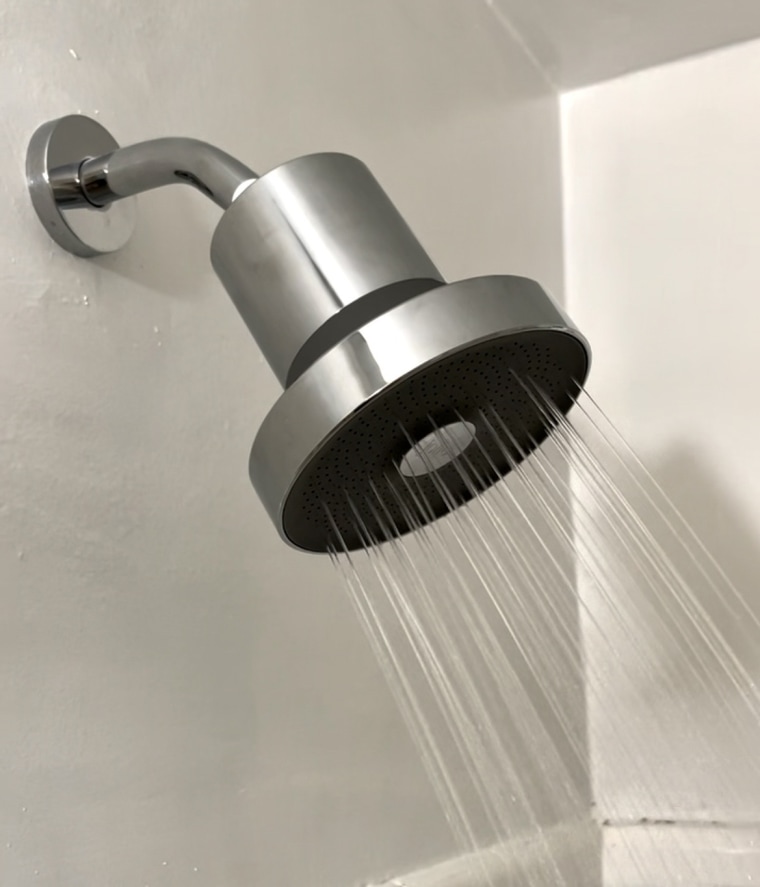
After testing four filtered showerheads, Jolie’s model is the one I returned to and continue to use now. Over the past two years, I’ve noticed that my skin is less dry and my hair is softer. In fact, my hairdresser says my curls have never looked or felt healthier, which she credits to my filtered showerhead. I also appreciate how easy Jolie makes managing my filter subscription online, and that it lets me skip or delay a filter delivery if I want to. For example, if I’m away for a while and don’t use my showerhead, I might want to push back the next time I swap it out.
Although the spray only has one setting, the stream of the showerhead is still wide enough to cover my whole body while standing underneath it. The first time I replaced the filter, I found twisting the fixture’s head off its base challenging, but it got much easier with practice.
Best overall handheld
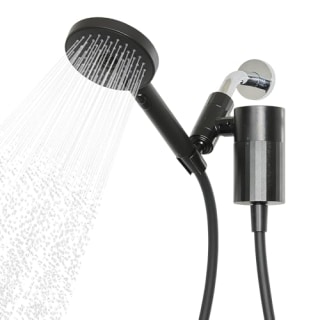
Sproos’ handheld filtered showerhead has three spray settings (full coverage, gentle rainfall and jet), a pause button and a 70-inch hose. In comparison, the other handheld fixture we recommend only has one spray mode, no pause button and a 60-inch hose. There’s also a pivot at the top of the showerhead’s bracket, which lets you turn it in any direction. And out of all the models we tested, Sproos’ comes in the most finish options — there’s eight to choose from, including neutral options like silver, gold and black, and bright colors like yellow, blue and red.
NBC Select editorial operations associate Jem Alabi says installation took her less than 10 minutes, and she never felt confused throughout the process due to clear directions the brand provides, both via a video presentation online and written instructions. The fixture’s filter is mounted to its side, rather than inside the showerheadhead itself, so you simply screw off the old filter and add a new one when it’s time.
“Since using this shower filter, I can confidently say that my skin and hair are softer, shinier and healthier, plus I’ve experienced far less breakouts and my hairline is thicker than before,” says Alabi. “As someone who struggles with keratosis pilaris, I’ve noticed the follicles on my arms, legs and knees have reduced in size. Additionally, my skin is much less dry this winter season, my nails have gotten stronger and ultimately, my shower experience has been truly elevated.”
Best handheld attachment
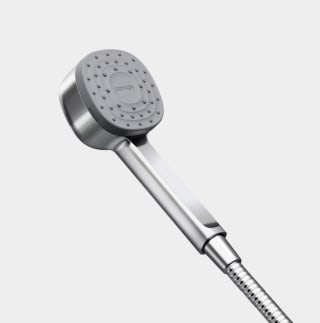
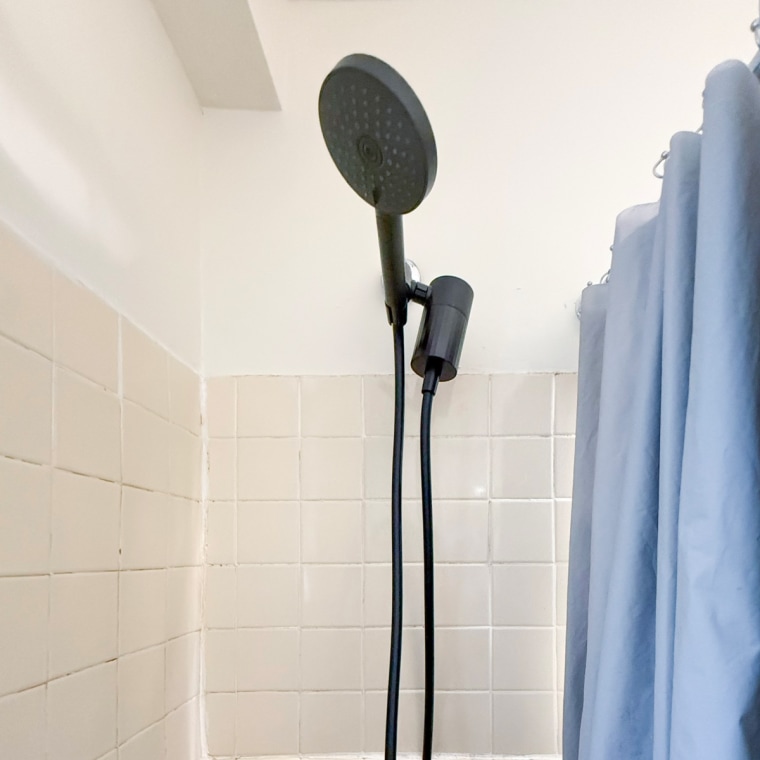
You can only use Sproos’ handheld filtered showerhead as your main fixture, so you attach it directly to the pipe built-in to your wall, like all the other options on this list. Canopy’s handheld filtered showerhead gives you more options: You can install it as your main fixture or as a secondary attachment for your current showerhead. To do the latter, which NBC Select editorial projects manager Rebecca Rodriguez opted for, you’ll also need to buy Canopy’s accessories kit, which comes with a diverter and mount.

Rodriguez says the installation process took less than 20 minutes, and that changing the showerhead’s filter is very easy. “Since it’s handheld, I don’t have to reach up or stand on the edges of my tub ,” she says.
Rodriguez has used the fixture for over a year, and appreciates the convenience, control and flexibility it gives her. She can remove the handle from its base to bring the waterstream closer to her body, giving her the ability to target specific areas. The handheld showerhead is also useful for cleaning kids, pets and your shower. “The handheld ability makes my shower experience so much smoother,” says Rodriguez. “It not only upgrades my overall shower experience, but also makes cleaning my shower and tub a million times easier.”
This showerhead comes with a scalp massager attachment, a mount and a 5-foot, 7-inch hose. It’s also American Disabilities Act-compliant, according to the brand.
Most spray settings
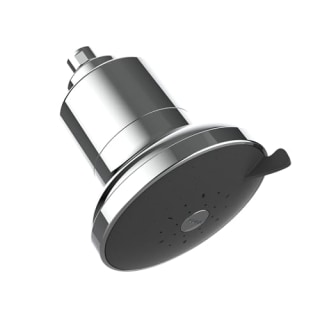
AquaTrue’s filtered showerhead has the most spray settings out of the options we tested: regular, massage, mist and high pressure. You can seamlessly switch among settings using a sliding notch on the bottom of the fixture. Since each person who uses the shower can choose the setting they like best, it’s great for multiperson households, says NBC photo editor Kara Birnbaum, who lives with her boyfriend. She also likes to change the spray setting to something gentler when she’s applying a hair treatment versus something stronger when she’s washing away shampoo.
Birnbaum installed the filtered showerhead in minutes, and from day one, it’s been a positive experience. “Living in a New York City apartment often means coming to terms with having a super old shower head — since we’ve moved in, our fixture’s nozzles have been clogged or just not working completely,” she says. “Ever since installing the AquaTru, we’ve had even water distribution and it helped increase our water pressure.”
Easiest filter replacements
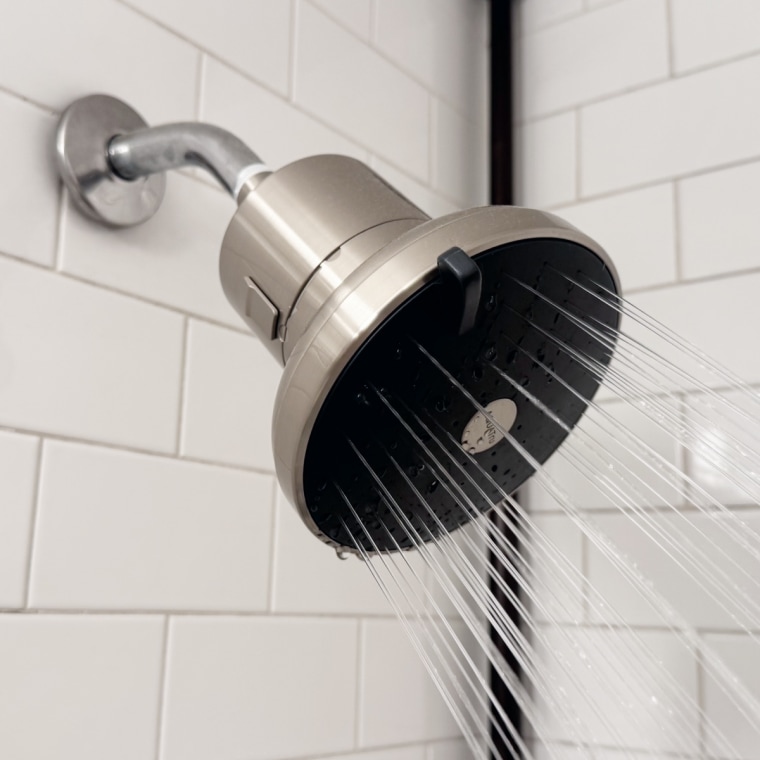
Changing this showerhead’s filter was quicker and easier for me than with all other models since there’s no twisting or turning involved. You just press up on the sides of the front panel to remove it, pop out the old filter, add a new one and slide the front panel back into place.
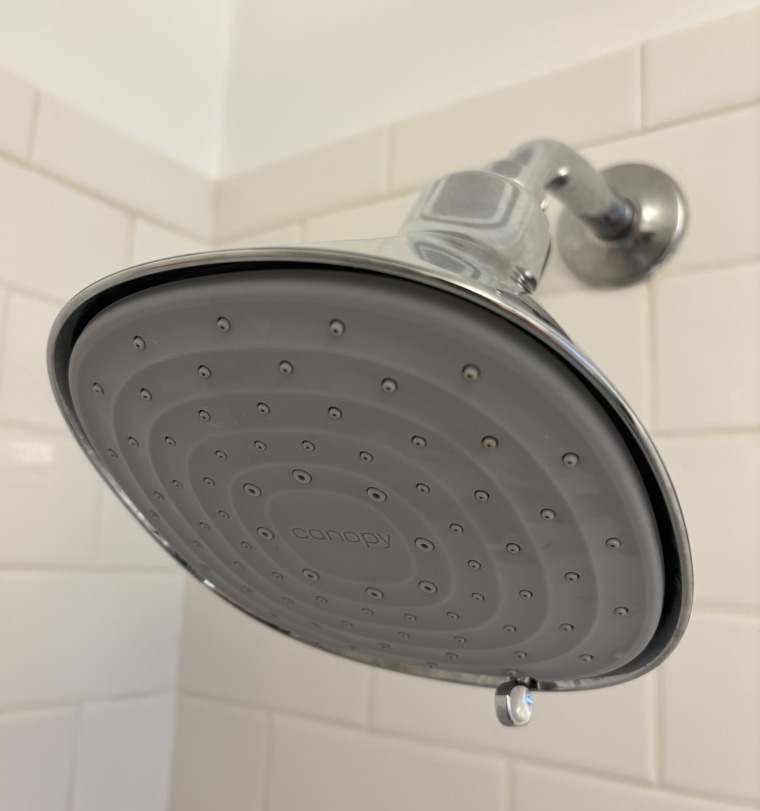
Canopy’s filtered showerhead has three spray settings, wide, narrow and dual, which you can switch between using a sliding notch on the bottom of the fixture. When shopping directly from the brand’s website, you have three buying options: the fixture; the showerhead and a filter subscription; or the showerhead, a filter subscription and an aroma subscription. The aroma subscription comes with essential oils and hook-shaped felt diffusers to hang on the showerhead. I tried the aroma subscription and, while I liked adding fragrance to my showers, I don’t reach for it often enough to need repeated refills.
Longest filter lifespan
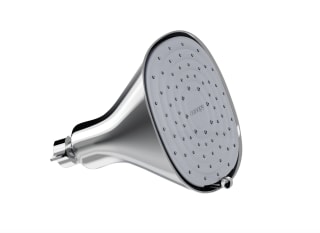
Out of all the showerheads we tested, Hydroviv’s has the longest filter lifespan at six months — in comparison, most others are about 90 days. Former NBC Select senior commerce editor Lindsay Schneider says being able to “set and forget” the filter motivated her to install the showerhead. “I didn’t want to be changing the filter all the time, even though installation is easy,” she says. “I’ll just come back to this showerhead in six months, which is nothing.”
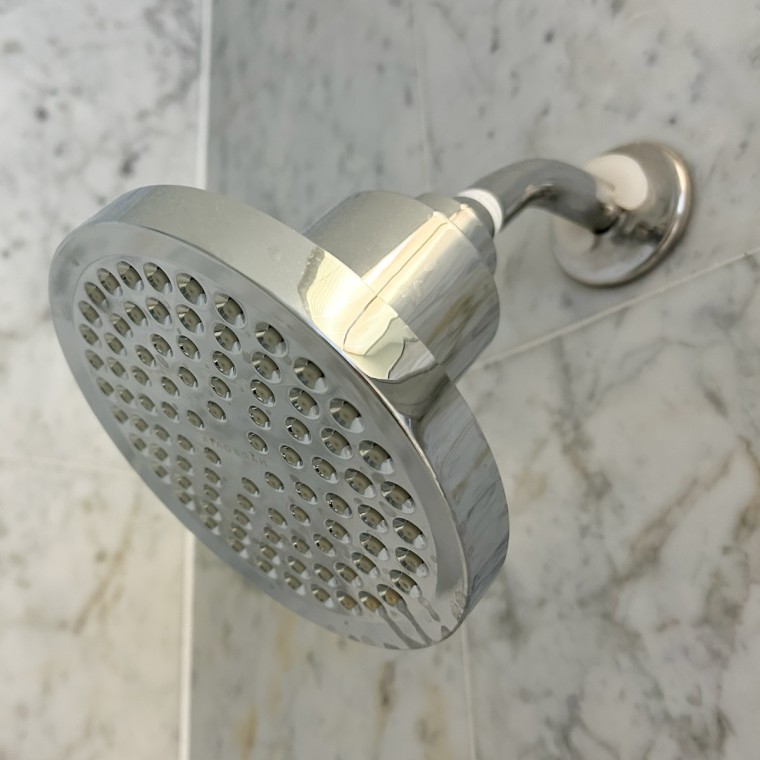
According to Hydroviv, this fixture removes over 93% of chlorine in water and takes about five minutes to install. Schneider attached it to her bathroom’s pipe without stress or difficulty since the included instructions were straightforward.
After using Hydroviv’s filtered showerhead for about three months, Schneider says she noticed a difference in how her hair feels. “My hair is genuinely softer, and the appliance looks nice in my bathroom, too,” she says. While the fixture shouldn’t impact water pressure, according to the brand, Schneider says hers is a bit lighter since installation.
Other filtered showerheads we tested and recommend
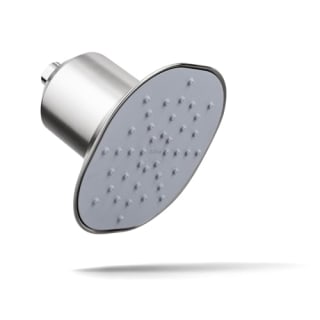
Afina’s filtered showerhead has a very basic, simple design. It only has one spray setting, but thanks to its square face, the water stream was wide enough to fully cover me.
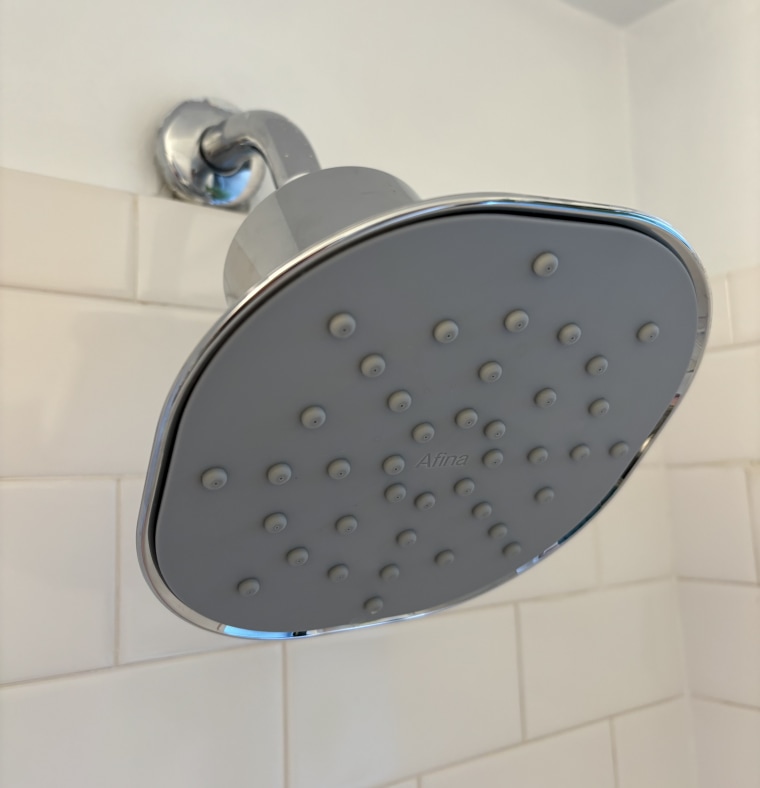
Overall, installing the Afina was straightforward. However, the included directions didn’t have specific instructions for adding a flow restrictor, and I didn’t find it on the brand’s website either. Because I had installed a few other models already, I knew enough about adding a flow restrictor that I eventually figured it out. But if I’d been new to the process, I would have been confused.
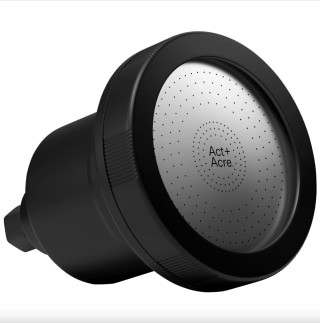
Act+Acre is one of our favorite women-owned businesses, and because I’ve had a great experience using the brand’s hair care products, I wasn’t surprised that its filtered showerhead is designed well. It has a circular face and is quite compact in size, which you may appreciate if you have a small shower.
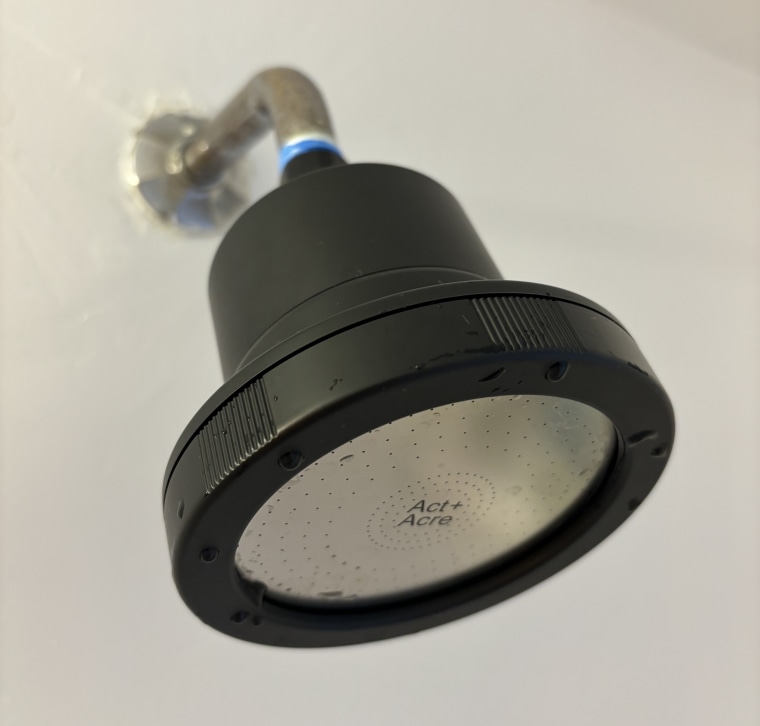
Installing Act+Acre’s showerhead took me less than five minutes. If you subscribe to Act+Acre’s filter subscription program, you get your first replacement filter for 40% off, making it $19.20. But all subsequent filter replacements are 20% off via the subscription, making them $25.60 . (If you don’t opt for the subscription service, each filter replacement is $32.)
Frequently asked questions
There’s no standard or overall “best” filter, and each type removes something different from your water. Brands often include multiple filters in a showerhead to offer maximum purification.
Below, I listed some of the common filters you’ll see when shopping and what each one does, according to experts:
- KDF-55 filters (aka kinetic degradation fluxion filters) reduce heavy metals and chlorine in water. Heavy metals can cause scale buildup (crusty mineral deposits) in your shower or tub, while chlorine can lead to dry skin and hair damage, says Anderson. Municipalities often add small amounts of chlorine or chloramine to water to kill germs, disinfecting it so it’s safe to drink, according to the Centers for Disease Control and Prevention. KDF-55 filters, among other types, then reduce the presence of that chlorine and chloramine in water before it touches your body. This can make for more hydrated skin and healthier hair over time, he says.
- Activated carbon filters reduce odors and chlorine in water.
- Ceramic filters reduce dirt, debris and bacteria in water.
- Calcium sulfite filters reduce chloramine and chlorine in water.
- Vitamin C (ascorbic acid) filters reduce chloramine and chlorine in water.
Before purchasing a filtered showerhead, the experts I talked to recommend getting your water tested. Doing so tells you the exact impurities present in it and at what levels. Get your water tested by an EPA-registered lab if you can, although you can also buy at-home water test kits. Still, keep in mind that at-home kits can’t give you in-depth information and tend to be much less accurate than lab results, plus they’re prone to user error, says Anderson.
Flow rate is the amount of water that comes out of a fixture (like a showerhead) during a certain period of time. States have different regulations on maximum flow rates for water conservation purposes. That said, not all showerheads are compatible with every state’s regulations, which means you may have to install a flow restrictor before using one. A flow restrictor limits how much water that can pass through a fixture per minute so it meets the regulatory standards in your state, says Deon Marecheau, a Thumbtack Pro and the owner of Antillean Restoration in Pennsylvania.
Here are the key rates to know:
- 2.5 gpm: Showerheads in the U.S. cannot exceed a flow rate of 2.5 gpm, which is a limit set by the federal government.
- 2.0 gpm: Seven states in the U.S. have tighter restrictions on flow rate: Colorado, Maine, Maryland, Massachusetts, New Jersey, Rhode Island and Vermont
- 1.8 gpm: Six states in the U.S. have the tightest restrictions on flow rate nationwide: New York, California, Oregon, Hawaii and Washington
No, shower water is often not filtered to begin with.
The water that comes out of showerheads and faucets in your home is either provided by a municipality, which is a public water supply, or a private well.
Municipalities are required to filter water to some degree to meet requirements set by the EPA’s Safe Drinking Water Act, which specifies legal limits for about 90 different contaminants, says Anderson. But by the time water makes its way through pipes and onto your skin and hair, it can pick up contaminants. If you get water from a private well, filtering water is up to each individual homeowner.
That said, most water is not thoroughly filtered when it comes out of a bathroom showerhead. That’s where shower filters come in. They’re point-of-use filters, meaning they reduce water impurities at the point water comes out. This is different from a point-of-entry filter, which reduces water impurities as it enters the home’s pipes, says Anderson. One isn’t necessarily better than the other — it’s more about what works with where you live. For example, you can’t install a point-of-entry filter in a rental building because it would impact the water every resident uses. Instead, you need to install point-of-use filters for the water fixtures in your unit. If you live in a house you own, you can install a point-of-entry filter.
Luckily, filtered showerheads are typically easy to install regardless of where you live. They’re also just as easy to uninstall, so you can take them with you if you move.
Filtered showerheads can reduce the presence of potentially-irritating minerals in your water, like calcium, magnesium and chlorine, which people with sensitive skin, dry skin and eczema are especially vulnerable to, says Dr. Brooke Jeffy, a board-certified dermatologist and founder of Btwn, a skin care brand for teens and tweens. Shower filters can also make your skin feel softer, she says.
When minerals like calcium, magnesium and chlorine build up on the skin, they tend to disrupt the skin barrier, leading to dryness and irritation, says Jeffy. These minerals can also bind with certain ingredients in skin care products, like surfactants (cleaning agents) in cleansers, causing them to leave a residue behind that may lead to irritation, clogged pores and breakouts. Hard water minerals can also shift the skin’s pH, resulting in irritation, says Jeffy.
Filtered showerheads prevent water from leaving behind drying, irritating mineral deposits on your hair and scalp, says Jeffy. If your shower water has high concentrations of minerals like chlorine, calcium and magnesium, the protective outer layer of the hair strand (the hair cuticle) can absorb them, leading to dry, brittle, dull and discolored hair, says Sara Hallajian, trichologist and the founder of Ame Salon in California. These minerals also make it hard for products like shampoo to lather properly, limiting effectiveness.
Hallajian says she sees and feels the benefits filtered showerheads have on her clients’ and her own hair. She recommends trying one if your hair is rough, hard to detangle and/or dull in color or shine.
Hard water has high concentrations of minerals like calcium and magnesium, and while it’s safe to drink, it’s tough on your skin, hair and home plumbing system, says Marecheau. It can also cause scale, which is a white film you’ll see when water dries on surfaces like dishware, faucets and countertops, says Anderson. Scale buildup can clog water fixtures and appliances, shortening their lifespan.
Hard water is quite common in the U.S., but it doesn’t cause issues for everyone. There are different hardness levels, which are measured in grains per gallon. The higher the calcium and magnesium levels are in water, the “harder” it is and the more likely it is to cause problems, says Anderson.
There aren’t many places in the U.S. where water is considered soft. “Soft water is hardness below one grain per gallon, and that’s pretty rare,” says Anderson. “Your typical U.S. household will have anywhere from three to 10 grains of hardness per gallon of water.”
According to Marecheau, telltale signs that you have hard water include:
- Scale buildup on your showerheads and faucets, which appears as white or chalky deposits
- Glass in your shower that looks like it’s permanently frosted
- Soap scum in your bathroom that’s difficult to remove
- Dry or filmy skin or hair after showering
- Hair that feels weighed down after showering
- Soap that doesn’t lather properly when you’re using it
- Spots on dishes that won’t go away after you hand-wash them or put them through the dishwasher multiple times
If you can check off a handful of the signs above, Marecheau recommends consulting a professional who can test your home’s water, talk you through an in-depth analysis and make recommendations for next steps. You can also buy hardness test strips, which give you a range of mineral concentrations in your water. These strips are not as accurate or helpful compared to a professional consultation.
No, shower filters can’t soften hard water, says Anderson. They’re designed to reduce the presence of water impurities, not “soften” it. Softening hard water is a complicated process involving an ion exchange, which basic shower filters can’t do. However, so long as they’re made with filters designed to do so, shower filters can reduce the concentration of the minerals responsible for hardness in your water so it’s less likely to cause negative side effects like scale buildup and damaged hair, says Anderson.
Shower filters can slightly reduce water pressure, but you shouldn’t be able to notice it, especially when the filter is brand new, says Marecheau. As you use the showerhead, its filter gets filled with debris, so it’s important to change the filter as regularly as the brand recommends to maintain proper flow.
Meet our experts
At NBC Select, we work with experts who have specialized knowledge and authority based on relevant training and/or experience. We also take steps to ensure that all expert advice and recommendations are made independently and with no undisclosed financial conflicts of interest.
- Doug Anderson is the senior director of global engineering, research and development for Culligan, which sells water treatment systems.
- Deon Marecheau is a Thumbtack Pro and the owner of Antillean Restoration in Pennsylvania.
- Dr. Brooke Jeffy is a board-certified dermatologist and the founder of Btwn, a skin care brand for tweens and teens.
- Sara Hallajian is a trichologist and the founder of Ame Salon in California.
Why trust NBC Select?
I’m a reporter at NBC Select whose written about home care and wellness for over five years, including topics like dusters, eco-friendly cleaning products, ingrown hair treatments and razor burn. For this article, I interviewed four experts about filtered showerheads. I’ve been testing models for over two years with other members of NBC Select’s staff.
Catch up on NBC Select’s in-depth coverage of tech and tools, wellness and more, and follow us on Facebook, Instagram, Twitter and TikTok to stay up to date.