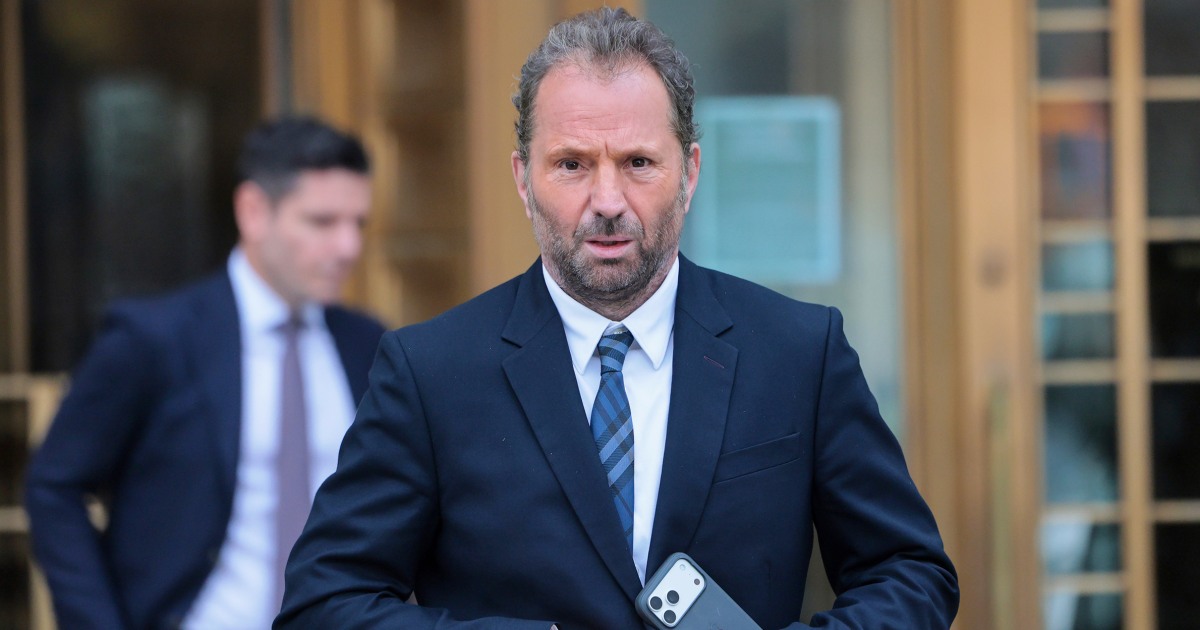
Live Nation CEO Michael Rapino took the stand for several hours in Manhattan federal court in a high-stakes antitrust trial, where he pushed back on accusations that the company illegally monopolizes live concerts in the U.S.
The case was originally brought by the Department of Justice and dozens of state attorneys general. However, the federal government struck a surprise settlement with the company in early March, following a face-to-face meeting between Rapino and Omeed Assefi, the acting assistant attorney general for the Antitrust Division.
A majority of the state attorneys general lambasted the deal and committed to pursuing their claims against Live Nation and its subsidiary, Ticketmaster.
Jeffrey Kessler, an attorney for the states, grilled Rapino on the company’s concert pricing tactics, exclusive long-term contracts and allegations of fostering an anticompetitive environment.
Rapino defended the business he built, saying the industry was once “fragmented,” which he described as the “wild, wild west.”
He said Live Nation has since brought “business professionalism” to the live events space, which competitors have replicated.
“You want to build a better mousetrap than the other guys,” Rapino said. “We were ahead of the curve in owning ticketing, owning venues, and concert promotion.”
Still, veteran antitrust lawyer Kessler pressed Rapino on rising ticketing fees and on complaints from artists, including Adele who wasn’t allowed to sell tickets directly to fans through a third party, even when she offered to cover the ticketing fees herself.
“We would never say no to Adele,” Rapino said. “We said no to the ticketing company trying to get free tickets.”
Kessler reminded Rapino of a 2016 email where he expressed concern over the ticketing costs for an Alabama Shakes concert.
“Our fees are too high. We can’t defend them,” Rapino wrote at the time.
Rapino told Kessler that he couldn’t recall the email or what it was about, saying it was from 10 years ago.
Kessler questioned Rapino about his knowledge of an executive boasting about “robbing” concertgoers “blind” through an increase in concert parking fees.
Rapino said he wasn’t aware of the messages until recently, saying, “It’s disgusting, and it’s not how we operate.”
In 2022, Ben Baker, a regional ticketing director at the time, messaged a colleague on Slack, referencing a data set tracking annual gross revenue for “premier parking,” which increased from $470,000 in 2018 to $666,000 in 2021.
“Robbing them blind baby,” Baker said. “That’s how we do.”
His colleague responded, saying, “lol.”
When asked if the company had taken any disciplinary action against Baker, Rapino said, “I have it under review, and he has apologized. We like to give our employees a break, and we don’t fire easily.”
Andrew Gass, a lawyer for Live Nation, questioned Rapino about allegations that the company strong-armed venues and their billionaire owners into exclusive Ticketmaster contracts.
Gass asked whether James Dolan, the owner of Madison Square Garden, was someone the company “could push around.”
“Certainly not,” Rapino replied. “I don’t tell a billionaire what to do with his venue. He tells me.”
Rapino also shot down claims that he threatened to withhold concerts at the Barclays Center after it chose a competitor over Ticketmaster.
On a recorded call with former Barclays CEO John Abbamondi, Rapino said, “It’s going to be a tough time to deliver tickets or concerts with a new competitor in town, regardless of ticketing.”
Abbamondi testified two weeks ago that he viewed Rapino’s statement as a threat to reroute concerts to the UBS Arena and said Barclays experienced a “dramatic decline” in shows after dropping Ticketmaster.
Rapino said that he had “zero” intent to threaten the venue.