
Somewhere along the way, blogging got a bad reputation. People started complaining about too much content with not enough substance.
Honestly, a lot of brands deserve that criticism. They blog because someone told them to, not because they have anything worth saying.
However, the brands that are quietly doing it well are still pulling ahead. Studies show that companies that blog produce an average of 67% more leads than those that don’t.
Authority comes from showing up, repeatedly, with content that actually helps people. The kind that makes someone realize that these people know what they’re talking about. That’s what turns a first-time visitor into someone who comes back, and eventually, someone who buys.
Let’s talk about how to get there.
Chapters
Turning Complex Topics Into Clear Insights Readers Trust
People are skeptical of brands by default. But give them something genuinely useful (like content that explains something they’ve been struggling to understand), and that skepticism softens fast.
It’s no coincidence that 70% of people prefer learning about a company through articles rather than ads. They want information, not a pitch.
This is where a lot of brands get it wrong. They either oversimplify to the point of being useless, or they go so deep into jargon that readers bounce within seconds. The sweet spot is explaining something complex in a way that makes the reader feel smarter, not more confused.
Here’s how to do this:
- Start with the question your reader is actually asking. These questions often reveal where confusion exists.
- Build articles around those topics.
- Use short paragraphs and plain language. If your reader needs a dictionary, you’ve already lost them.
- Break these topics into steps or stages. Complex topics become manageable when they’re structured logically.
- Avoid over-explaining everything at once. Cover one concept well rather than five concepts poorly.
A good example of this in practice is R.E. Cost Seg, a company that helps real estate owners reduce their tax burden through cost segregation strategies. This is a subject that confuses even experienced property investors.
That’s why their articles take these genuinely complicated tax topics and walk readers through them in plain, digestible sections. For instance, in their “Bonus Depreciation in 2026: What You Need To Know” post, they never use any unnecessary jargon. This way, readers leave the page actually understanding something.
When a brand consistently delivers that, people stop seeing it as just another service provider. They start treating it as a reliable resource, which is exactly where trust begins.

Publishing In-Depth Educational Content That Demonstrates Real Expertise
There’s a big difference between a brand that talks about what it does and a brand that teaches you something about the industry it operates in. The second one earns your attention. And more often than not, it earns your business too.
Research shows consumers are 131% more likely to buy from a brand after engaging with early-stage educational content. That’s an impressive lift.
The logic here is straightforward. When a brand takes the time to genuinely educate you, it signals confidence in its own knowledge. Also, teaching someone how something works stays with them. And when you’re the one who provided that deeper understanding, you become the person they think of when they’re ready to act.
Here’s how to approach this:
- Go deeper than the basics. Surface-level content is everywhere. If you want to stand out, cover topics your competitors are glossing over or avoiding entirely.
- Answer the questions your sales team keeps hearing. Those recurring questions are a goldmine for educational content that’s both relevant and useful.
- Don’t water it down for fear of giving too much away. Brands that share genuine expertise freely tend to attract more qualified leads, not fewer.
- Back your points with data, examples, or real context. Opinion is fine, but substance is what makes content credible.
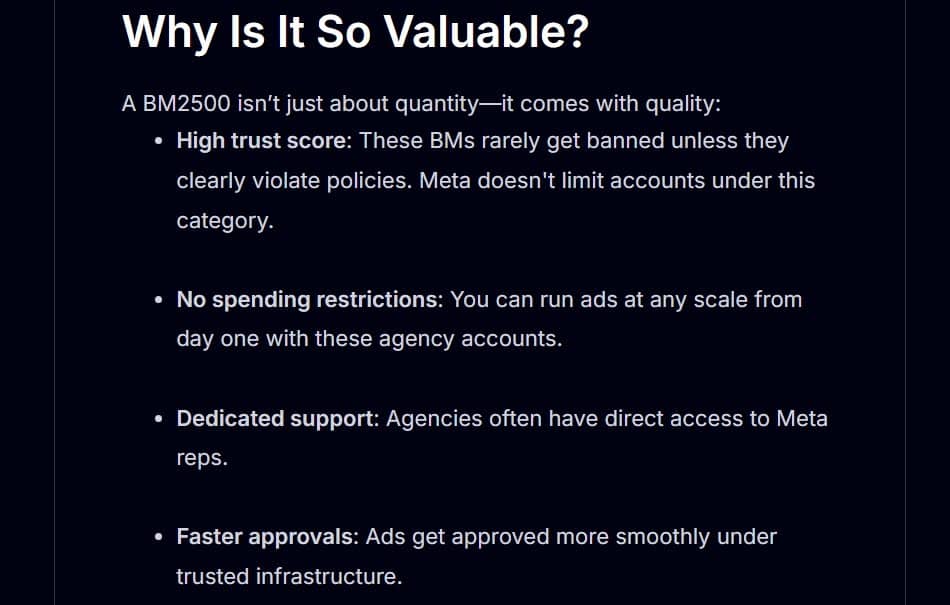
You can see how Uproas does this. They’re a company that provides premium ad accounts for platforms like Meta, Google, and TikTok to agencies and media buyers.
Their article “What is a BM2500 in Facebook Ads?” tackles a concept that many marketers encounter but few fully understand. The post dives deep below the surface, explains the mechanics clearly, and puts the concept in a practical context.
For readers navigating the complexities of paid advertising infrastructure, that level of detail is exactly what builds confidence in a brand. It positions Uproas as a team that genuinely knows its space.
Answering Customer Questions with Content That Guides Decision-Making
Before most people spend money, they research. They type questions into search bars, read through results, and gradually form an opinion about which brand seems to know what it’s talking about.
If your content shows up during that process and actually answers what they’re asking, you’re already ahead of most competitors.
This type of content works because it meets people at the exact moment they need help. Its purpose doesn’t revolve around building awareness or persuasion. You simply put it out there to be genuinely useful to someone who is trying to figure something out.
Here’s how to build this into your content strategy:
- Mine your FAQs, emails, and support tickets. The questions customers ask before buying are your best starting points. They’re already searching for answers, so give them yours.
- Write for the question, not the keyword. Optimizing for search matters, but the content still needs to read like a real answer, not a keyword-stuffed paragraph.
- Be direct. State the answer early, then back it up with context and detail. Readers shouldn’t have to scroll halfway down the page to find what they came for.
- Cover the nuances. A question like “Can I do X?” often has a “Yes, but…” answer. Address those conditions. That’s where the real value is.
Start in Wyoming is a company that helps entrepreneurs set up LLCs and registered agent services in Wyoming.
They put this into practice with their post answering whether someone can form a Wyoming LLC without living in the state. That’s a question their target audience genuinely has, and the post answers it clearly and completely.
This kind of content is excellent for driving traffic. However, its real value lies in its capability to remove doubt. Remember: A reader who leaves your site with less confusion than they arrived with is far more likely to come back ready to buy.

Source: startinwyoming.com
Turning Blog Traffic Into Trust with Clear Brand Positioning
Getting people to your blog is one challenge. Keeping them interested in your brand once they’re there is another.
Many companies pour energy into content creation and then lose the reader the moment they click over to the homepage. That’s because what they find there doesn’t match the clarity or confidence of the content that brought them in.
Blog traffic is only valuable if your brand positioning picks up where the content leaves off. When someone finishes reading a helpful post and wants to know more about who wrote it, they need to land somewhere that immediately tells them: This is what we do, this is who we help, and this is why we’re the right choice.
Here’s how to get that right:
- Lead with what you do, not what you are. “We help X achieve Y” is more useful than a tagline that sounds good but says nothing.
- Make sure your homepage and blog feel like the same brand. Tone, clarity, and focus should be consistent across both.
- Remove friction. A visitor who arrives from a blog post is already interested. Don’t make them dig around to figure out what you offer.
- Speak directly to your target customer. Generic positioning tries to appeal to everyone and ends up resonating with no one.
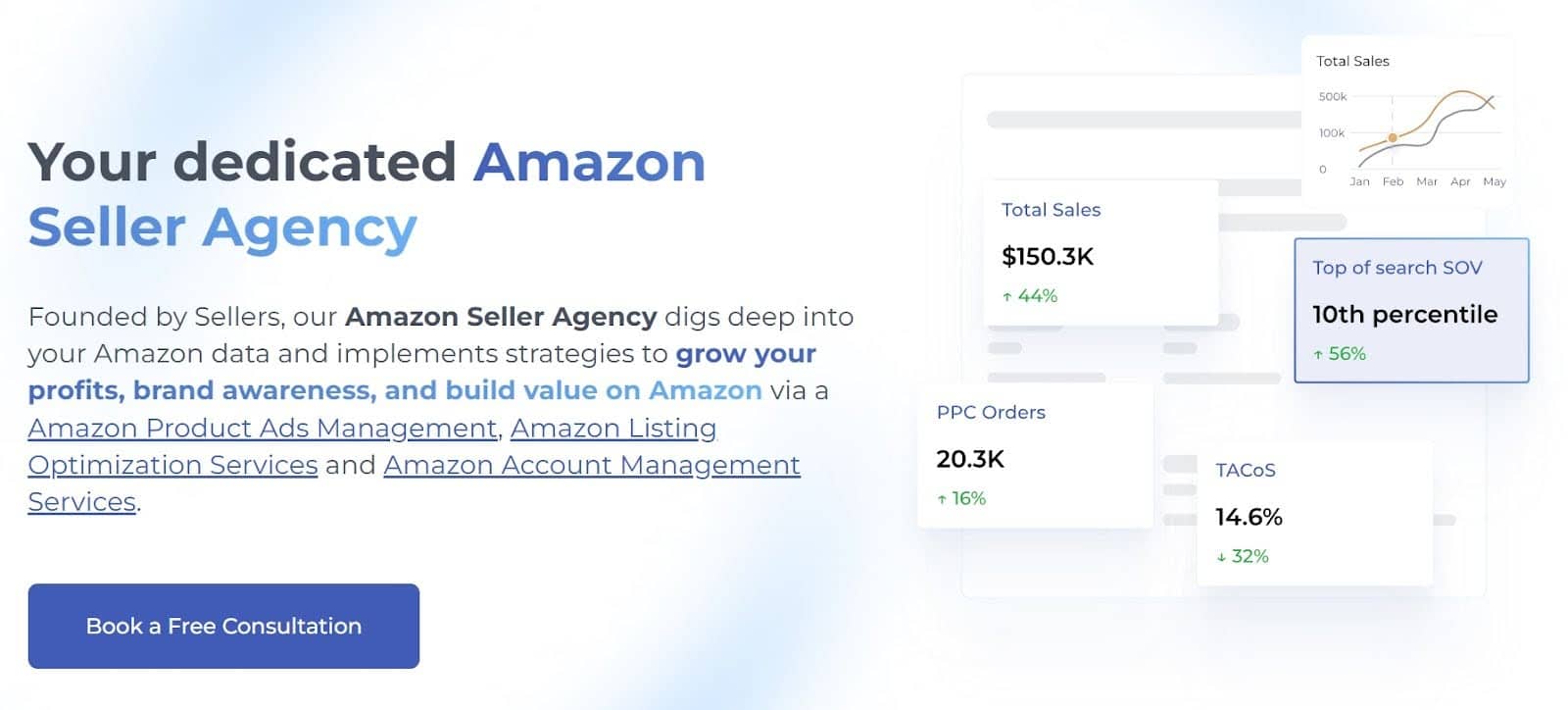
SellerMetrics, an agency that helps Amazon sellers manage and scale their advertising, does this well.
A reader who lands on their homepage after reading one of their posts immediately understands what the company does and who it serves. There’s zero ambiguity surrounding their value proposition and unique selling points.
That alignment matters. When your content earns someone’s attention and your brand positioning holds it, trust builds naturally. That’s what turns a first-time reader into a legitimate lead.
Source: sellermetrics.app
Reinforcing Brand Credibility with Social Proof and Real-World Insights
Anyone can claim their product works. What actually moves people is specific, documented, and believable proof.
Case studies with measurable results drive 38% higher engagement and 64% more sales inquiries than vague, general claims. That gap exists because readers can tell the difference between “Our clients love us” and a story that shows exactly what happened and why.
Social proof earns its credibility through detail. The more specific it is, the more convincing it becomes.
Here’s how to make it work for your brand:
- Lead with the outcome, then explain how you got there. Readers want to know what changed, but they also want to understand the process behind it.
- Use real numbers wherever possible. Percentages, timeframes, and measurable results make a case study feel grounded rather than promotional.
Include direct quotes from the people involved. A client explaining the impact in their own words carries more weight than anything you write about yourself. - Cover the problem honestly. A case study that glosses over the initial challenge feels incomplete. Show what wasn’t working before. That’s what makes the outcome meaningful.
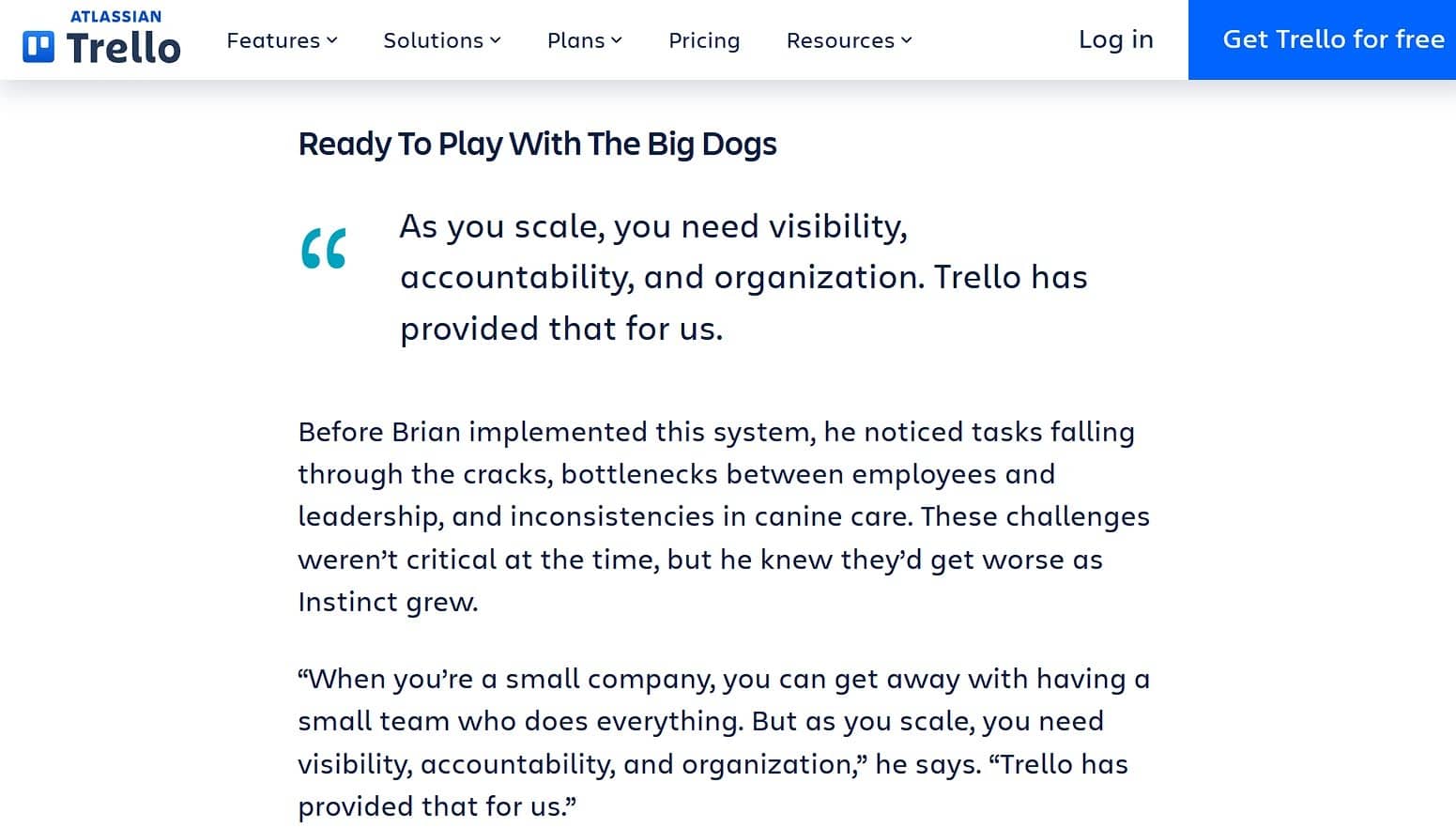
Trello, a platform that helps teams organize tasks and manage projects visually, does this particularly well in their case study featuring Instinct, a pet training business.
Rather than offering a surface-level success story, Trello walks readers through the full arc, from how Instinct initially struggled with operational disorganization, through the setup process, to the specific features that resolved those challenges.
What’s truly amazing about it is the inclusion of direct quotes made by the client. This adds authenticity throughout.
The thoroughness is exactly what makes it credible. It doesn’t feel like marketing material but like an honest account of what actually happened. That’s precisely why readers trust it.
Using Thought Leadership Content to Shape Industry Conversations
Most brands in any given niche are publishing the same content. Same topics, same angles, same listicles that have existed in slightly different forms for a decade. Readers notice this, even if they can’t articulate why one brand feels more authoritative than another.
The brands that stand out are the ones willing to say something original, backed by something real.
Thought leadership doesn’t mean having strong opinions for the sake of it. It actually means contributing something to your industry that didn’t exist before you published it.
Here’s how to approach this:
- Do your own research. Original data, even from a modest survey or internal analysis, gives you something no competitor can replicate. It also attracts backlinks and citations naturally.
- Take a clear stance on topics your audience cares about. Neutral, hedged content rarely leads conversations. Informed perspectives do.
- Cover the angles others are ignoring. If every brand in your space is writing the same post, that’s a signal to branch out, not a reason to follow along.
- Present your findings clearly. Data visualizations, structured reports, and well-organized insights make complex information accessible and shareable.
ProtectMyPaws, a platform dedicated to pet care education and resources, takes this approach seriously. While competitors churn out recycled breed rankings and generic care tips, ProtectMyPaws invests in original research.
Their report analyzing how often TikTok videos depict harmful interactions with cats is a strong example. It’s full of data visualizations and genuinely interesting details that you won’t find anywhere else.
That kind of content does something a standard blog post can’t. It gives pet owners a reason to see ProtectMyPaws as a source worth paying attention to, not just another website covering familiar ground.

Source: protectmypaws.com
Final Thoughts
You may have started this article wondering if blogging is worth the effort. The real answer shows up in how you use the content, not in how often you publish or which keywords you target.
Readers stay when they find information that actually helps them understand a problem, evaluate an option, or make a better decision.
That’s where the ideas in this article come into play. However, you don’t need to implement everything at once. Start with one approach. Choose a topic your audience struggles with and publish an article that genuinely helps them move forward. Then continue with the next topic.
Over time, those individual posts create something larger. Readers begin to recognize the consistency and usefulness of your content. They return when new questions come up. They share the articles with colleagues or friends facing the same issues.
That’s when blogging starts to pay off in a meaningful way.