Marketing technology has undergone three distinct shifts: from manual execution to rules-based automation, and now to intelligent autonomy.
AI agents for marketing represent this third paradigm, systems that do not simply follow predefined instructions but interpret context, make decisions, and execute multi-step campaigns across channels with minimal human oversight.
For B2B growth teams navigating complex buying journeys, fragmented channel stacks, and mounting personalisation demands, this shift is no longer theoretical.
It is operational infrastructure. This article defines what AI marketing agents are, why adoption is accelerating, and which platforms are setting the benchmark.
Chapters
What Are AI Agents for Marketing?
AI agents for marketing are goal-oriented systems that combine data analysis, generative AI, predictive intelligence, and workflow automation to execute marketing initiatives end-to-end. Unlike conventional marketing automation, which executes fixed sequences when conditions are met, AI marketing agents reason across variables, adapt dynamically, and optimise continuously without requiring manual reprogramming.
In practical terms, a capable AI agent in marketing can:
- Set, monitor, and adjust campaign logic in real time
- Segment audiences dynamically based on behavioural signals
- Generate and personalise content at scale
- Trigger coordinated actions across email, paid media, and CRM
- Learn from performance data to improve future execution
The critical distinction is the transition from AI that recommends to AI that executes. This is what separates AI agents in marketing from the dashboards and assistants that preceded them.
Why AI Agents in Marketing Are Becoming Core Growth Infrastructure
The business case for AI marketing agents is not primarily about efficiency. It is about structural capability, the ability to execute at a speed and scale that manual coordination cannot match. Several converging pressures are driving adoption across B2B organisations.
1. Marketing Complexity Has Outgrown Manual Coordination
Modern B2B growth strategies span multiple channels, require real-time personalisation, and demand continuous lifecycle orchestration. Campaign performance depends on the ability to act on signals the moment they appear. Manual oversight introduces latency that compounds across every decision point.
2. Speed of Execution Is a Competitive Differentiator
In competitive markets, the gap between insight and action determines whether an opportunity is captured or lost. AI agents for marketing compress that gap, translating behavioural signals into targeted engagement in minutes rather than days.
3. Static Automation Cannot Deliver Contextual Personalisation
Fixed automation flows, however well designed, cannot account for the variability of individual buyer behaviour. AI marketing agents adjust journeys dynamically based on real-time intent signals, delivering contextually relevant engagement at a scale that static rules cannot achieve.
4. Growth Teams Require Operational Leverage
AI agents in marketing do not replace marketing professionals, they amplify team capacity. By handling orchestration, segmentation, and performance optimisation in the background, they allow growth teams to focus on strategy, creative direction, and customer relationships.
Core Capabilities of a Modern AI Marketing Agent
Not all AI tools marketed as agents meet the operational threshold required for autonomous growth execution. Organisations evaluating platforms should look for the following capabilities:
- Autonomous workflow orchestration without continuous human intervention
- Real-time behavioural segmentation and audience adaptation
- Predictive lead scoring integrated with CRM and sales workflows
- Native generative content capabilities embedded within execution flows
- Cross-channel campaign activation spanning email, paid, and owned media
- Unified customer data infrastructure enabling a complete 360-degree view
- Continuous performance monitoring and self-optimisation
Platforms that meet these criteria operate as growth infrastructure rather than point solutions. The following five systems represent the strongest examples currently available.
5 AI Marketing Agents Every B2B Growth Team Should Know
The leading AI agents for marketing, including Creatio AI, HubSpot Breeze AI, Salesforce Einstein, Jasper Marketing AI, and Adobe Sensei, each address the challenge from a distinct angle: workflow orchestration, content production, predictive intelligence, or real-time personalisation. What unites them is a commitment to moving AI from advisory function to active execution.
1. Creatio AI
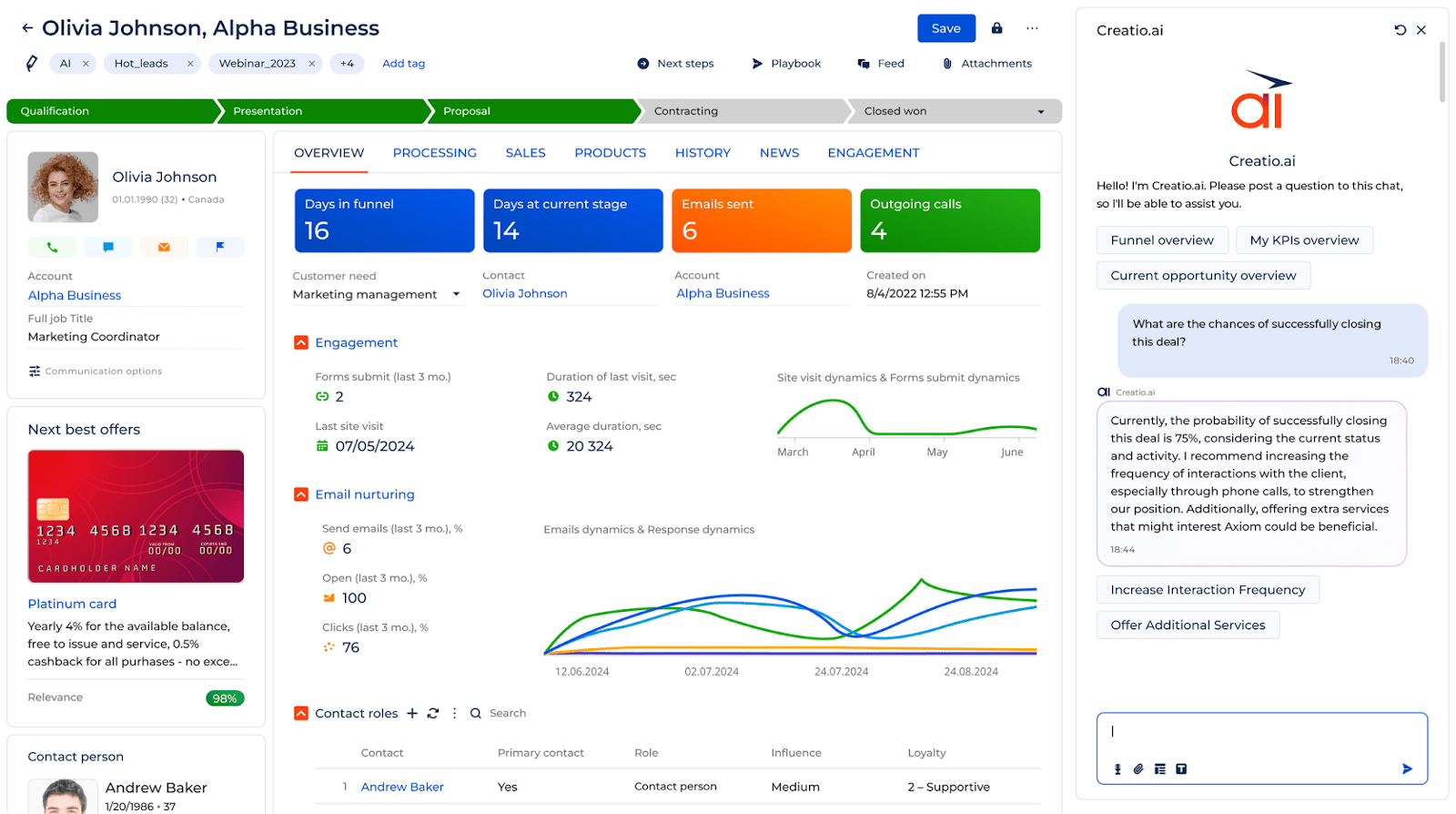
Creatio AI agents sit at the core of a comprehensive agentic platform that combines generative, predictive, and autonomous intelligence within an integrated CRM ecosystem. Rather than acting as advisory tools, these agents execute marketing workflows, optimise campaigns in real time, and adapt engagement strategies based on behavioural signals.
Key capabilities include real-time audience segmentation, autonomous campaign orchestration, predictive lead prioritisation, and contextual content generation embedded directly into marketing execution flows. Operating on unified customer data, Creatio AI agents enable more precise personalisation and stronger alignment between marketing activity and revenue outcomes.
For B2B growth teams seeking AI agents that function as operational infrastructure rather than isolated automation features, Creatio represents one of the most execution-focused approaches currently available.
2. HubSpot AI (Breeze AI)
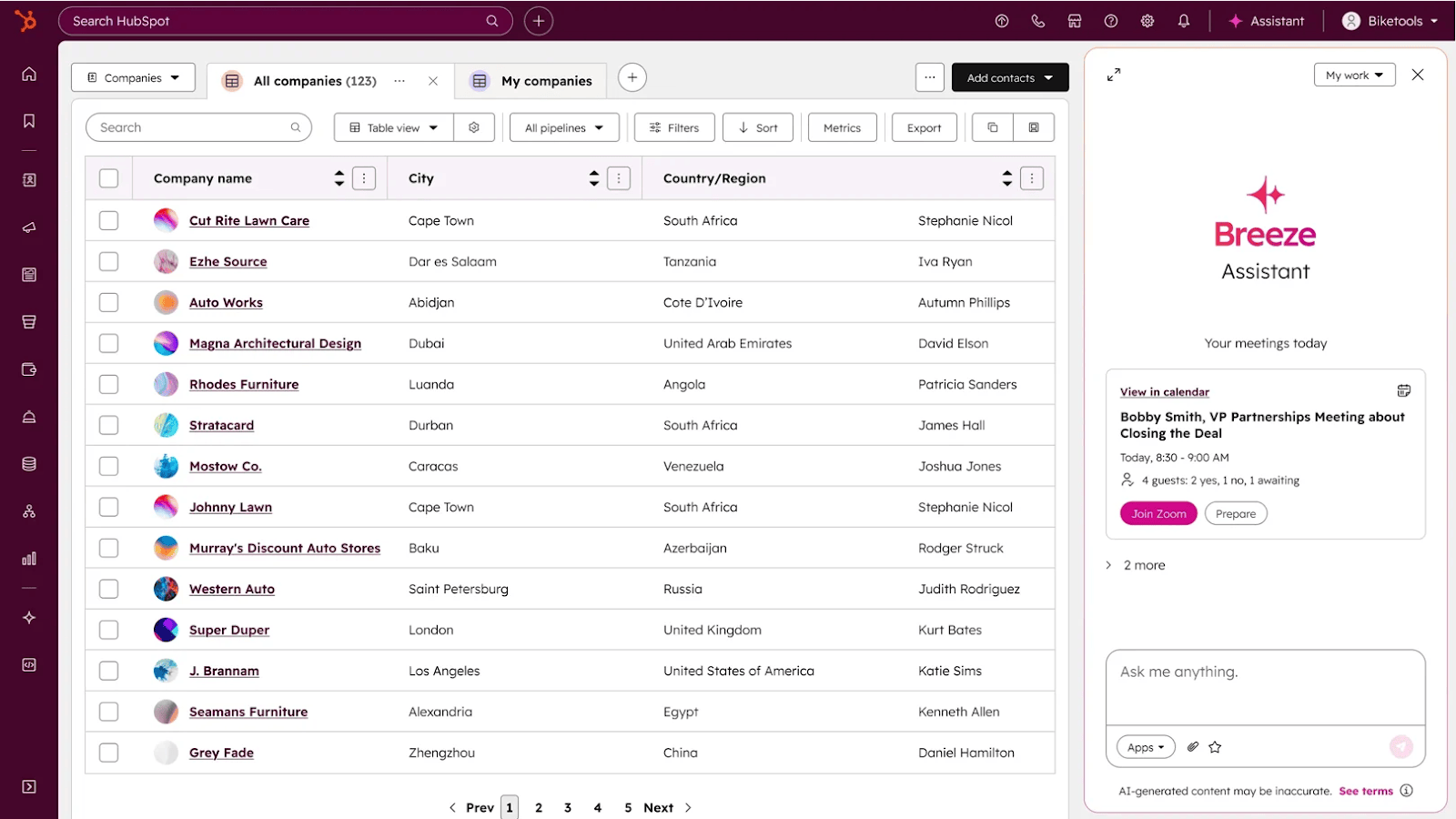
HubSpot integrates AI capabilities natively into its CRM and marketing automation environment through its Breeze AI layer. For scaling B2B teams already operating within the HubSpot ecosystem, it offers accessible AI marketing agents without a significant change management burden.
Capabilities include AI-powered content creation, automated workflow suggestions, predictive lead scoring, and CRM-native personalisation. Autonomy is partially guided, making it well-suited to teams earlier in their AI adoption journey.
3. Salesforce Einstein
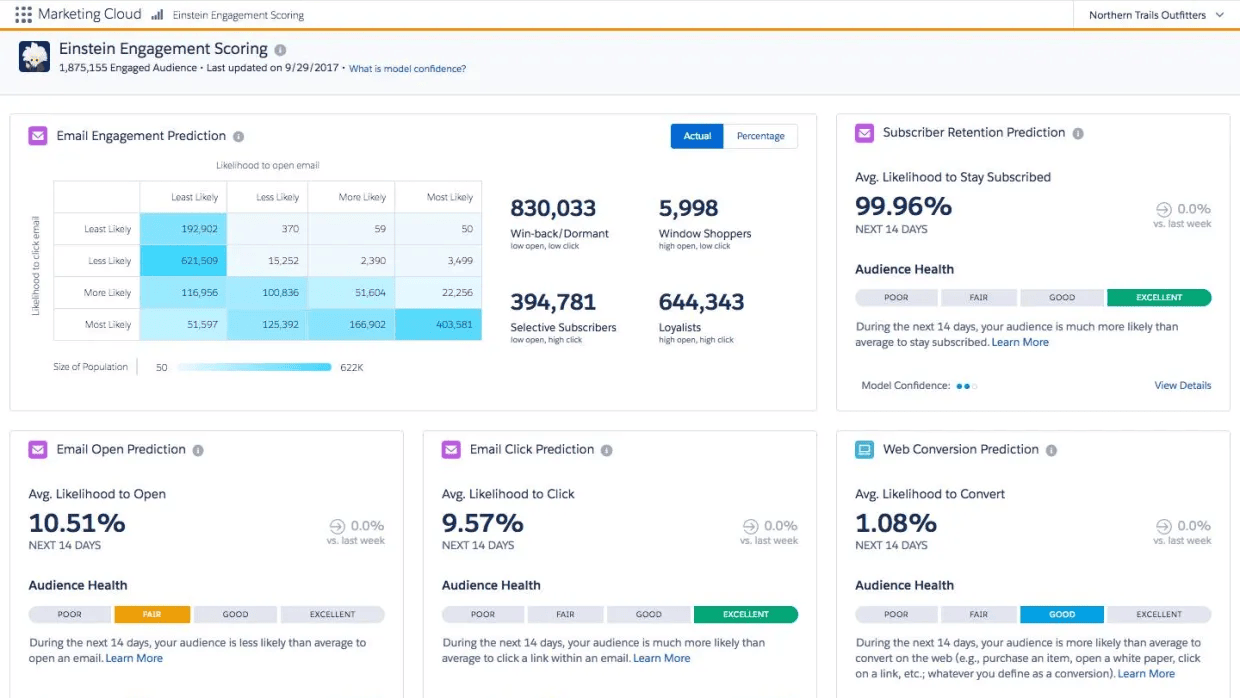
Salesforce Einstein embeds generative and predictive AI directly into enterprise marketing and CRM systems. Its strengths lie in AI-generated messaging at scale, predictive analytics, automated segmentation, and campaign performance forecasting.
For enterprise B2B organisations operating complex global marketing infrastructures, Einstein provides a robust layer of predictive-driven AI agents in marketing within an environment most enterprise teams already operate.
4. Jasper Marketing AI
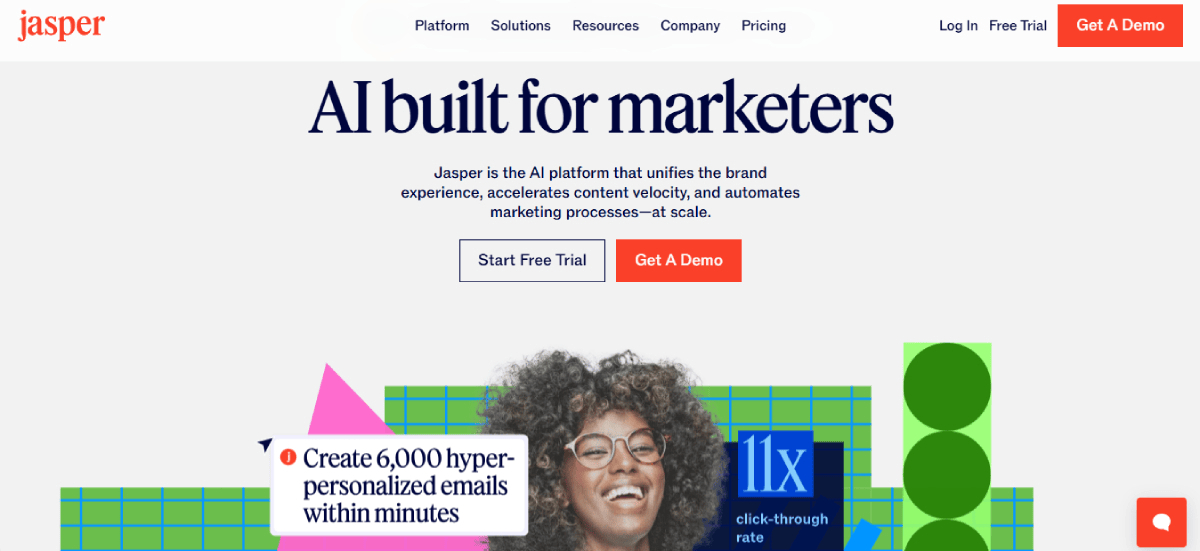
Jasper focuses on AI-driven content generation and brand consistency. It is not a full orchestration engine, but functions as a highly specialised AI marketing agent for content-centric teams.
Capabilities include long-form content creation, brand voice memory, multi-channel campaign copy generation, and content workflow acceleration. Jasper is best deployed as a component within a broader AI marketing stack rather than as a standalone growth infrastructure solution.
5. Adobe Sensei
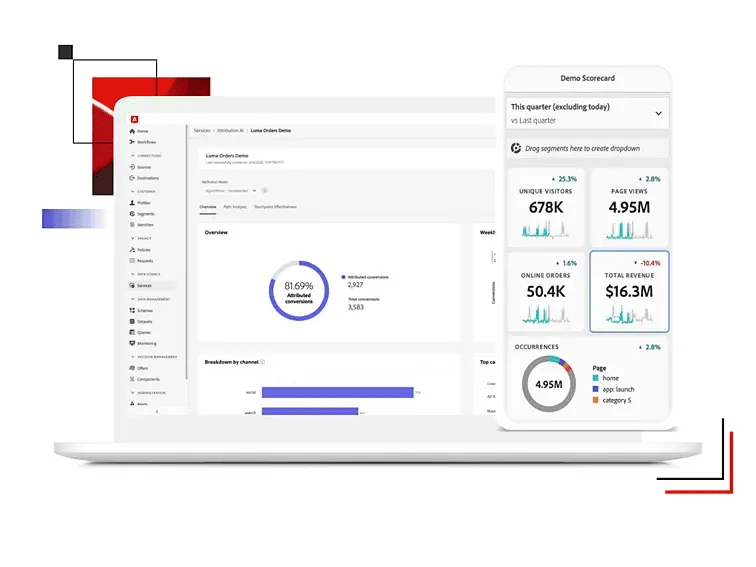
Adobe Sensei powers AI-driven personalisation and analytics within the Adobe Experience Cloud ecosystem. Its primary capabilities, real-time personalisation, behavioural analysis, predictive content recommendations, and automated experimentation, make it an ideal choice for organisations that prioritise experience optimisation and data-driven personalisation within digital environments. For B2B marketers with significant digital experience investments in Adobe infrastructure, Sensei represents a mature and deeply integrated AI layer.
Choosing the Right AI Agent for Your Growth Strategy
Selecting the right AI marketing agent requires a clear-eyed assessment of organisational maturity, existing infrastructure, and strategic objectives. The following criteria should guide evaluation:
- Level of workflow autonomy required – from guided assistance to fully autonomous execution
- Depth of CRM and data integration – particularly the ability to unify customer data across touchpoints
- Cross-channel orchestration capabilities – can the platform coordinate across email, paid, and owned channels simultaneously?
- Scalability across business functions – does the platform extend to sales, customer success, and revenue operations?
- Governance and AI transparency – are decision-making processes auditable and aligned with your compliance requirements?
The most advanced AI agents for marketing do not function as tools. They function as infrastructure, coordinating execution across strategy, campaigns, and revenue operations in a continuous loop of insight and action.
The Strategic Shift Toward Agentic Marketing
The emergence of AI agents in marketing signals a broader and irreversible shift in how growth functions operate. Marketing technology is no longer a collection of tools managed by specialists. It is becoming an autonomous system capable of continuous learning, optimisation, and execution at a pace and scale that human coordination alone cannot sustain.
Organisations that adopt comprehensive AI marketing agents now will establish structural advantages that are difficult to replicate: faster execution cycles, deeper personalisation across the buyer journey, and more efficient alignment between marketing spend and revenue outcomes.
The future of B2B growth is not AI-assisted marketing. It is an autonomous marketing infrastructure — and the organisations building that foundation today will define the competitive landscape tomorrow.