Even before the sell-off last week, we’ve all had the feeling of white-knuckling through the fourth quarter.
Anthropic’s (ANTH.PVT) IPO prospectus. Big Tech earnings. Bond yields through the roof. An unexpectedly tall blue wave that lifted the stock market up — and threw it back down.
With volatility (^VIX) running hot, investors are balancing on a knife’s edge between a flywheel of angst — or a bounce.
As Goldman Sachs’ panic gauge suggested, the extremeness may signal more of Friday’s bounce to come.
It’s a new week, and we’ll have plenty of scheduled plot points to guide us.
Of particular note, we’re looking forward to CoreWeave (CRWV) quarterly results on Tuesday and Nebius Group (NBIS) and Cerebras Systems (CBRS) on Thursday, a few companies caught up in the data center destruction post-election.
What they have to say about their plans and outlook, the debt markets they’ve been tapping, and the health of their business will be at the top of mind.
Good timing to have that a mere week after midterms.
On the economic calendar, we’re in inflation mode once again, especially after that hot jobs report.
We’ll kick off the week with the New York Fed’s consumer inflation expectations before getting some actual data on Tuesday — and wholesale inflation figures on Friday to close the week.
2 big AI narratives keep wrestling with each other for control of the market
What’s more important: the chip and AI infrastructure trade or the companies that actually provide AI?
As we wrote in the Morning Brief on Friday, “A data center slowdown is bad for the stock market’s AI engine,” and “A data center slowdown is good for Big Tech’s profit machine.”
Can Google (GOOG, GOOGL), Microsoft (MSFT), and Amazon (AMZN) deliver AI at least some productivity and tools to clients with the compute they have — and make a lot of money doing so, flipping the switch from growth and scale to monetization?
Maybe! Those companies are healthily in the green since the election, doing just fine amid the broader sell-off. And while Tesla (TSLA) has sold off, SpaceX (SPCX) is mostly doing fine.
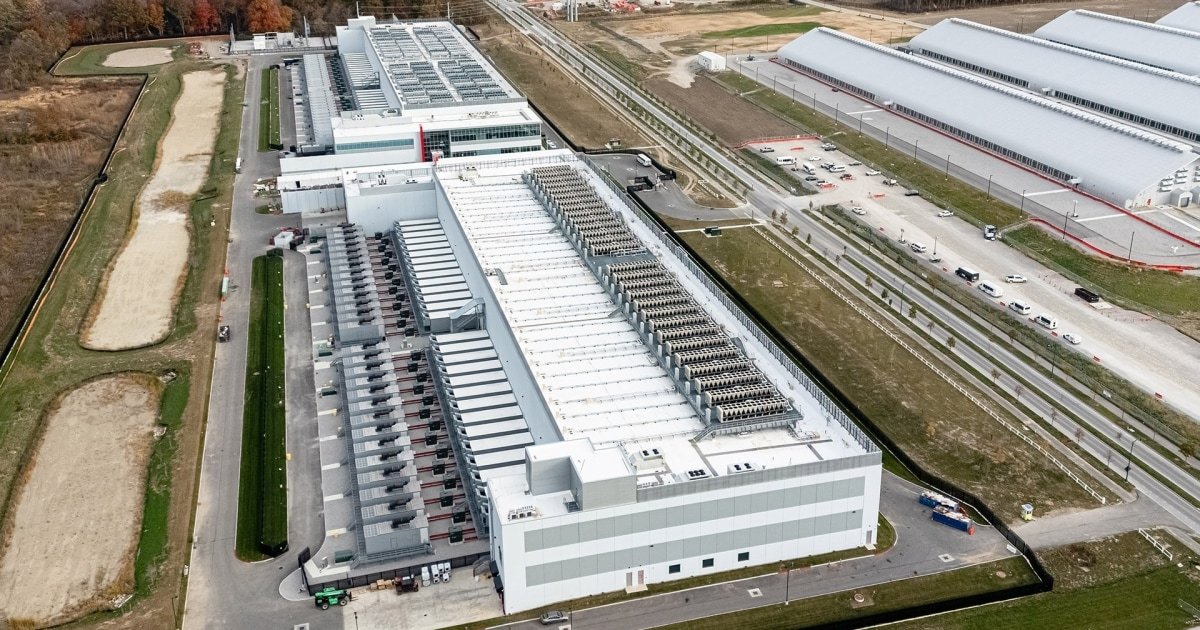
The CoreWeave AI data center is shown under construction on Oct. 21, 2026, in Kenilworth, N.J. (Stephanie Keith/Getty Images) ·Stephanie Keith via Getty Images
As DataTrek’s Nicholas Colas wrote on Thursday, you need to look at the entire week, not just the bloody Thursday, to see the bigger picture (small as that is). And it’s pretty clear that this may be reflected in the broad indexes, but it’s mostly about chips.
“As for what the market is ‘saying’ over the last 2 days, we believe the moves are AI-centric, not augurs of a looming recession,” Colas wrote, also noting that Google and Co. are doing fine.
The push-pull of the chip narrative and the hyperscaler narrative is the pulse our fingers are on right now.
A big inflation check after a booming jobs report
Friday’s blowout jobs report of 165,000 jobs delivered an unexpected verdict about the current state of the labor market: It’s better than fine.
Even September’s underwhelming 29,000 jobs were adjusted upward to 60,000.
Good for breaking the “low-fire, low-hire” ice, if this represents the beginning of a trend. As every Fed chair likes to remind us, one month doesn’t mean anything by itself.
Customers check fruit at a grocery store in New York on Oct. 14, 2026. (Zhang Fengguo/Xinhua via Getty Images) ·Xinhua News Agency via Getty Images
But with Tuesday and Friday’s big inflation reports for October, we’ll have more than just one data point to work with, and two (or more) hot pieces of economic data could start to make some people sweat.
We are keeping one research note from Apollo’s Torsten Sløk that caught our attention last week at the top of our mind: that the Fed’s rates needed to bring inflation down its 2% target could be as high as 6.75%. (Disclosure: Yahoo is a portfolio company of funds managed by affiliates of Apollo Global Management.)
While the data center sell-off is obviously important, inflation still matters as much as anything.
Bloomberg’s average analyst estimate has core inflation rising 0.2%, slowing down from 0.3% last month.
A ton of post-election Fed speak is coming
Amid all the data will be a lot of commentary from the people who read the data — and decide what to do with it.
The Fed’s Goolsbee and Bowman speak on Monday; Waller and Bowman (again) on Tuesday; Barr, Barkin, and Logan on Thursday; and Williams, Jefferson, and Bowman (again) on Friday.
We love seeing our public officials putting in the work. But the market loves guidance and FedSpeak even more and is hoping to be given more of a lens through which to read all of this data and get a better picture of how the Fed sees the economy — and perhaps even the sell-off, depending on what topics come up and how forthcoming they feel like being.
With Fed Chair Warsh settling into a cryptic, taciturn no-forward-guidance rhythm, it’s up to these guys — who may also feel more emboldened post-midterms.











Leave a Reply