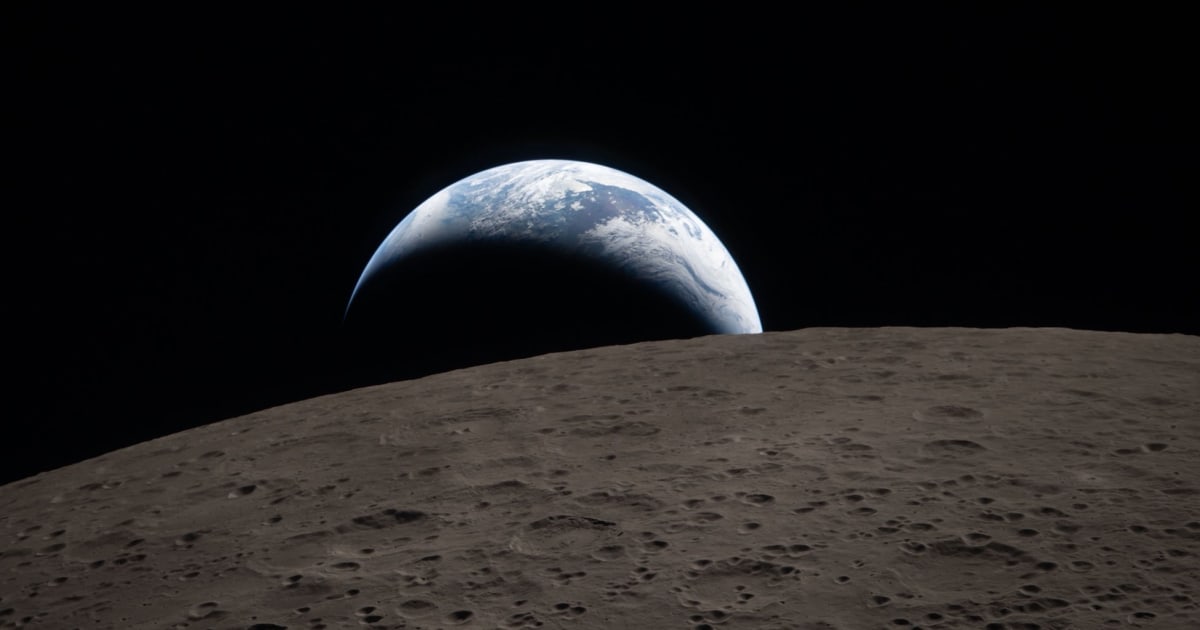
Wiseman, Glover, Koch and Hansen spent around seven hours taking photographs and gathering notes about surface features on the moon during the flyby. They became the first people to see the lunar far side, which is not visible from Earth because that part of the moon permanently faces away from our planet.
Even during the Apollo missions, astronauts couldn’t view much of the moon’s far side because of the paths and timing of their flights.
Now, the four Artemis II astronauts have become trailblazers for all of humanity.
Their early observations elicited celebrations from the mission’s lunar science team throughout the flyby. Glover, for instance, was particularly captivated by the jagged topography along the moon’s terminator, the dividing line between its illuminated side and the side cloaked in darkness.
“Boy, I am loving the terminator,” he radioed to Mission Control. “There’s just so much magic in the terminator — the islands of light, the valleys that look like black holes. You’d fall straight to the center of the moon if you stepped in some of those. It’s just so visually captivating.”