As the April 15 tax filing deadline nears, most Americans say they believe they are paying more than their fair share — a sentiment that is strongest among the nation’s top earners, according to recent polling from the Pew Research Center.
That belief has become more widespread in recent years, despite new tax cuts for everyone from seniors to tipped workers, Pew found. Many Americans are also getting bigger refunds in 2026, with the typical refund up about 11% compared with a year earlier, IRS data shows. The bigger refunds reflect new tax breaks under the “big, beautiful bill” enacted in 2025.
About 68% of top earners — defined as households with total annual income of more than $155,600 — say they pay too much in taxes, the highest share of any income bracket, according to Pew. Only about one-third of those polled say their tax burden is appropriate.
Complaints about paying taxes are nothing new. Still, the level of discontent appears to be on the rise: In 2026, about 60% of adults said their taxes are too high, up from about 51% in 2019, Pew found. An April 10 survey from Gallup found a similar share — 59% — say they pay too much in taxes.
That increase may reflect more households feeling the strain of inflation, which has remained elevated since the pandemic, according to experts. And it stands to reason that paying taxes on top of rising costs for groceries, gas, health care and housing may compound frustrations.
“We know that many hardworking Americans are feeling financial pressure,” said Mark Steber, chief tax officer at Jackson Hewitt Tax Services, in an email to CBS News. “In my opinion, anytime money comes out of someone’s pocket, even with the noble and necessary responsibility of paying taxes — either through paycheck withholdings or during tax filing time — it is just hard.”
At the same time, tax rates for many income groups have declined in recent decades, with the Tax Cuts and Jobs Act of 2017, President Trump’s signature tax law during his first term, reducing the top tax bracket from 39.6% to 37%.
“The price tag for fairness”
Widespread public frustration with taxes may also reflect the complexity of the tax code, Steber said.
Many Americans lack a clear understanding of how taxes work, with one 2024 survey from the Tax Foundation finding that more than half of taxpayers lacked basic tax literacy, including how tax brackets function.
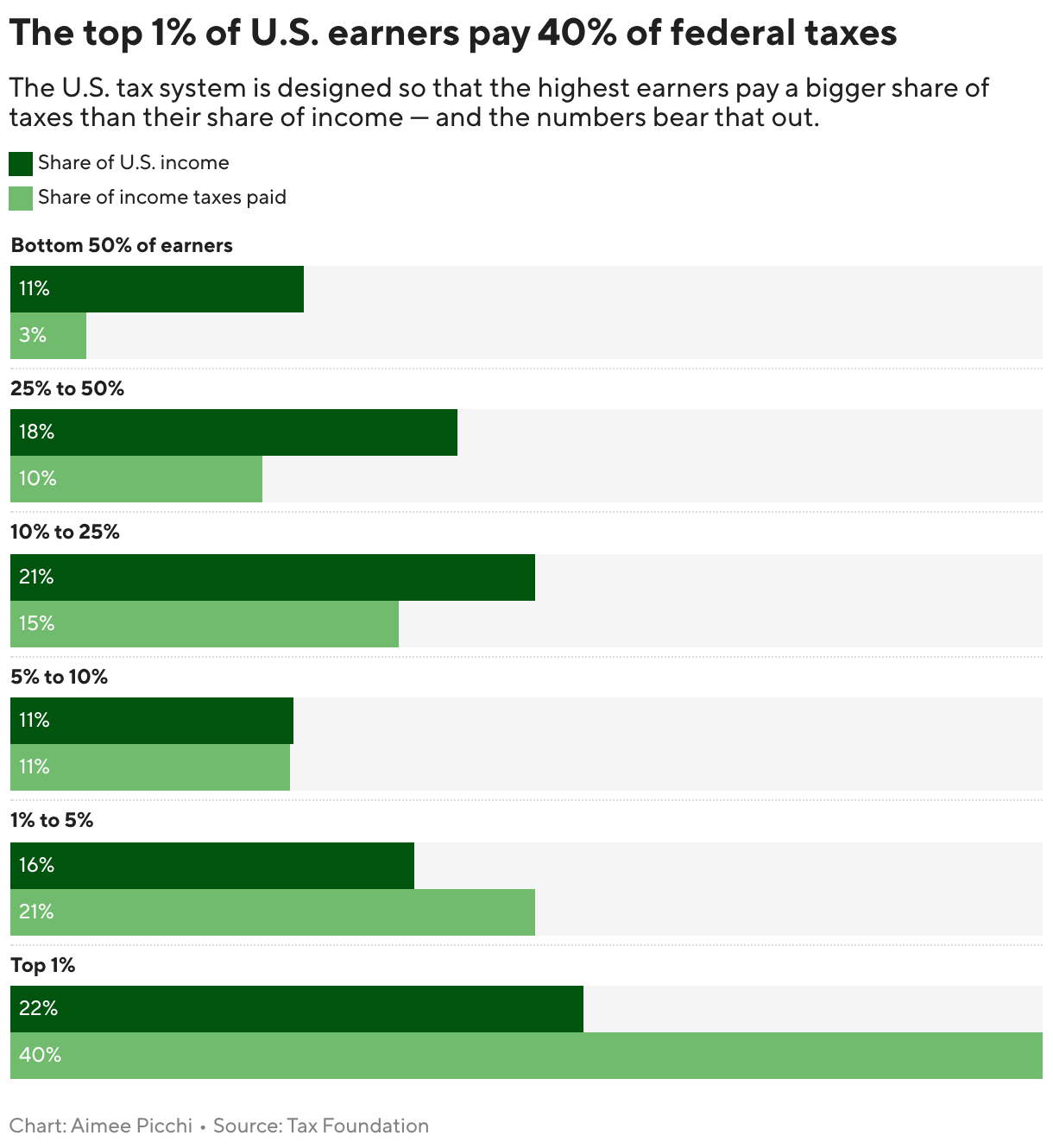
The tax system is designed to be progressive, meaning that lower-income Americans pay a smaller share of their income in federal taxes than do higher-income workers. IRS data shows that the top-earning households pay the bulk of federal income taxes. Many low-income households end up owing little or nothing in income taxes, although they are subject to payroll, sales, state and other taxes.
“Income taxes aren’t simple, but complexity is the price tag for fairness,” Steber said. “Everyone’s financial situation is different, and when you layer that onto an elaborate tax system, taxpayers naturally compare what they pay to what they feel they’re getting back, which can reinforce the perception that they’re paying more than their fair share.”