For 152 million Americans, including nearly half of the nation’s children and teens, just breathing air in the places they live can be harmful. According to the American Lung Association’s latest State of the Air report, 44% of the U.S. population reside in areas with unhealthy levels of pollution, including 33 million who are younger than 18.
Experts have warned for years that kids are particularly susceptible to the consequences of pollution exposure. Young people are deemed more vulnerable because they have developing lungs, relatively large air consumption needs compared with adults and spend more time outdoors.
“We recognize that there’s a connection between air pollution and exposure in children and chronic diseases,” said Kevin Stewart, the director of environmental health at the American Lung Association and one of the report’s co-authors. “The problems aren’t necessarily immediate, in terms of just sending a child with asthma to the hospital. It also can affect the induction of asthma in children who ordinarily wouldn’t have gotten it, or reduce lung function over their lifetime because they’ve been exposed as children.”
The new report evaluated air quality in different parts of the country by measuring the presence of ozone and particle pollution in the atmosphere, over short-term and longer periods of time. Ozone pollution is also known as smog; particle pollution is known as soot.
Counties were graded based on how much smog and soot the researchers detected, in addition to the length of time the pollutants were there. The report is based on data collected between 2022 and 2024. As its authors noted, air quality conditions over that two-year period appeared to show improvements in some ways and setbacks in others.
Nearly 4 million more people across the U.S. were breathing unhealthy levels of smog between 2022 and 2024 than they were between 2021 and 2023, which was the time frame used to compile last year’s State of the Air report. And, although the latest report showed more than 61 million people living in counties that earned “F” grades for unhealthy short-term spikes in soot pollution, and another 75 million living in counties with “F” grades for soot pollution year-round, both numbers were better than they were before.
Stewart called that good news, but noted “there are still some areas in the country that show some obvious problems.” Southern and southwestern states, as well as a number of metropolitan areas in Texas, specifically, experienced notable particle pollution, he said.
Most polluted U.S. cities
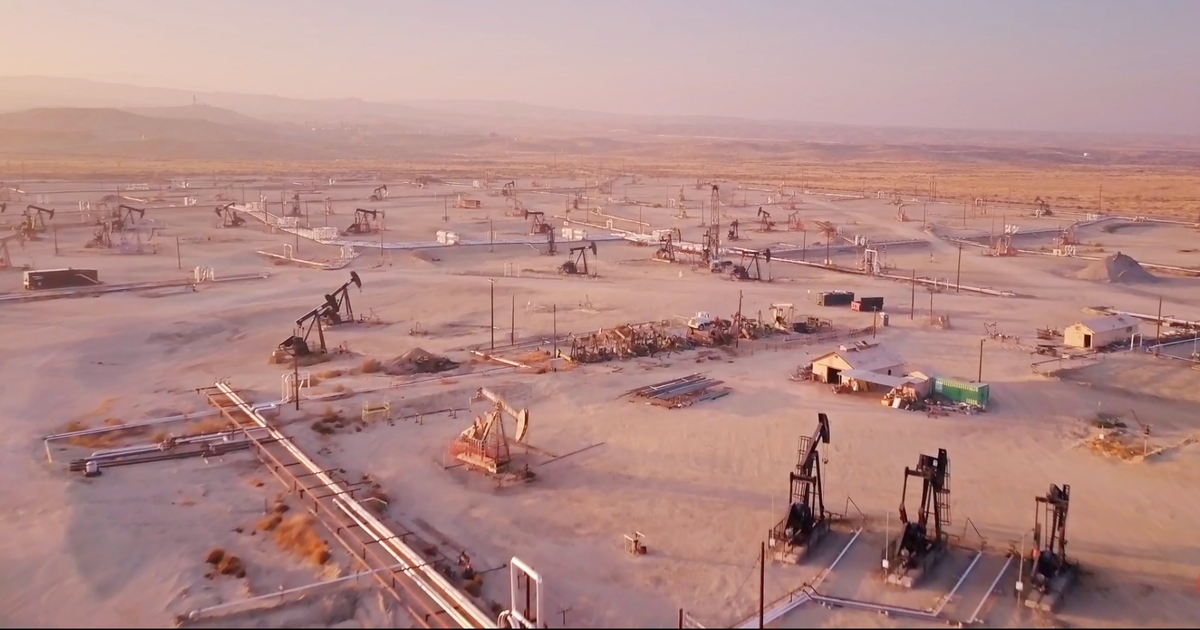
Bakersfield, California, continued to rank highest on the American Lung Association’s list of cities with the worst particle pollution year-round. It was also third-highest on this year’s lists of cities with the worst short-term particle pollution and ozone pollution.
The five most polluted cities, according to the American Lung Association report, are:
- Bakersfield-Delano, California
- Brownsville-Harlingen-Raymondville, Texas
- Eugene-Springfield, Oregon
- Fresno-Hanford-Corcoran, California
- San Diego-Chula Vista-Carlsbad, California (tied with Visalia, California)
Another major annual air quality review, by the Swiss technology company IQAir, placed El Paso, Texas, and Los Angeles, California among the most polluted areas in the U.S. That report examined pollution around the world and found that concentrations in the U.S. increased by 3% between 2024 and 2025.
Cleanest U.S. cities
The American Lung Association’s report also ranked American cities with the cleanest air. When looking at year-round particle pollution, Bozeman, Montana, topped the list ahead of Casper, Wyoming, which held the first-place position in 2025.
The five cleanest cities are:
- Bozeman, Montana
- Casper, Wyoming
- Kahului-Wailuku, Hawaii
- Urban Honolulu, Hawaii
- Burlington-South Burlington-Barre, Vermont
Data centers
In addition to the more traditional sources of pollution, like power plants and vehicle exhaust, the new air quality report warned that data centers used to train, maintain and operate artificial intelligence models are increasingly contributing to air pollution, too.
“We’re trying to raise the warning sign for the public to make sure that any data centers that are created are using state-of-the-art pollution controls,” whether they burn fossil fuels or rely on backup generators as their main power source, said Stewart.
The American Lung Association also cited policies by the Trump administration, which has faced pushback this year over its decision to deregulate emissions and repeal the landmark scientific finding that linked greenhouse gases to human health problems.
Known as the “endangerment finding,” the policy was repealed by the Environmental Protection Agency in February, when President Trump announced that greenhouse gases emitted from cars, power plants and other large-scale sources would no longer be regulated by the federal government. Emissions of common air pollutants fell massively since the Clean Air Act was signed into law in 1970, according to the EPA, but additional data show it has been rising again in recent years.
“Contrary to its mission, EPA has recently acted to weaken, delay or revoke key health protections that will leave America’s children more exposed and more vulnerable to the consequences of many different pollutants, including ozone and particle pollution,” the report’s authors wrote, adding that the agency “must not devalue the benefits of removing deadly pollution from the air children breathe.”