After a week of late nights, last-minute votes, and party infighting, Congress passed a flurry of items – including a bill to end the Department of Homeland Security shutdown – ahead of a one-week recess and multiple impending deadlines.
The House of Representatives voted Thursday to fund all of DHS except Immigration and Customs Enforcement and Customs and Border Protection. President Donald Trump signed the bill into law Thursday evening.
That ended a record 76-day partial government shutdown that included agencies like the Transportation Security Administration, the Federal Emergency Management Agency, and the Coast Guard. The excluded agencies, ICE and CBP, already have funding through the Republicans’ tax and spending bill last year.
Why We Wrote This
Congress resolved several persistent issues, including some that had been held up by inter-party disagreements among Republicans, and addressed homeland security funding less than a week after an alleged assassination attempt against President Donald Trump.
The House passed the measure in a voice vote Thursday afternoon, just before the last paychecks were set to go out to DHS employees. Homeland Security Secretary Markwayne Mullin had warned that the Trump administration’s temporary funding to cover their pay would run out during the first week of May.
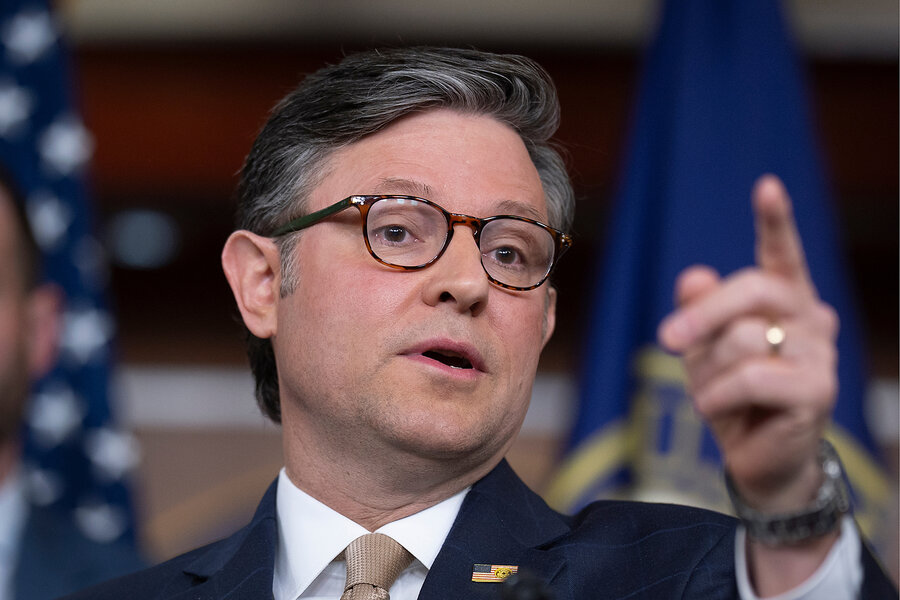
Senators had struck a bipartisan deal in early April to fund everything in DHS apart from immigration enforcement. Republicans plan to deal with that in a separate budget bill that won’t need support from Democrats, who were using the funding impasse to press for reforms on immigration enforcement tactics. But House Speaker Mike Johnson had refused to take up the Senate-passed legislation for weeks under pressure from other House conservatives who didn’t want to exclude ICE and CBP.
The chamber ultimately passed the bill after President Trump sent a memo to members on Tuesday urging them to take it up. The vote also came after an armed man tried to get into the April 25 White House Correspondents’ Dinner, at which Mr. Trump was present. The incident raised concerns about funding for the Secret Service, which is housed under DHS.
Both chambers Thursday also authorized a 45-day extension of Section 702 of the Foreign Intelligence Surveillance Act, just hours before the midnight expiration deadline. That short-term reauthorization was headed to the president’s desk later Thursday.
This section allows the government to monitor the communications of noncitizens outside the U.S. without a warrant. It’s controversial for several reasons, mainly because U.S. citizens who are communicating with foreign targets can get caught in that surveillance net.
The extension means Congress will still need to grapple with Section 702 and the thorny issues involved when it returns from its recess the week of May 11. A bipartisan coalition of representatives and senators want to add a warrant requirement before the government can look at communications from Americans swept up in the government’s surveillance.
“I think that the fourth amendment should protect Americans from unreasonable searches,” Republican Sen. Rand Paul of Kentucky told reporters Tuesday, before the final vote on FISA.
Other actions in Congress on Thursday:
- Farm bill compromise: The House passed a farm bill, a sweeping five-year law that would create national policy on issues ranging from agriculture to food programs to forestry. The bill faces a steep path in the Senate. House Republicans had to overcome internal divisions, including a debate between pro-business members and those who support the “Make America Healthy Again” movement championed by Health Secretary Robert Kennedy Jr. The latter group ultimately succeeded in stripping language that would have protected pesticide makers from lawsuits.
- Prediction market ban: Senators voted unanimously to prohibit themselves or their staff from trading in prediction markets. The ban went into effect immediately. This practice has come under scrutiny in recent months as reports emerge of people getting big payouts from market trades that seemed to foresee major news events – suggesting political insiders used their privileged knowledge of current events to make money betting on the outcome of those events.
- War powers flip: Republican Sen. Susan Collins flipped for the first time on a vote on the Iran war. The Maine senator voted yes on a Democrat-led procedural vote to move forward on a bill that, if passed, would have required the president to end military operations in Iran absent approval from Congress. The vote ultimately failed by a vote of 50-47, as multiple similar votes have in recent weeks. Senator Collins and Senator Paul were the only Republicans to vote yes. “I think this is one of those votes where you really don’t know until the vote is called” if members will vote across party lines, Democratic Sen. Adam Schiff, who sponsored the resolution, told the Monitor a few hours earlier on Thursday.