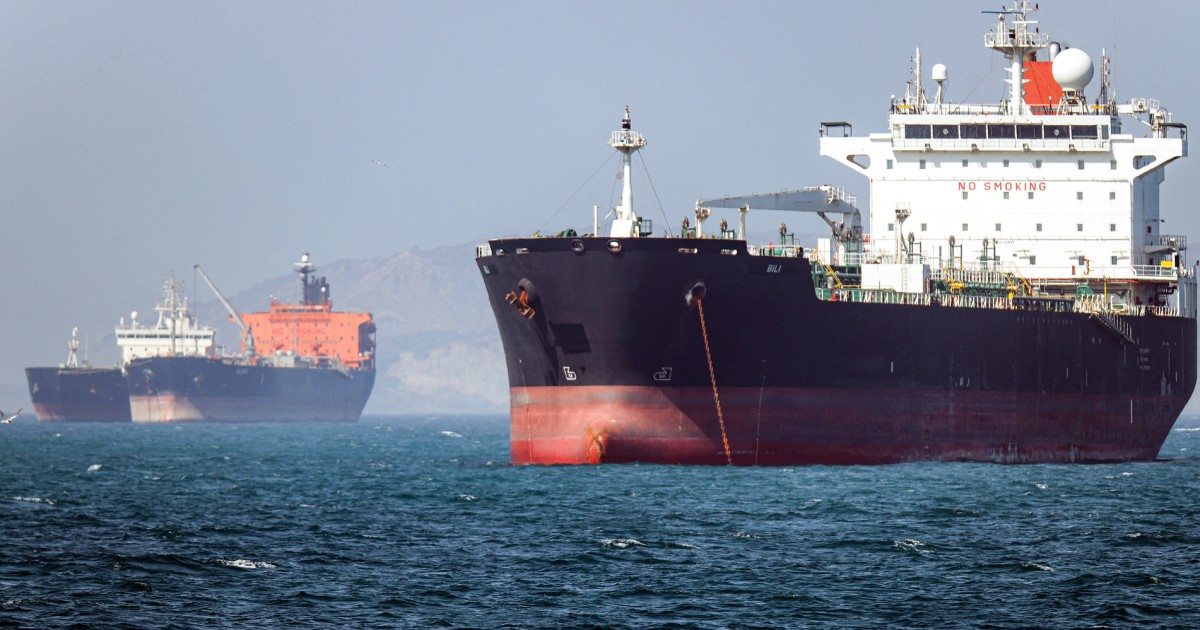
But some of the warships assigned to Project Freedom are also assigned to the paused Epic Fury mission, as well as the ongoing U.S. naval blockade of Iranian ports.
Secretary of State Marco Rubio, who also serves as interim national security adviser, said Tuesday from the White House press briefing room that the U.S. was “done” with Epic Fury and was now focused on the next stage.
“The operation is over,” Rubio said. “Epic Fury is — the president notified Congress, we’re done with that stage of it.”
The comments piled on more confusion over the status and future of the U.S. and Israel-led war against Iran, which began in late February. Though Trump again said it was only a “little excursion,” the war has become an increasing quagmire for the United States, as Iran maintains a chokehold on the waterway, energy prices spike, Trump’s approval rating declines and the president’s critical trip to China is rapidly approaching.
Pentagon officials said Iran has fired 10 times at military vessels, nine times at commercial vessels and seized two container ships since the ceasefire began on April 8, and the U.S. had taken out six Iranian boats.
Dan Caine, the chairman of the Joint Chiefs of staff, told reporters Tuesday that despite the attacks, Iran hadn’t reached the threshold for restarting the military’s bombing campaign. Yet Caine couldn’t say what that threshold was, calling that determination “a political decision above my pay grade.”
Hegseth said “the ceasefire is not over” and that only Trump can decide when that’s changed. “Ultimately, the president is going to make a decision whether anything were to escalate,” Hegseth said. Rubio described any U.S. action in the strait as “a defensive operation.”
“This is not an offensive operation. This is a defensive operation. And what that means is very simple, there’s no shooting unless we’re shot at first,” Rubio said. “We’re not attacking them.”
Iran, meanwhile, denied its vessels had been destroyed and said no commercial vessels or oil tankers made it through the strait.
Iran began to block the Strait of Hormuz after the U.S. and Israel began bombing.
While the situation in the strait was clearly “unbearable” for America, Iran has “not even begun yet,” parliamentary speaker and lead negotiator Mohammad Bagher Ghalibaf said in a post on X.
Events in the strait make clear that there is “no military solution to a political crisis,” Foreign Minister Abbas Araghchi also said in a post on X late Monday. He added “Project Freedom is Project Deadlock.”