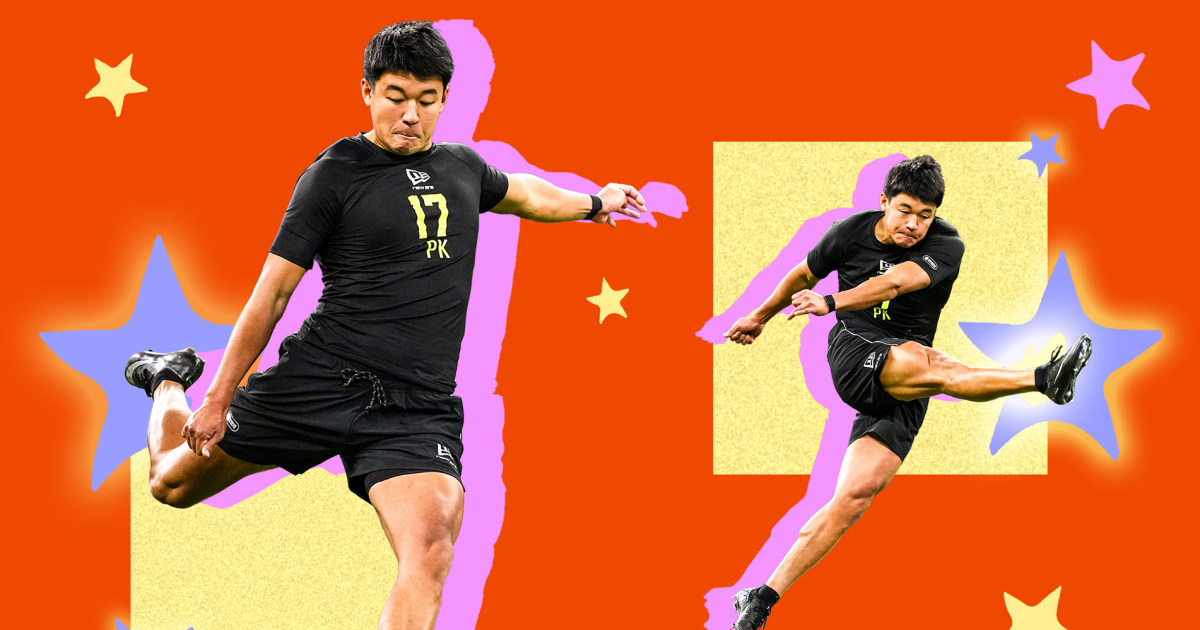
Unorthodox backgrounds are the norm in the IPP program, which expanded two years ago to include specialists, including kickers. Yet Matsuzawa might have the unlikeliest path to the NFL of all.
Football isn’t a foreign concept in Japan. A semiprofessional league, the X League, was founded in 1971. American universities once regularly played Japanese universities in the 1980s and the 1990s. Flag football is regularly practiced in elementary schools, and NFL games air weekly in the country during the regular season and the playoffs.
Matsuzawa’s father, Tetsuhara, had played quarterback at a Japanese university. But his father left the team after one season over frustration with a lack of opportunity, and he barely spoke of American football for the next 30 years, Matsuzawa said. While he was playing soccer in high school, Matsuzawa knew about only the New England Patriots, Brady and Montana, a favorite player of his father’s.
Matsuzawa envisioned a future that would keep him in Japan — college, followed by a career. But when he sat for the country’s rigorous national college entrance exams, he failed. When it happened again, a second time, it was “the first time, pretty much, that things didn’t go the way I wanted to,” he said. “I don’t know what I want to do in the future. I just hit the rock bottom.”
He graduated from high school in 2017, but other than a part-time job waiting tables at a Morton’s steakhouse, he rarely felt interested in leaving his family’s home for the next two years. He described himself as content to play video games in his room and spend time with his family.
“My family never rushed me, like, ‘You should do this.’ They never say that,” Matsuzawa said. “But that two years was really tough to me. I didn’t have energy. I didn’t have a, like, dream purpose of my life. And then my dad hated to see their son struggling in their life. He just gave me the tickets to the United States, to America, and he told me, like, ‘Just go outside of Japan and see in your eyes what is going on.’”
‘I want to do something great in the U.S.’
Matsuzawa landed in San Diego in early September 2018 with one backpack and only two things on his itinerary. He had to fly back to Japan out of Los Angeles two weeks later, and he had to watch an NFL game.
“That’s an American thing,” he said. “You can watch soccer, baseball in Japan, but not American football.”
Matsuzawa had heard of the San Francisco 49ers through his father, but they were out of town to open the 2018 season. He instead made his way to Oakland to watch the Raiders lose, 33-13, in their season opener to the Los Angeles Rams. The game was a high point of a trip that otherwise left Matsuzawa with mixed feelings. Unable to speak English, he likened himself to being as helpless as a baby. It compounded the rudderless feeling he’d experienced after high school in Japan.
Sitting in the stands and witnessing the spectacle of the Raiders-Rams game, though, sparked inspiration for how he could take control of his life. Some friends and family members thought he was crazy. But it provided a goal for which he could aim.
“I realized this kind of sucks — once you go outside of Japan, you’re just nothing,” he said. “Then I think, you know, I want to do something great in the U.S. I want to make them realize I can do something in the U.S. by myself.”
Had that inspiration struck Matsuzawa earlier in his life, he probably would have given the more glamorous positions of quarterback or receiver a try, he said. But given his already delayed introduction to football and his background in soccer, placekicking offered the most prudent option.
Now he just had to learn it.
On YouTube, Matsuzawa found videos of NFL kickers, including Jason Meyers, now of the Seattle Seahawks, and applied what he learned kicking into a giant net at a public park. For a while, he could kick accurately up to about 15 yards. After about a year at the park and sneaking onto a field with American-style uprights at Kanda University, where some of his friends went to school, Matsuzawa wanted to make his project more serious. He made a 90-minute one-way trek from his home to the office of the Fujitsu Frontiers of the semipro X League and pleaded for a job.
“I asked them, ‘I’m gonna do whatever you want. Doing filming, like wiping the toilet, or whatever you guys wanted — and then just after practice, let me use the field,’” he said. “And then that was the deal. And then they say, ‘Yeah, of course.’”
His time around the Frontiers gave Matsuzawa access to American-style uprights and coaches and players who he said were encouraging. Eventually, coaches invited him to join kicking and weightlifting sessions with the team’s specialists, and it was enough to piece together a highlight reel that he sent, via direct message on Twitter, to dozens of U.S. junior college coaches whose names he’d found online. The reels showed his naturally strong leg and big size, at 6-foot-2 and 200 pounds. But only Hocking College, a community college in the rural, 4,500-person town of Nelsonville, Ohio, agreed.
Moving to rural Ohio required an adjustment. He watched clips of “Friends” and “Star Wars” to grasp English. To save money, he turned to YouTube again to learn to cook and cut his own hair. If that was trial and error — he once cut a 3 -inch-long chunk out of the back of his hair — so was his kicking. Hocking didn’t have an experienced long snapper; the first time Matsuzawa lined up for a real kick in his first game, a moment for which he had waited three years, the snap from a wide receiver flew over his head.
Matsuzawa made 12 of his 17 kicks during his second season at Hocking, including a 50-yard game winner. He did better at a national kicking showcase, which earned him the attention of the University of Hawaii, a Division I program that could offer him his biggest exposure in front of NFL executives. But his first season at Hawaii, in 2023, was spent as a backup, and in 2024 he went 12-for-16, with a season long of 41 yards. Last summer, he entered the season with some trepidation, because the school had to scramble to find a teammate who knew how to hold for placekicks, but he also returned with his confidence after having worked with a mental coach.
Over lunch during preseason, Hawaii’s long snapper told Matsuzawa he was about to have a big year and needed to proactively think about a nickname. The snapper tossed out an idea: “the Tokyo Toe.”
The world would soon learn it.
Anonymous to overnight celebrity
In last season’s first game, Matsuzawa made three field goals, including a 38-yarder in the final seconds, to beat Stanford. His family watched from the stands.
“Winning the game, that is the best moment in your life,” he said. “That is the best feeling you can ever feel.” He felt “a little bit addicted to being successful, and once you feel it you want to feel more.”
Within days, the player who had shown up to the U.S. knowing almost no English was doing interviews with some of the largest media outlets in the U.S. He stayed in the news by making his first 25 field goals last fall, matching the NCAA record for most consecutive makes to begin a season, which had stood for 43 years, and finishing 27-of-29 on the season to earn consensus all-America honors, the first time that had happened in Hawaii’s school history.
Though he wasn’t selected in April’s seven-round draft, that hasn’t stopped Matsuzawa from becoming one of the most talked-about rookies. The NFL’s Japan-focused Instagram account has fewer than 19,000 followers, yet a post showing video of the moment the Raiders called Matsuzawa to inform him he’d be signed as a free agent has earned more than 100,000 likes. He called being signed by the Raiders, the franchise he watched in his first NFL game, a “full-circle moment.”
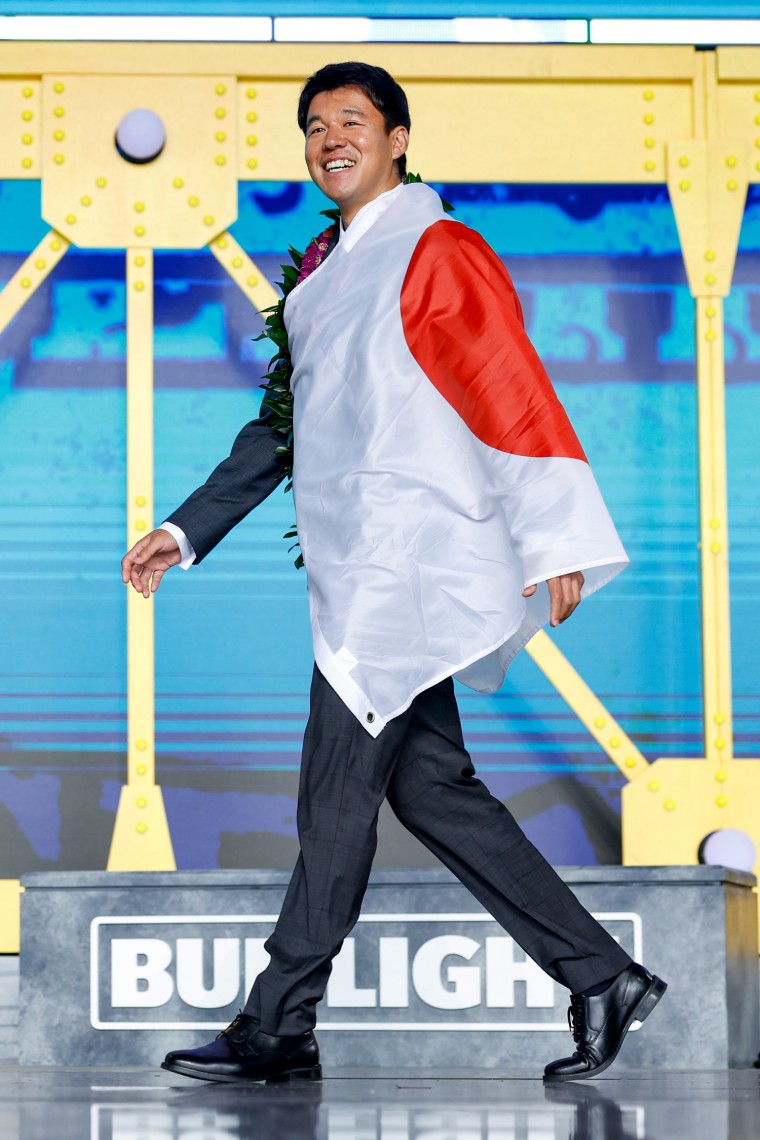
Since Matsuzawa began training in Southern California in the winter, Japanese media based in the U.S. have dropped by EBS Performance’s compact training facility, a few miles from the Pacific Ocean, to record segments. Hollywood has shown interest in his backstory. In April, he met Meyers, the kicker after whom he modeled himself.
“Timing is everything; mental is everything,” said Byrd, a longtime trainer of NFL hopefuls. “It’s a lot of things that have to go into place for something to work, and we are all looking for something that’s different. This is different.”
“Obviously, it’s fun” to vault from anonymity to being a sensation in two countries, Matsuzawa said, yet it isn’t surreal. Believing so strongly he would kick in the NFL led him to expect a breakout moment. It just happened to happen in the last nine months.
“Every time I see my Instagram following is going up, I was like, ‘Oh, this is amazing; this is so funny,’” he said. “But [I’m] trying to separate myself and what people think or what people say. I kind of knew that was gonna happen to me, because I always say I want to be an NFL player.”
He is one, for now. Seeing a fellow free agent cut only a few days into rookie minicamp with the Raiders woke up Matsuzawa to the reality that although his place in the international pathway allows for a potentially longer stay on a roster, his spot in the ruthlessly competitive NFL isn’t guaranteed. If nothing else, the past eight years have taught Matsuzawa the power of self-belief. It’s why he talks to himself before every kick.
“Tell myself, like, ‘I’m elite,’” he said. “‘I make this field goal.’”