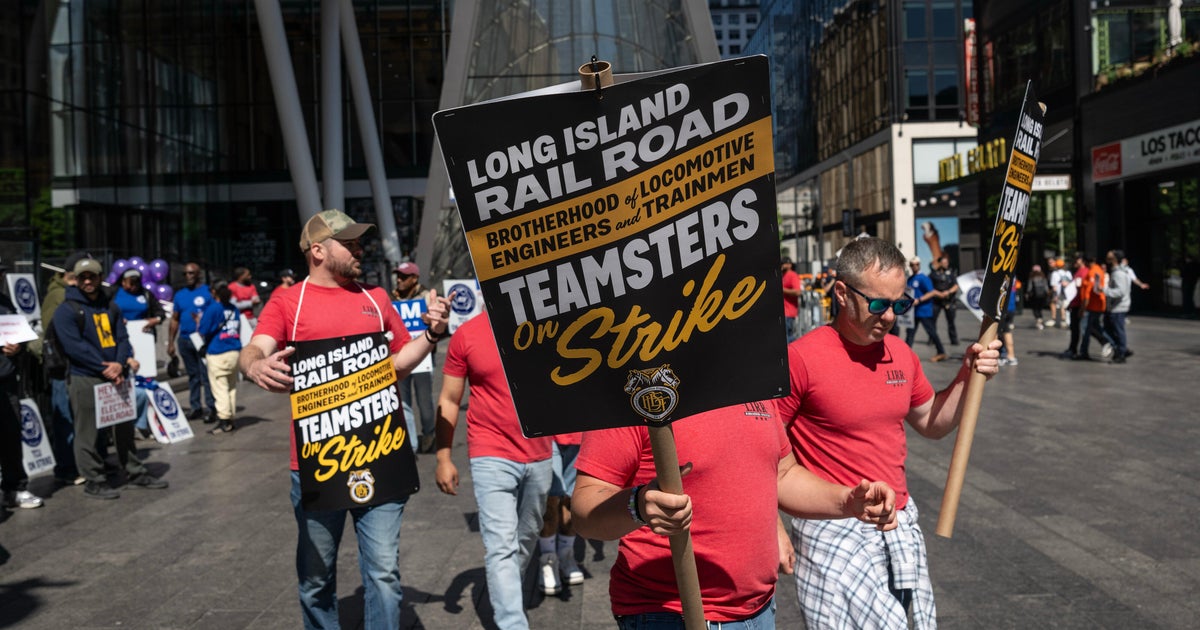
Thousands of Long Island Rail Road riders are in for a rough commute Monday morning as the MTA and unions are set to resume talks.
The National Mediation Board, which handles labor relations for railroads, summoned both sides Sunday night. No deal was reached after hours of talks. They will return to the negotiating table at 7:30 a.m.
Meanwhile, commuters are starting to take shuttle buses and subways into New York City as the largest commuter rail system in North America remains shut down.
“It’s very inconvenient. Unfortunately or fortunately, I am starting a new job today, so I have to get on the train, I have to go in,” one commuter at the Ronkonkoma station said. “Bad day to start a first day of work.”
Workers have also returned to the picket line at LIRR stations.
LIRR strike update
The strike stems from a dispute over the last year of a four-year contract between the MTA and unions.
The MTA agreed to 9.5% wage hikes and was only a percentage point apart on the fourth year. Then, union sources said the MTA suddenly asked for a steep increase in healthcare contributions for new hires from 2% to 10%.
“We’re looking for a modest raise in our wages,” said union representative Raymond Delio. “Health insurance should never be on the table; we work hard enough.”
MTA Chairman and CEO Janno Lieber said the unions are made up of the highest-paid railway workers in the United States, making well over six figures.
“We are more than willing to meet them halfway in wages. In fact, more than halfway, which is why we put new ideas on the table again and again,” Lieber said.
Is the LIRR running today?
The MTA started providing 275 free shuttle buses from six LIRR stations to Queens as the railroad remains shut down.
These buses can only handle 13,000 daily riders, which is very small in comparison to the more than 250,000 normal daily riders.
The MTA is encouraging people to work from home if they can.
Even if a deal is reached on Monday, sources told CBS News New York’s Elijah Westbrook that service won’t resume immediately.
The railroad would still need at least a day to inspect tracks, equipment, signals and get crews situated before full service could return.
Former Department of Transportation Commissioner Sam Schwartz said the ripple effects of the commuter nightmare will be far-reaching.
Subway riders will see bigger crowds, and roads across Long Island will be busier.
“Those from the South Shore are going to see the Belt Parkway backed up like they haven’t seen in a long time. The Gowanus will be impacted. Buses will be impacted,” he said. “And we’ll have to grin and bear it.”