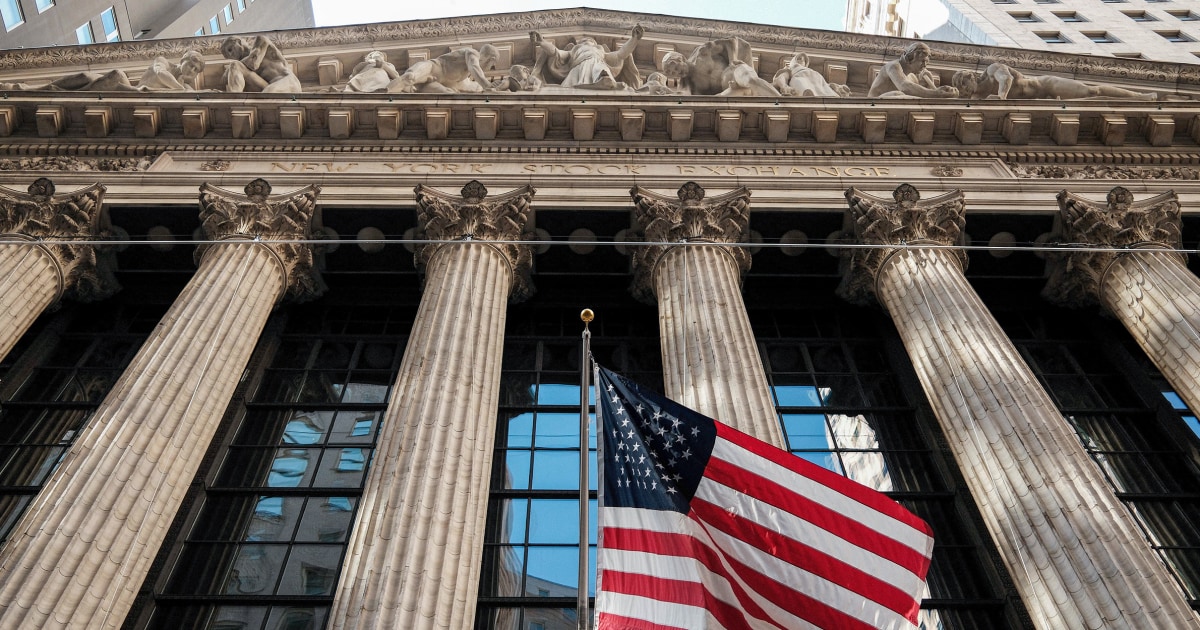
The stock market is near record highs, but there’s another corner of Wall Street that’s flashing warning signs: the bond market.
Subscribe to read this story ad-free
Get unlimited access to ad-free articles and exclusive content.

For many people, talk of bonds and yields and rates might sound like alphabet soup. But the bond market actually has a huge impact on your life — affecting how much you pay for everything from mortgages to car loans.
Bond … James Bond?
No, not James — but still action-packed.
A bond is basically an IOU. Investors lend money to institutions — often the U.S. government — in exchange for interest payments over time.
U.S. government bonds are called Treasurys, and they come in different durations: one month, two months, all the way up to 30 years. Lending money to the government tends to be a sure bet: It’s much less volatile than the stock market, and you’re all but guaranteed you will be paid back.
As an investment, bonds can be a safe haven during times of uncertainty.
And you get regular payments back — what’s called a yield. When lots of investors sell bonds, yields typically rise, because there are fewer people overall in the bond market.
Yields also tend to rise when the Federal Reserve hikes interest rates, and they fall when those rates come down — often in response to inflation.
Let’s say you buy a 10-year bond for $100 at a 5% yield. But then, after a few years, overall interest rates go up, and yields on new bonds are 7%. Your 5% bond is less desirable, because it has a lower yield than what’s being offered new.
If you wanted to sell it, you wouldn’t be able to sell it for as much as you paid for it — so you could get $80 for it, perhaps, instead of $100.
That’s another reason investors might sell their bonds: If investors believe the U.S. government will need to borrow more money soon, they may expect the government to issue more bonds into the market, increasing the overall supply.
And as in any market, supply and demand matters. If more bonds are suddenly available, the government may need to offer higher yields to attract investors. That can make older bonds with lower yields look less attractive.
So what’s going on right now?
Long-term Treasury yields over the last few days have surged to some of their highest levels in decades. The 30-year yield reached 5.2% Tuesday, its highest since 2007.
That’s in large part because Wall Street is increasingly worried that inflation could stay higher for longer. The rise in oil prices due to the Iran war is pushing up the costs of gasoline, food and air travel.

FORSUBSCRIBERS

The unexpected way the Iran war impacts the housing market
02:09
“This conflict has gone on longer than people expected,” said Kelsey Berro, a portfolio manager with J.P. Morgan Asset Management. “I think that the concerns are compounding.”
If inflation stays elevated, the Federal Reserve may need to keep interest rates higher for longer — or potentially even hike rates. That could lead to even higher bond yields.
What does that mean for regular people?
The bond market influences borrowing costs for things like mortgages, credit card loans and auto loans. So when yields go up, particularly the 10-year yield, consumer lending rates tend to rise with them.
On Tuesday, the 30-year fixed mortgage rate rose to 6.75%, its highest since July, according to Mortgage News Daily. Rates have steadily climbed since the Iran war started — after having dipped below 6% just before.
“It’s horrible for consumers,” said Diane Swonk, chief economist at KPMG. “It becomes such a political piñata, because higher interest rates do affect affordability, but they also are a key factor in bringing the inflation that everyone is experiencing down.”
Investors are also constantly comparing bond yields to potential stock market returns. At a certain point, rising yields can put pressure on stocks, because if investors can earn higher returns in the bond market, riskier assets like stocks can suddenly look less attractive.

The tipping point, according to many Wall Street analysts, tends to be around the 4.5% level for the 10-year Treasury yield. Right now, the 10-year yield is hovering around 4.7% — a level some strategists warn could begin weighing more heavily on stock prices and the broader economy.
Analysts from London-based HSBC described the rising bond yields as “firmly in the danger zone,” adding that that level tends to put pressure on other assets.
And that’s an issue for the widening K-shaped economy — in which spending by wealthier Americans, many of whom are invested in stocks, accounts for an outsized share of overall consumer spending, while lower-income families struggle.
A stock market plunge could put serious pressure on higher-income Americans, causing them to pull back on their spending.
“If you lose the wealthy consumer, it’s very hard to keep this economy moving forward in any meaningful way,” Swonk said. “I am very worried about it.”
What does it say about the broader economy?
The rising bond yields signal that inflation is most likely here to stay, at least for a while.
“At a certain point, there will be concern that if interest rates continue to rise, that is going to be a negative impulse for growth, slow down lending, slow down activity and hurt the trajectory of the overall economy,” Berro said.
The bond market also can serve as an important check on policy, which happened last year after President Donald Trump’s “Liberation Day” tariff announcements.
At the time, the 10-year Treasury yield surged at a rapid clip, prompting Trump to pull back on his original reciprocal tariff rollout.
01:59
How Trump’s tariffs will affect the average American
00:0000:00
“The bond market is very tricky — I was watching it,” Trump said at the time. “People were getting a little queasy.”
Time will tell whether the current moves in the bond market ultimately prove a factor in any policy changes. But for now, investors are becoming increasingly anxious about the long-term effects of persistent inflation and government debt.
“What often happens, sadly, in financial markets is they can ignore something until it becomes unignorable,” Swonk said.
For years, inflation has been higher than the Federal Reserve’s 2% goal, while the U.S. debt continues to climb. The Iran war has only put more pressure on the economy.
“There is no Las Vegas in the global economy,” Swonk said. “Whatever happens abroad washes up on our own shores.”
“And what happens here does not stay here,” she added. “It has ripple effects for the whole world.”