

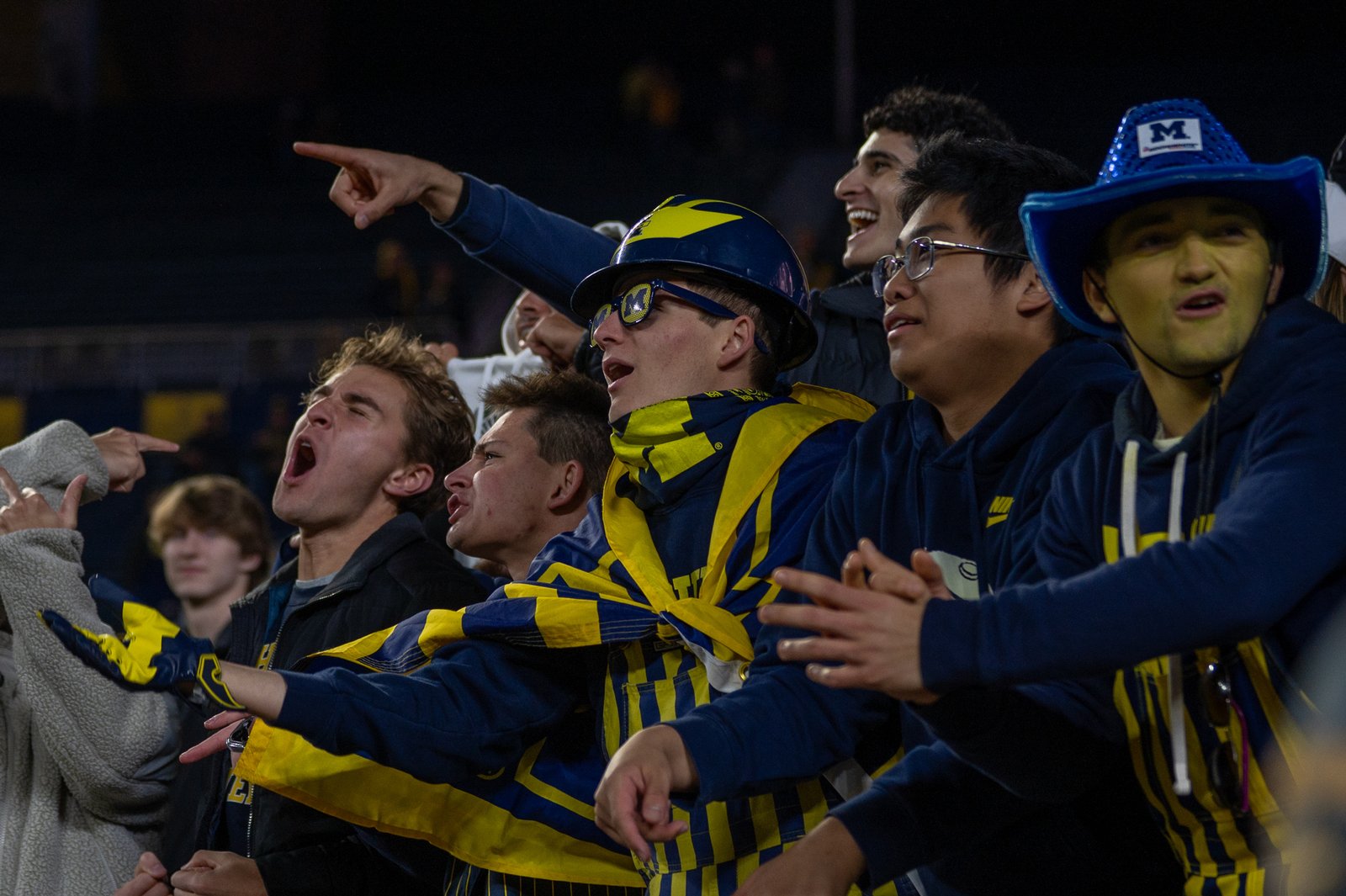
As freshman running back Savion Hiter stood outside the media tent Saturday, trying his best to keep his composure, he couldn’t help but overhear the personal attacks coming from his right.
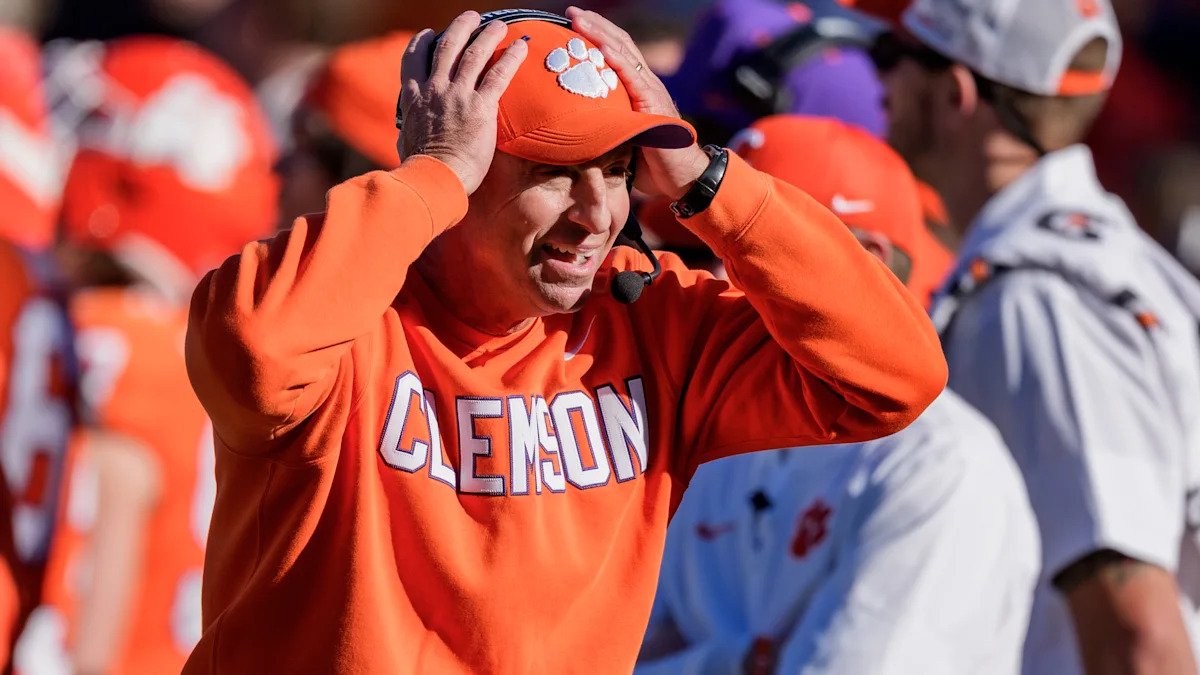
The insults weren’t directed at Hiter, rather his head coach. Immediately following the Michigan football team’s ugly 31-7 loss to No. 13 Oregon, a cluster of disgruntled, fed-up Wolverines fans had positioned themselves up against the low fence surrounding the tent, waiting for Michigan coach Kyle Whittingham to exit so their verbal onslaught could begin.
When Whittingham eventually walked out, he was berated by their wide array of criticisms, some of which called him an old man, others telling him to go back to Utah. Hiter was subjected to all of this, too. The 18-year old, who produced his team’s only score against the Ducks, showed no visible reaction to the comments flying around him. Hiter found refuge from the noise by entering the media tent, only by subjecting himself to the press’ direct questions as to why his team lost so badly.
Hiter’s experience Saturday is only the most visible example of the loud, omnipresent criticisms the Wolverines have become tasked with blocking out as their season spirals out of control. While the players don’t encounter an angry mob of fans all that often, it’s undeniably more difficult to avoid the increasingly hostile social media posts targeting the program. Defensive coordinator Jay Hill shared that some of those insults are slipping through the cracks, and it’s beginning to affect the on-field product.
“For the first time last week (against Oregon), I think you saw a little bit of it set in on defense,” Hill said Wednesday. “We had played as one of the best defenses in the country up through the first nine games, and last week we had a little setback. And is that some of the noise? Maybe.”
Hill is referring to the 31 points the Ducks laid on Michigan’s then-No. 4 defense in the country. A unit that hadn’t allowed more than 21 points all season gave up that same number to the Ducks in a single half.
The majority of Oregon’s damage came on explosive plays uncharacteristic of the Wolverines’ defense to allow. Three of the Ducks’ four touchdowns came on gains of 49 yards or more. Senior defensive tackle Jonah Lea’ea claimed postgame that Oregon’s game-altering offensive plays were the product of Michigan’s defenders trying to do too much on the field, trying too hard to make a play or overcompensating for a teammate’s mistake. Those are mental errors, ones that very well may have been fostered or worsened by the online criticisms these players have all been exposed to in spades.
“They’re young teenagers, they look at their phone all the time, and so just being realistic, do they hear it? Absolutely. Is it part of life and is it part of the growth process? Absolutely,” Hill said. “They’ll be struggling with what they’re going through right now, and it’s hard to block out all the noise. You got to be oblivious to not know it’s there.”
Senior cornerback Zeke Berry is one of those attentive players on Hill’s defense. Berry shared Nov. 10 that he’s seen plenty of the hateful comment sections while scrolling through his personal Instagram account, specifically recalling the common sentiments that the offense is letting his unit down, and that Whittingham doesn’t know what he’s doing.
“Yes, we are definitely aware, but we don’t care,” Berry said.
It’s possible that players like Berry truly don’t pay any mind to the online barrage, but that doesn’t mean they don’t agree with some of its sentiment. If it’s not an outsider’s negative opinion getting the Wolverines in their head, it’s their own frustration with a 5-5 record causing play to worsen as the season drags on. Whichever it is, there’s a swarm of added mental pressure to perform. That can easily lead to the kind of on-field overcompensation Lea’ea was referring to against Oregon, and while the coaching staff wants to nip these defensive lapses in the bud, extra added mental pressure only runs the risk of exacerbation.
“There’s a lot of things being said on social media to the players directly, but I think the type of kids we have, they also are competitive, and they recognize that we haven’t been very good,” offensive coordinator Jim Harding said Wednesday. “It’s a delicate balance as a coach, where you want to press and press, but you also know at the end of the day they are still kids, so having to deal with some of the things that … they’re dealing with being 18-year-old kids is a challenge.”
Michigan has simply not been good enough this year. Not for the fans’ standards, and not for its own, either. Each subsequent week of poor football raises the noise to a new fever pitch, and since there’s no avoiding the criticism, all the Wolverines can do is stop it from materializing on the field.



Leave a Reply