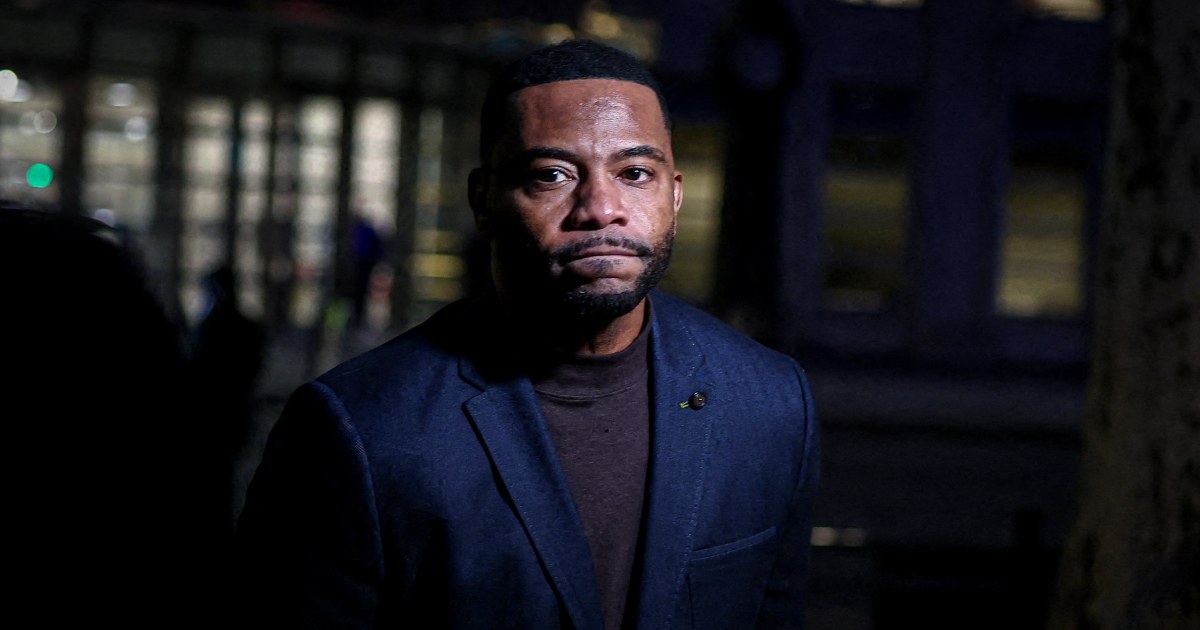
A central figure in sweeping gambling schemes involving professional and college basketball pleaded guilty Thursday to several charges stemming from two separate criminal cases.
Subscribe to read this story ad-free
Get unlimited access to ad-free articles and exclusive content.

Marves Fairley, who has marketed himself on social media as a sports betting influencer, appeared before a federal judge in Brooklyn, where he admitted to obtaining nonpublic information to place fraudulent bets on NBA games in a case brought by prosecutors in the Eastern District of New York.
The self-proclaimed gambling guru pleaded guilty to one count of conspiracy to commit wire fraud and one count of conspiracy to commit money laundering in connection with the professional basketball betting case.
Federal prosecutors in Brooklyn said Fairley bought inside information on former Miami Heat guard Terry Rozier’s deliberate underperformance in a 2023 game, as well as on Los Angeles Lakers stars LeBron James’ and Anthony Davis’ nonpublic medical status, according to the indictment.
“I agreed to pay a player to change their game performance to give me an advantage,” Fairley said, appearing solemn throughout the hearing.
Prosecutors are expected to file new charges of sports bribery and honest services wire fraud against Rozier, who was charged alongside Fairley last year in the sprawling indictment.
On Thursday, Fairley also admitted to recruiting and bribing college basketball players to underperform at games and placing wagers in a separate NCAA point-shaving case brought by federal prosecutors in Pennsylvania. In that case, he pleaded guilty to five counts, including sports bribery, conspiracy to commit wire fraud, and wire fraud.
The federal government suggested that Fairley serve eight to ten years in prison, citing that he was a leader in the schemes and the amount of money he profited from the illegal activity.
He is scheduled to be sentenced in February 2027.
Fairley, who was joined by his defense attorney Eric Siegle, declined to comment to reporters’ requests for comment outside of the courtroom after the hearing ended.