

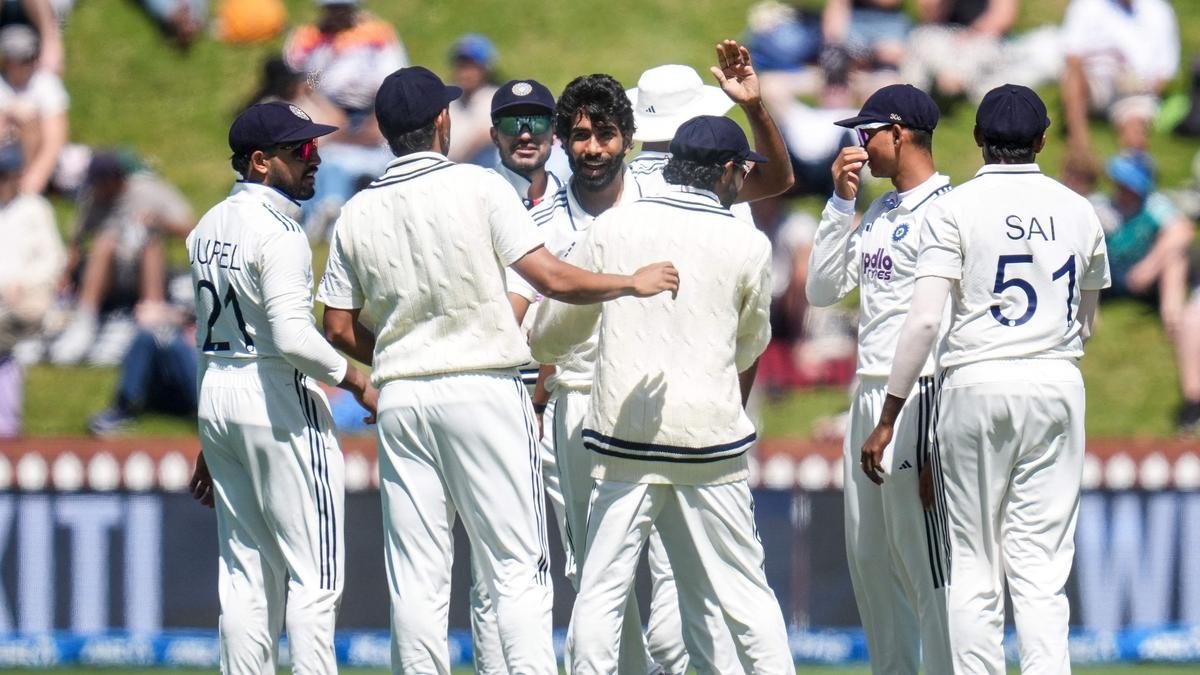
The shores of New Zealand have seldom been kind to the Indian Test team.
The last time India won a Test match in New Zealand was in 2009 and on a seemingly green track in Wellington, even the ultimate optimist would have hesitated to bet on that winless run coming to an end.
However, across five days at the Basin Reserve, it was India that dominated New Zealand, coming close to an innings win before time ran out and the two teams eventually had to settle for a draw.
India controlled proceedings across all three departments right from ball one, winning 12 out of the 15 sessions to head to Christchurch with confidence and momentum on its side.
From India’s third highest total to its bowling performance, here are talking points from the game.
Uncharacteristic Wellington pitch comes to India’s aid
‘Appearances can be misleading’ is an old adage that India and New Zealand learnt the hard way upon seeing the green layer on the Wellington pitch. The green tinge prompted both teams to field a four-pace attack anticipating maximum assistance for the pacers. However, its true nature proved to be one of a flat deck that slowed down as the game progressed.
This played directly into India’s hands, especially after captain Shubman Gill won the toss and decided to bowl first. The wicket offered bounce and seam movement, as was the expectation before the game, only in the first two sessions, which India’s bowlers made full use of to reduce the home side to 70/5.
On Day 2, the green soon gave way to a wheatish brown that resembled a batting paradise often found in the IPL, on which the Indian batters made hay while the sun shone. India amassed 720/9 in its only batting essay to record its highest score in overseas Tests and its third highest score overall. The team also accomplished 50-plus partnerships for its seven wickets, marking the first such instance in the history of Test cricket.
Bumrah shows how it’s done on a flat wicket
Before the start of the first Test, New Zealand was the only country where Jasprit Bumrah had averaged over 30 in Test matches. In Wellington, India’s pace spearhead delivered the goods in unhelpful conditions to take five wickets at an economy rate of less than three.
The 32-year-old was especially effective against New Zealand captain Tom Latham, who he dismissed for a pair.
What made Bumrah stand out the most was his consistency with line and length. No pacer across both bowled more length deliveries than Bumrah (173).
Bumrah bowled at the stumps the most, sending in 37 deliveries that forced the batter to play a shot and create wicket-taking opportunities.

What made Jasprit Bumrah stand out the most was his consistency with line and length.

What made Jasprit Bumrah stand out the most was his consistency with line and length.
Bumrah also extracted the maximum movement off the surface amongst all bowlers, with 11.8% of his balls being seaming deliveries. The next best was New Zealand’s Nathan Smith (6.7%)
In a match where the winds, contrary to expectations, had largely stayed away, Bumrah managed the most swing (4.3% of deliveries), fractionally ahead of Kyle Jamieson (4.2%).
Devdutt Padikkal strengthens case to become long-term number 3
Devdutt Padikkal continued his rich vein of form with a 175-ball 80, further cementing his place in the side as India’s first-choice number three.
Padikkal, who came into the match on the back of two centuries against Sri Lanka and a hundred and a fifty in the India A tour, stitched a 165-run partnership with Karnataka teammate KL Rahul to set up India’s big total.

Devdutt Padikkal scored 64% of his runs off the hard length, the only delivery type against which he had a strike rate of over 50 against pace.
Devdutt Padikkal scored 64% of his runs off the hard length, the only delivery type against which he had a strike rate of over 50 against pace.
Padikkal’s knock was defined by immaculate footwork and seamless weight of transfer, which he used to split his approach. He was defensive off the front foot, and attacked on his backfoot, often relying on late cuts and punches to thread the gaps.
The southpaw scored the majority of his runs through the off-side, and was also prolific behind square.
Padikkal scored 64% of his runs off the hard length, the only delivery type against which he had a strike rate of over 50 against pace.
Rahul, Pant script history
Rahul and Rishabh Pant, India’s senior most members in the batting unit, etched their names in the history books by becoming just the fifth and sixth players to score a Test hundred in all SENA (South Africa, England, New Zealand, Australia) countries. The other names on this list are Virat Kohli, Sachin Tendulkar, Mohammed Azharuddin, and Rahul Dravid.

KL Rahul used classical shots and timing to target the off-side, where he collected most of his runs.
KL Rahul used classical shots and timing to target the off-side, where he collected most of his runs.
Rahul was compact in his knock of 136 off 290 balls, while Pant (128 off 153 balls) was a lot flashier, displaying a wide range of unorthodox strokes that has been central to his technique in Test cricket.
Rahul used classical shots and timing to target the off-side, where he collected most of his runs.
Rahul also utilised his leg-side game to good effect, rolling his wrists and getting on top of the ball to find the fence.
Pant, on the other hand, was not as pleasing on the eye but far more aggressive. In trademark fashion, he swept, reverse-swept, slogged, and danced down the ground to send the New Zealand bowlers on a leather hunt.
The wicket-keeper in the process also surpassed Brendon McCullum in the list of most sixes in Test cricket with 108, and is only behind Ben Stokes (138).

Rishabh Pant was a lot flashier, displaying a wide range of unorthodox strokes that has been central to his technique in Test cricket.
Rishabh Pant was a lot flashier, displaying a wide range of unorthodox strokes that has been central to his technique in Test cricket.
Missed opportunities cost India potential win
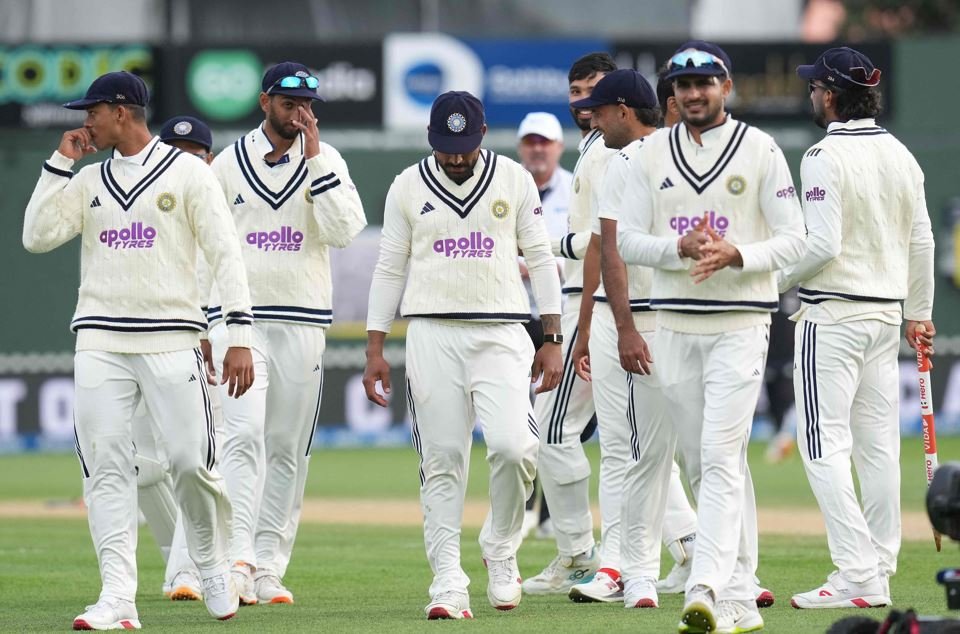
India will be rueing the fact that it could not secure a win despite doing almost everything right. On Day 5, with eight wickets needed to win, India let a couple of opportunities go to waste, which, if it had cashed in on, might have potentially helped the visitor secure a famous innings win.
The first fumble came from Akash Deep at mid-on, when a mix up by Daryl Mitchell and Glenn Phillips offered India an easy chance of a run-out at the striker’s end. However, Akash failed to collect the ball cleanly, which helped Mitchell run back to safety.
The second miss came when captain Shubman Gill surprisingly went with a spread out field after India took the second new ball, easing the pressure on the New Zealand batters.
The absence of a short leg for the short ball, which caused Mitchell’s downfall in the first innings, came to hurt them. Prasidh Krishna, the pick of the bowlers on the final day, got Mitchell to inside edge one onto the pads and loft in the air, only for the ball to land safely.
Gill reverted to an attacking field in the post-Tea session, stationing Padikkal at short leg against Mitchell. The ploy nearly worked but Padikkal failed to latch onto a difficult reflex chance.
Mitchell and Phillips would end up staying unbeaten at the crease to help New Zealand come away with a draw.
Selection calls for Christchurch: Does Mohammed Siraj make a comeback?
India’s decision to name a four pace-attack and not include Mohammed Siraj, its highest wicket-taker in the current WTC cycle, raised eyebrows. The logic behind the team management’s thinking was that Anshul Kamboj and Akash ensure more batting depth, and the latter, with his scramble seam, would be better suited to exploit the conditions in Wellington.
In hindsight, there is little that Siraj could have done to make a difference, but his energy and commitment on the field remain unmatched.
With both teams calling for a more pace-friendly wicket in Christchurch, it will be interesting to see if India tweaks its bowling combination. Akash, Anshul and Prasidh did well to execute their roles in Wellington, playing defining supporting acts to Bumrah.
Whether one of the three needs to make way for Siraj’s invaluable experience in overseas conditions is a decision the team management will have to mull over seriously.
In the spin bowling department, Washington Sundar used drift to dismiss Devon Conway, create a number of close calls, and shouldered much of the responsibility on deteriorated Day 5 pitch. He is likely to retain his place over Ravindra Jadeja, considering New Zealand’s left-hand heavy batting lineup.
Published on Nov 23, 2026












Leave a Reply