Fifteen protesters in Minnesota face a series of charges including conspiracy to impede or injure federal officers, assault on a federal officer and destruction of government property, the departments of Justice and Homeland Security announced Tuesday.
Subscribe to read this story ad-free
Get unlimited access to ad-free articles and exclusive content.

The charges stem from demonstrations earlier this year against the Trump administration’s mass immigration enforcement operation in Minneapolis and the surrounding area.
The protesters are accused of using multiple tactics to disrupt federal immigration enforcement, including using vehicles and blocks of ice to block or slow down agents’ vehicles outside a federal detention center, and using homemade shields made of plastic, wood and metal to “physically resist the efforts of law enforcement,” Minnesota U.S. Attorney Daniel Rosen said at a news conference.
“They all joined an agreement, a conspiracy to interfere with lawful immigration enforcement operations. The conspiracy was not to interfere by their voice, but to do it by force; that’s a crime, and it will not be tolerated in the United States,” Rosen said.
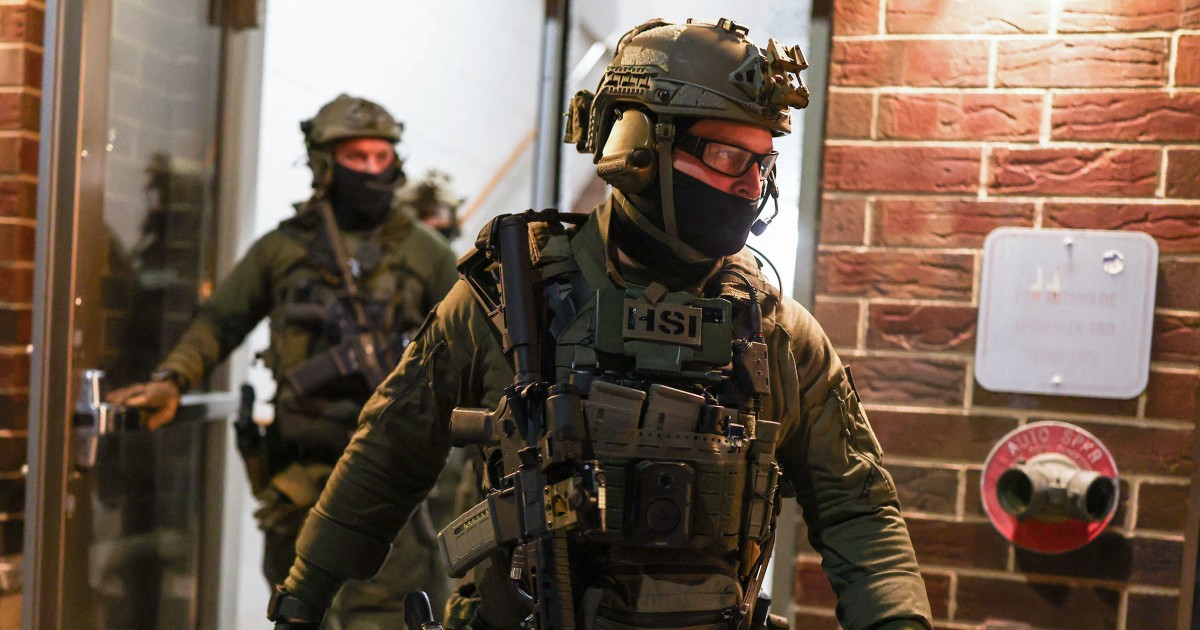
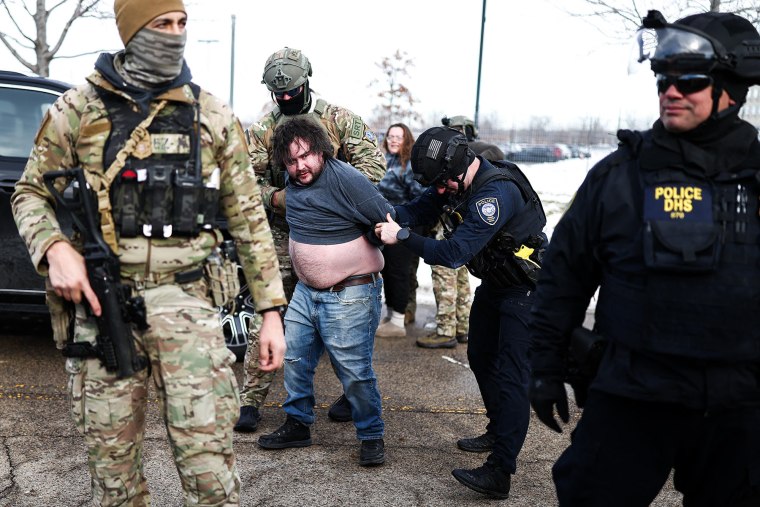
Twelve of those charged were arrested during an operation Tuesday morning; one was in custody and two remain at large, he said.
Rosen declined to say whether any officers were injured during the demonstrations, which took place on Jan. 23 and March 1.
“Whether or not they actually, at the end of the day, cause bodily harm is not the measure of whether or not they committed a serious federal crime,” Rosen said.
Rosen also said the protesters followed and surveilled law enforcement officers.
Rosen said the defendants were associated with two “Minneapolis-based antifa groups” and showed a video in which one defendant claimed the term.
“Antifa,” short for “anti-fascist,” is an umbrella term for loosely affiliated far-left activists and groups. It resembles more an ideology than an organization, though some have embraced militant tactics.
The Trump administration sent 3,000 federal agents to Minnesota at the end of November for the immigration enforcement operation dubbed Metro Surge. Tensions flared over aggressive tactics by federal agents, including pepper-spraying crowds and use of force on civilians.
During the months of the operation, crowds of observers and activists would often quickly gather at the site of immigration enforcement operations, blowing whistles and honking horns to warn others of the presence of ICE and Border Patrol agents throughout the city.
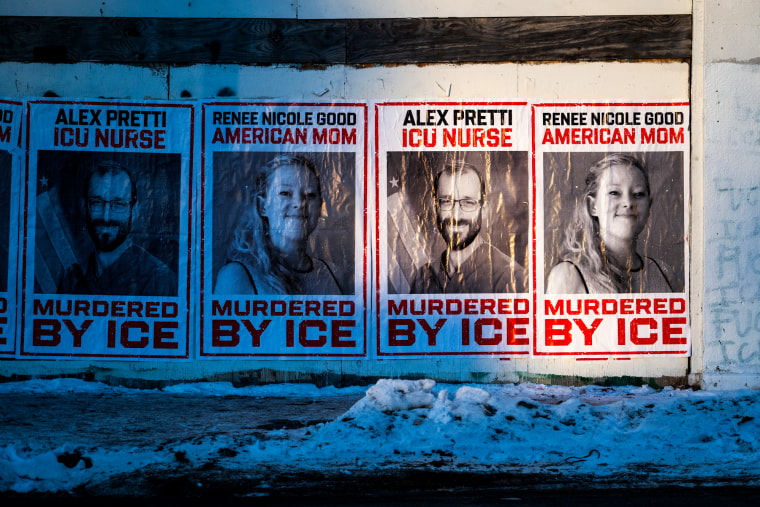
Amid the crackdown, immigration authorities shot and killed two U.S. citizens — Renee Good, 37, a mother of young children, and Alex Pretti, 37, an intensive care unit nurse at a local Veterans Affairs hospital — in separate confrontations. The killings, which were captured in videos from the scene, led to a groundswell of outrage and massive protests across the country. The deaths also drew stark criticism from Democrats and some Republican lawmakers.
Over the last two months, Minnesota prosecutors have charged two ICE officers in separate incidents related to allegations of violence against civilians.
Last month, an ICE officer who was accused of lying about an incident in which he shot a Venezuelan man in January was charged with four counts of assault and falsely reporting a crime in Minnesota. Prosecutors allege the officer shot through the front door of a residence “with the intent to cause fear of immediate bodily harm or death to the four adults who were just inside the door,” Hennepin County Attorney Mary Moriarty said at a news conference at the time.
The officer was taken into custody last month in Texas.
In April, another ICE agent was charged with felony second-degree assault with a dangerous weapon. The agent was accused of pointing a gun at the heads of two civilians in a vehicle, Moriarty said at the time. That agent turned himself in and had an initial court date in May.
The Department of Homeland Security did not respond to requests for comment after either arrest.
The incidents occurred during DHS’ three-month immigration enforcement operation in Minnesota.
In the weeks after the killings, Trump administration border czar Tom Homan arrived to take over the operation from Border Patrol commander Gregory Bovino, who was relieved of the title and returned to his previous role as sector chief in El Centro, California, before retiring. Homan in February announced a winding down of the effort, which he said had resulted in the arrests of thousands of people. Immigration arrests in and around Minneapolis have continued.