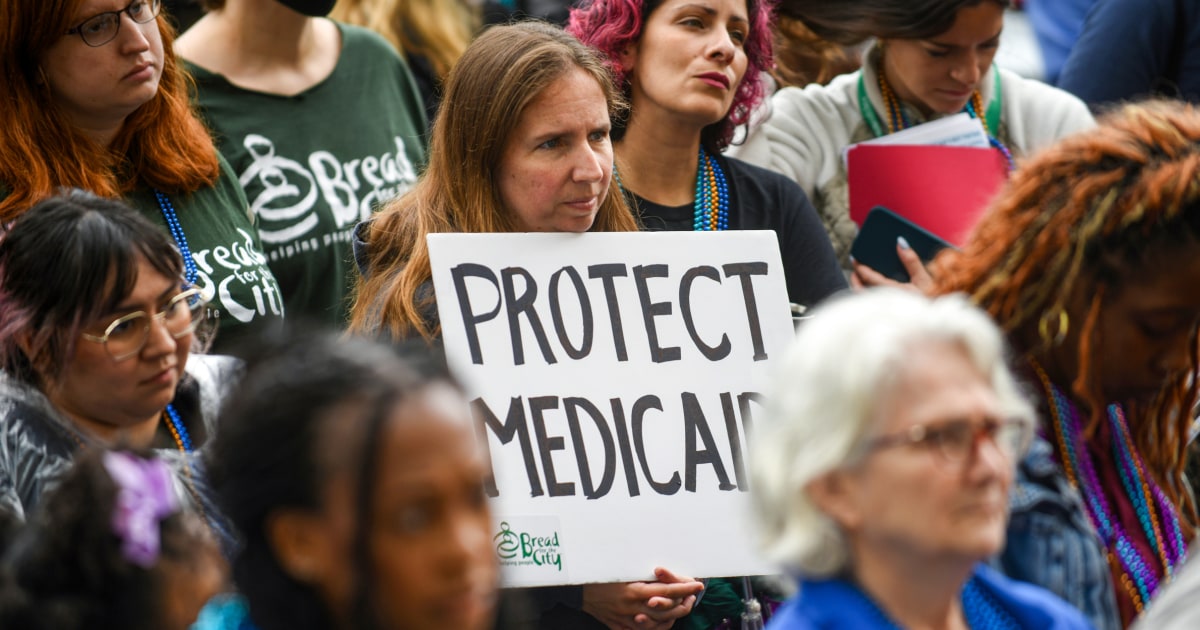
The number of people enrolled in Medicaid and Affordable Care Act plans fell by more than 5 million in the last 12 months, according to a new report from the advocacy group Protect Our Care.
Subscribe to read this story ad-free
Get unlimited access to ad-free articles and exclusive content.

The decline stems in part from President Donald Trump’s “big, beautiful” bill — which was signed into law last July — and the expiration of the enhanced ACA subsidies, the group says. The law includes nearly $1 trillion in Medicaid cuts over 10 years; the subsidies expired in December after Republicans declined to extend them, leading to double- to triple-digit premium increases for millions of people.
Health policy experts had warned that the two changes would dramatically reduce health coverage in the U.S.
The Congressional Budget Office, a nonpartisan federal agency that provides economic and budget analysis to Congress, estimated last year that there would be roughly 15 million more uninsured people by 2034 due to the Medicaid cuts and expiring subsidies.
“We’re already at 5 million,” said Brad Woodhouse, executive director of Protect Our Care. “This is going to get worse.”
Experts cautioned that some of the enrollment declines may be the result of people switching to job-based insurance, but the scale of the decline suggests many people likely lost their health coverage.
“This was an entirely predictable consequence of the multilayered cuts and restrictions on eligibility,” said Lawrence Gostin, director of the O’Neill Institute for National and Global Health Law at Georgetown University, who was not involved in the report. “It will cost Americans in lost lives and economic distress.”
It’s not uncommon for people who lose health insurance to delay or forgo care, waiting until their conditions become more serious.
“People who lack coverage get sicker sooner and they die earlier,” Woodhouse said. “People put off going to the doctor or they can’t even afford to go to a doctor, so they put off getting any care until they’re sicker than they would have been otherwise.”
The findings are based on two years of ACA enrollment data from the Centers for Medicare & Medicaid Services and an analysis of Medicaid data by the Georgetown University Center for Children and Families.
The report found that enrollment in Medicaid and the Children’s Health Insurance Program, or CHIP — a sister program for children — fell by about 3.8 million people since last June, and enrollment in ACA plans declined by about 1.2 million.
Before this year, ACA enrollment had been rising steadily for several years, reaching a record 22.3 million sign-ups last year. Medicaid enrollment surged during the pandemic, but began falling in 2023 after states started rolling back pandemic-era protections.
All but three states — Alabama, Missouri and Montana — saw a decline in Medicaid and CHIP enrollment. The states that saw the largest declines in enrollment were Indiana, Louisiana, Arizona, Rhode Island and Delaware.
For ACA plans, enrollment fell by more than 10% in 12 states. North Carolina, Ohio, West Virginia, Indiana and Delaware saw the largest drops.
Many of the changes to Medicaid have yet to take effect, with the most consequential provision — Medicaid work requirements — set to begin in most states in January. Nebraska, however, implemented the new work rules in May, and Montana is expected to follow next month.
Miranda Yaver, an assistant professor of health policy and management at the University of Pittsburgh, said some of the Medicaid declines in the report may reflect a so-called chilling effect, in which eligible people — particularly legal immigrants or people with family members who are non-U.S. citizens — avoid enrolling or drop coverage because they fear immigration enforcement or deportation.
Other changes, such as new restrictions on how states are able to fund their Medicaid programs, have also been implemented.
The declines, she said, will get worse once more states implement the Medicaid work requirements. In June, the CMS announced guidance on the new work rules that could make it harder for people to qualify for medical exemptions.
“The CMS rules that have been proposed certainly go farther than HR.1 and will almost assuredly result in more dramatic coverage losses than the CBO projected,” Yaver said, referring to the new law.
Yaver said that she was “not at all surprised” by the declines in ACA enrollment because many enrollees said they experienced “sticker shock” during last year’s open enrollment. The figure also likely understates the impact, she said, because it does not account for people who switched to worse plans or those who will eventually drop coverage because they can no longer afford their premiums.
“This is a glimpse of a lot more to come,” she said.
Woodhouse, of Protect Our Care, said the cost of treating uninsured patients is ultimately passed on to U.S. taxpayers.
“It just all contributes to this affordability crisis that the American people are faced with,” he said.