

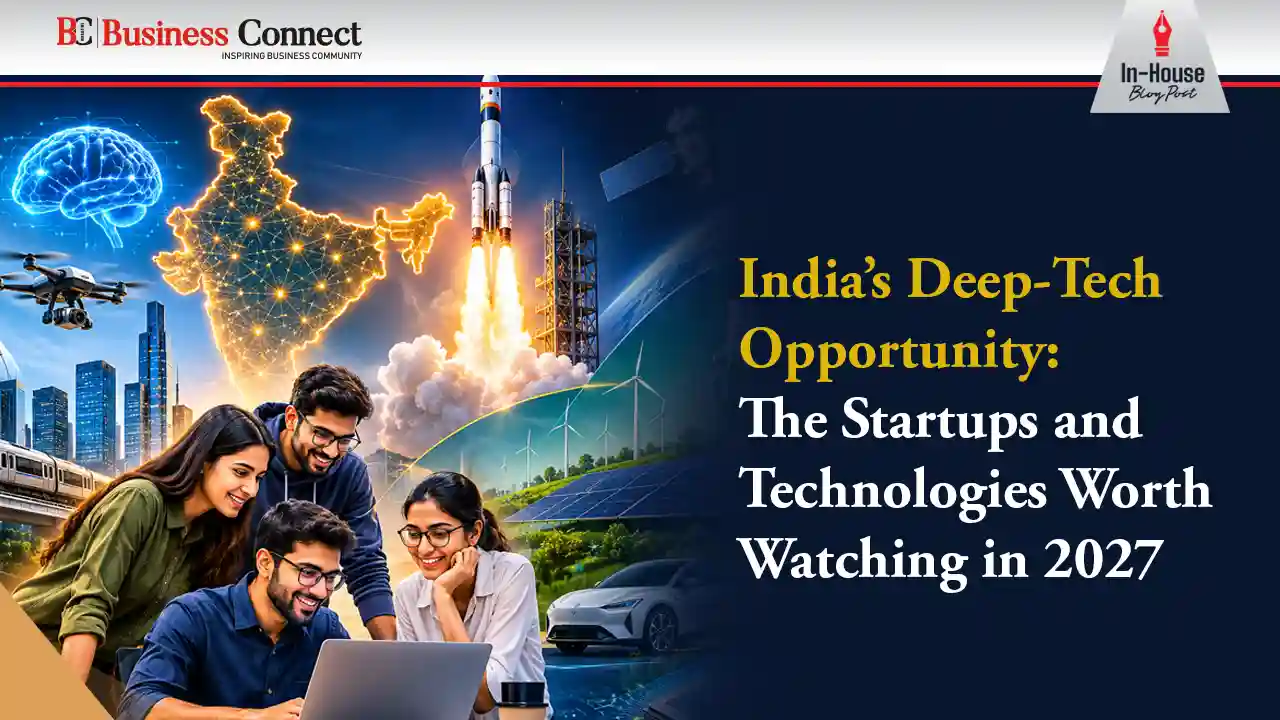
India’s Deep-Tech Opportunity: The Startups and Technologies Worth Watching in 2027
India’s next wave of startups is not making shopping or delivery apps anymore. Now it is moving towards rockets, data centre cooling systems, drones and quantum chips. The startups and technologies that will grab eyeballs in 2027 have moved from prototypes to paying customers, and the clearest signs are in space, AI infrastructure, defence and climate technology.
For entrepreneurs, founders, investors and corporate leaders, this is an important list to track. Here is where the momentum is and what could slow it down.
Accessible Finance Support from Government
In July 2025, the Union Cabinet approved the Rs 1 lakh crore Research, Development and Innovation scheme. It offers long-term loans at low or nil interest and can also take equity in startups. This is the money deep tech needs that venture funds do not generally give. The IndiaAI Mission and the Startup India Fund of Funds 2.0 add compute support and venture capital. A founder today has various such supportive initiatives to go for.
Successful Companies in Space
Hyderabad-based Skyroot Aerospace became India’s first spacetech unicorn in May 2026. In July 2026, its Vikram-1 rocket put customer payloads into orbit, and it became India’s first privately built rocket to complete an orbital mission. The next challenge is to do it on a regular basis with a good number of customers and costs that beat the other alternatives.
Other successful companies in the space sector include Agnikul Cosmos. It is building modular rockets with 3D-printed engines. Pixxel and Dhruva Space work on Earth observation satellites, platforms and ground infrastructure. IN-SPACe and the Antariksh Venture Capital Fund support this group.
AI Companies Making More Than Models
When it comes to AI technology, the business scope is not limited to just models. It is also about the compute, power and cooling that models depend on. Sarvam AI builds Indian-language models and voice systems under the IndiaAI Mission.
It presents a homegrown option for public and business use. KuhlTherm makes liquid-cooling systems for high-density data centres. This is a serious problem which is becoming bigger with every new AI cluster. Chip design startups also have an important role to play, because power and processing efficiency decide how much AI a data centre can run.
Hardware Startups Emerging in Defence
The demand for a strong defence system is rising with domestic buying and the push for Indian-made systems. ideaForge and Tonbo Imaging lead in drones and electro-optical surveillance. Orders from the armed forces give hardware startups a customer with a long pipeline.
Quantum and Climate Will Take Longer
QpiAI works on quantum computing hardware and how it connects with AI. QNu Labs focuses on quantum security. In climate, investor interest is moving to energy storage, battery materials and industrial decarbonisation. These sectors take years to show revenue, so patient public money is more important here.
Challenges in India’s Deep-Tech Opportunities
There are mainly four problems: the first is the gap after the proof of concept, when a startup has a working product but no repeat customers. The second is talent, because trained engineers cannot be hired quickly with money. The third is slow buying by the government and large companies. The fourth is hardware depth, since India still imports many of the parts its startups need, it has lack of hardware depth.
Frequently Asked Questions
What is a deep-tech opportunity?
Deep tech is the big story: space, AI infrastructure, defence and drones. A private Indian rocket has reached orbit, data centres need better cooling and power, and defence buyers want Indian-made systems. Quantum and climate technologies are also growing.
Which startup is best for the future?
Stating one single type of startup is not possible. The safer ones to back are those who have paying customers, such as Skyroot in space or ideaForge and Tonbo Imaging in defence. Look for early orders, a clear path to repeat sales and enough funding to survive the long wait.
What are the top AI startups to watch in 2026?
Sarvam AI is one name to watch for Indian-language models and voice systems under the IndiaAI Mission. KuhlTherm makes liquid-cooling systems for AI data centres. Chip design startups also matter, since power and processing efficiency decide how much AI a data centre can run.
Which business will boom in the next 10 years?
The early signs favour businesses built on hard technology: space, defence, AI infrastructure, energy storage and battery materials are expected to boom in the next decade. To ensure success, they need patience, because earning revenue takes years. The ones that show repeat customers and have steady public or private funding are expected to last.
Add Business Connect magazine to your Google News feed
Read Also:
Join ShopOpen24 Community
Connect with entrepreneurs, discover business ideas and explore a growing business community.
Explore ShopOpen24 →ShopOpen24 | Local Products. Global Reach.












Leave a Reply