

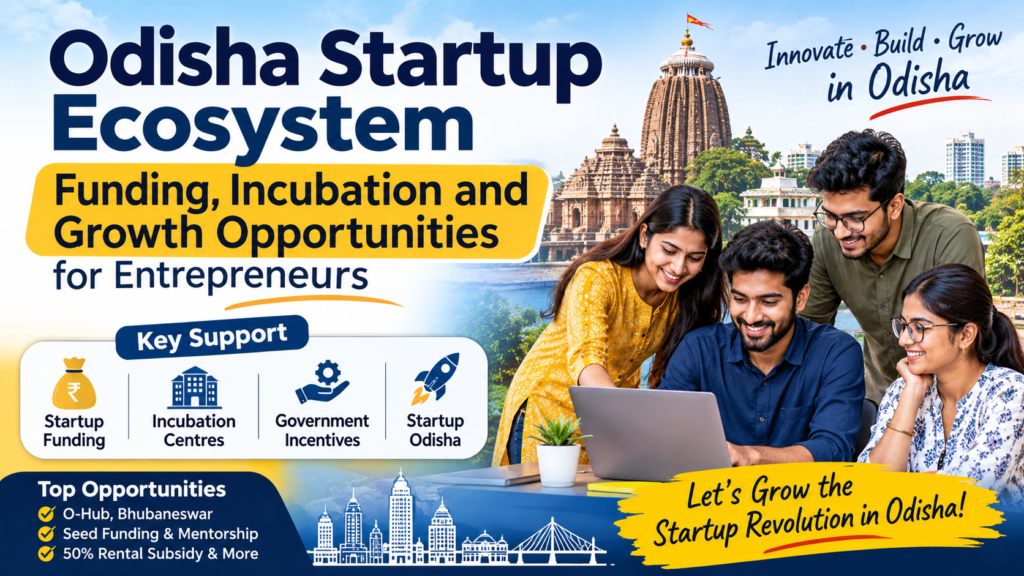
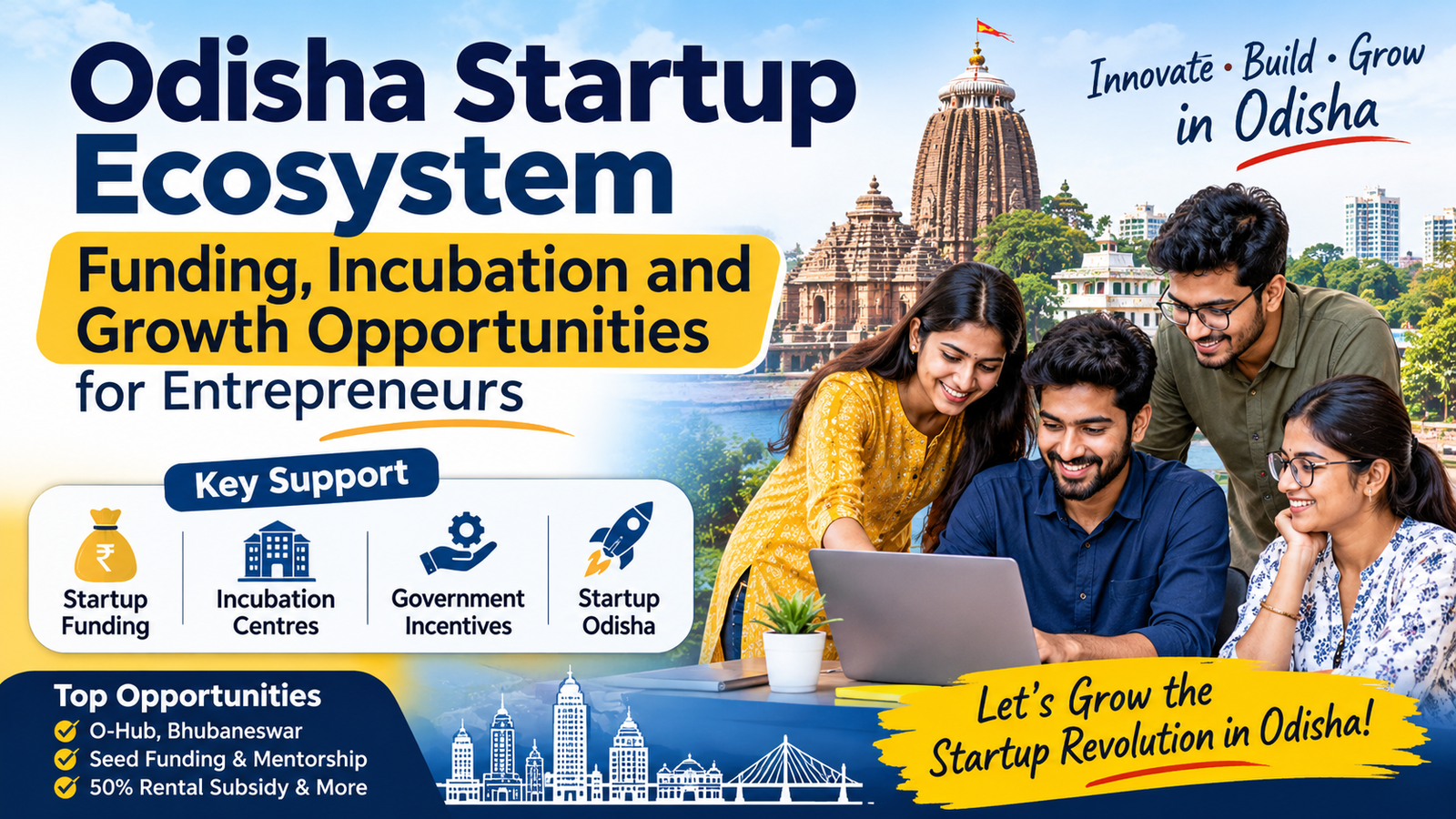
Odisha is gradually emerging as a promising destination for startups, supported by government incentives, incubation facilities, institutional partnerships and growing interest in innovation-led businesses. For young entrepreneurs, the opportunity is no longer limited to starting a small company. It is about developing products, solving local problems, creating employment and building businesses that can compete in national and international markets.
The state’s startup ecosystem is gaining momentum across sectors such as agriculture, food processing, healthcare, information technology, artificial intelligence, tourism, handloom, handicrafts and clean technology. These sectors offer considerable opportunities because they connect entrepreneurship with Odisha’s existing economic strengths, natural resources, skilled workforce and local business needs.
The progress is also reflected in the number of recognised ventures. In September 2026, officials reported that Odisha had recognised 2,893 startups under its Startup Policy, supported by 43 recognised incubators. This indicates that entrepreneurship is gradually spreading beyond individual business initiatives and becoming a more organised part of the state’s economic development strategy.
However, building a successful startup requires more than an innovative idea. Entrepreneurs need funding, business guidance, technical infrastructure, market access and the ability to manage operations. This is where Odisha’s startup support system, particularly funding incentives and incubation facilities, becomes important.
Understanding the Startup Ecosystem in Odisha
A startup ecosystem is a network of entrepreneurs, investors, incubators, universities, government departments, mentors, financial institutions and businesses that work together to support new ventures.
In a developing ecosystem such as Odisha, this network helps entrepreneurs move from identifying a business problem to developing a product, testing it, finding customers and expanding operations.
The Startup Odisha initiative, operating under the state’s MSME Department, plays an important role in this process. It provides startup recognition, financial assistance, incubation support, mentoring programmes and opportunities to connect with investors and institutions.
The Odisha Startup Policy, introduced in 2016, continues to operate until a new policy is notified. Its broader objective is to create a supportive environment for innovation, encourage entrepreneurship among young people and strengthen the state’s startup infrastructure.
For entrepreneurs, this support can reduce some of the initial difficulties associated with launching a business. It can also help promising ventures become more prepared for investment and commercial growth.
What Is Startup Incubation and Why Does It Matter?
Incubation is a support process that helps an early-stage business develop its idea into a commercially viable venture. A startup incubator provides more than office space. It offers access to experienced mentors, business advice, technical facilities, networking opportunities and guidance on funding and product development.
For example, an entrepreneur developing an agricultural technology product may need help testing the product, understanding farmers’ requirements, improving its design and identifying potential buyers. An incubator can connect the founder with technical experts, research institutions, industry professionals and potential investors.
Similarly, a healthcare startup may require laboratory access, regulatory guidance, product testing and partnerships with hospitals before launching its solution.
Incubation is particularly valuable during the early stages because many startups fail not simply due to a lack of ideas, but because they struggle with product development, financial planning, customer acquisition and business execution.
By providing structured guidance and infrastructure, incubators help entrepreneurs avoid common mistakes and use their limited resources more effectively.
Funding Opportunities for Startups in Odisha
Access to finance remains one of the biggest challenges for new businesses. Traditional lenders may hesitate to finance ventures without a strong operating history, while private investors generally look for evidence of market demand and growth potential.
Odisha’s startup support framework offers several forms of assistance to help eligible ventures manage their early development.
1. Monthly Sustenance Allowance
Recognised startups may be eligible for a monthly sustenance allowance of ₹20,000 for up to one year. The amount increases to ₹22,000 per month for eligible startups with women or transgender founders, or founders belonging to SC, ST, SEBC or persons with disabilities categories, subject to the prescribed ownership conditions.
This assistance can help founders meet essential early-stage expenses while working on their business ideas, developing prototypes and establishing their initial operations.
However, the allowance is not an automatic payment for every registered business. Startups must meet the recognition and eligibility requirements, and the scheme specifies conditions relating to funding, patents, government grants or revenue performance.
2. Product Development and Marketing Assistance
Developing a product is only one part of building a successful business. A startup must also test its product, improve its quality, establish production capabilities and introduce it to the market.
Under the Startup Odisha incentive framework, recognised startups may receive product development and marketing or publicity assistance of up to ₹15 lakh. The maximum support can increase to ₹16 lakh for eligible startups led by women, transgender persons or founders from specified social categories, subject to ownership and other conditions.
This support can help businesses with product improvement, market introduction and promotional activities. Applicants generally need to submit a product development plan and supporting documents for approval.
For a technology startup, such assistance could help with product testing and development. For a food-processing venture, it may support improvements in packaging, product quality or market readiness.
3. Need-Based Financial Assistance
Some startups require specialised support that does not fit into standard funding categories. A manufacturing venture, for instance, may need raw materials, components or equipment to improve an existing product or develop a new one.
Startup Odisha provides for need-based assistance, which may be considered on a case-by-case basis for recognised startups. The applicant needs to explain the business requirement and how the proposed support will be used.
This type of assistance can be particularly useful for product-based startups that need to conduct experiments, improve prototypes or address technical challenges before commercial production.
4. Seed Funding and Investor Connections
Seed funding is the early-stage capital that helps a startup move from an idea or prototype towards market entry and initial business growth. It can be used for product development, hiring, testing, technology development and customer acquisition.
Odisha has been working to strengthen this area through partnerships with financial institutions. A notable initiative is the ₹10 crore Assistance for Seed Fund programme launched by Startup Odisha in collaboration with the Small Industries Development Bank of India (SIDBI) to support startups incubated at O-Hub.
The state has also organised investor-connect programmes and pitching opportunities to help founders present their business models to angel investors, venture capital representatives and financial institutions.
For entrepreneurs, these platforms can provide an opportunity to build investor relationships and understand what funders expect in terms of business plans, revenue models, market potential and scalability.
It is important to understand that seed funding and investor connections do not guarantee investment. Startups must demonstrate a clear business opportunity, a capable team and a realistic plan for growth.
Incubation Opportunities: Where Entrepreneurs Can Build Their Businesses
Financial assistance can help a startup manage expenses, but access to the right working environment and professional guidance is equally important. Odisha has been developing incubation infrastructure through government-supported facilities, academic institutions and specialised centres.
O-Hub: A Key Startup Destination
The Odisha Startup Incubation Centre, popularly known as O-Hub, is one of the state’s major startup infrastructure initiatives. Located in the Chandaka area of Bhubaneswar, it provides facilities designed to support entrepreneurs during different stages of business development.
Its infrastructure includes co-working spaces, private cabins, meeting facilities, testing and technical support, and spaces for product development. It also provides opportunities for mentoring, networking and engagement with the wider startup ecosystem.
For founders who are developing a technology product or planning to build a scalable business, such facilities can offer a more structured working environment than operating independently.
O-Hub also plays an important role in connecting startups with institutional support and funding-related programmes, including the seed fund initiative developed with SIDBI.
Academic Incubators and Institutional Support
Educational institutions are becoming important contributors to Odisha’s startup ecosystem. Incubation centres connected with universities, engineering colleges and research institutions can help students, researchers and young entrepreneurs convert technical knowledge into business ideas.
Institutions such as IIT Bhubaneswar and KIIT have contributed to the state’s innovation and entrepreneurship environment through research, mentoring and incubation-related activities.
These institutional connections are valuable because startups often need access to specialised knowledge, laboratories, technical experts and industry networks that may be difficult to arrange independently.
The state is also encouraging more educational institutions to participate in entrepreneurship development, helping students understand business planning, innovation, intellectual property and startup management.
Incubation Rental Subsidy
Office space and infrastructure costs can become a financial burden for early-stage businesses, particularly before they begin generating regular revenue.
Under the state support framework, eligible startups can receive a 50% reimbursement of incubation space rental costs, subject to a maximum of ₹5,000 per month for up to one year at recognised incubators.
Although the amount may not cover all operating expenses, it can help founders reduce their initial financial commitments and direct more resources towards product development, hiring and customer acquisition.
Support for Incubators
A strong startup ecosystem also depends on the quality of its incubators. These centres need trained professionals, modern infrastructure, testing facilities and specialised mentoring capabilities.
Odisha’s startup framework includes financial support for eligible incubators through capital grants, matching grants and other forms of assistance. These provisions are intended to help institutions establish or strengthen facilities that support new ventures.
The expansion of incubation infrastructure can create benefits beyond individual startups. It can encourage collaboration between colleges, research organisations, industries and entrepreneurs while creating more opportunities for young people to explore business ownership.
Which Sectors Offer Opportunities for Odisha Startups?
Odisha’s economic strengths provide several possible areas for innovation and entrepreneurship. Startups that understand local needs and develop practical solutions may find opportunities in both domestic and wider markets.
Agriculture and Agri-Tech: Agriculture remains an important part of Odisha’s economy. Startups can develop digital advisory services, farm management tools, smart irrigation systems, supply-chain solutions and technologies that help farmers improve productivity and reduce losses.
Food Processing: The state has opportunities in food preservation, packaging, cold-chain management, seafood processing and value-added agricultural products. Startups can help local producers reach larger markets by improving product quality, branding and distribution.
Handloom and Handicrafts: Odisha’s traditional products offer opportunities for digital commerce, modern product design, branding and direct-to-consumer businesses. Technology can help artisans connect with customers beyond local markets while preserving traditional skills.
Healthcare and Med-Tech: Digital health platforms, affordable diagnostic solutions, healthcare management software and medical devices can address service gaps, particularly in smaller towns and rural areas.
Tourism and Hospitality: Startups can build digital booking platforms, local travel services, experience-based tourism businesses and technology solutions for hotels and tourism operators.
IT, AI and Clean Technology: Artificial intelligence, software services, automation, renewable energy and waste-management technologies offer opportunities for entrepreneurs who can develop solutions for businesses, industries and public services.
The most promising ventures will be those that combine a clear customer need with a practical business model. A startup does not become sustainable simply because it operates in a high-growth sector; it must solve a real problem and demonstrate that customers are willing to pay for its solution.
The Current Situation: Progress Alongside Important Challenges
Odisha’s startup ecosystem has made measurable progress in recognition, institutional support and incubation infrastructure. The 2,893 recognised startups and 43 recognised incubators reported in September 2026 indicate a growing base of entrepreneurial activity.
The state is also encouraging innovation across sectors rather than limiting startup development to information technology. Agriculture, food processing, healthcare, tourism, traditional industries, electronics and emerging technologies are among the areas receiving attention.
The latest States’ Startup Ecosystem Ranking report places Odisha in the ‘Aspiring Leader’ category. The report highlights stronger relative performance in innovation and sustainability and ecosystem capacity building, while identifying infrastructure, funding and market access as areas requiring further improvement.
This distinction is important. Recognising more startups is a positive step, but the long-term strength of an ecosystem depends on how many ventures can secure investment, generate revenue, create employment and expand into new markets.
For many founders, access to private capital remains a challenge. Early-stage businesses may receive initial assistance but still struggle to attract follow-on investment when they need money to increase production, hire skilled employees or enter new markets.
Market access is another important issue. A startup may develop a useful product, but without corporate partnerships, government procurement opportunities, distributors or a strong customer network, commercial growth can remain limited.
There is also a need to spread entrepreneurial activity more evenly across the state. Bhubaneswar remains a major centre for startup activity, while entrepreneurs in smaller cities, rural areas and tribal regions may face limited access to mentors, investors and specialised infrastructure.
These gaps are gradually receiving attention. The state has been emphasising stronger coordination between government departments and startups, wider institutional participation and more opportunities for young and tribal entrepreneurs. Better connections between startups and public-sector departments could also help innovative businesses find practical applications for their products.
What Entrepreneurs Should Do Before Applying for Support
Government assistance can provide an important starting point, but founders should approach it with a clear business plan. Before applying for recognition, incubation or financial incentives, entrepreneurs should consider the following steps:
- Develop a clear business idea: Identify the problem the business intends to solve and understand who will pay for the solution.
- Build a business plan: Prepare realistic estimates for investment, operating expenses, revenue, pricing and future growth.
- Check startup recognition requirements: Review the eligibility conditions under Startup Odisha and ensure the business meets the applicable definition of a startup.
- Explore suitable incubators: Choose an incubation centre based on the business sector, technical requirements, mentoring support and available facilities.
- Prepare funding documents: Keep the business plan, product details, financial projections, ownership information and other supporting documents ready.
- Understand the incentive conditions: Check the latest scheme guidelines, eligibility requirements, application process and utilisation rules before depending on any grant or allowance.
Entrepreneurs can use the official Startup Odisha portal to explore recognition, incentives, incubator information and application procedures.
Why a Strong Startup Ecosystem Matters for Odisha’s Economy
A successful startup ecosystem can create economic benefits that extend beyond individual businesses. New ventures can generate employment, encourage innovation, support local suppliers and create demand for professional services.
For example, an agri-tech startup can help farmers access better information and markets. A food-processing company can create demand for local agricultural produce, packaging, transport and storage services. A technology startup can generate skilled jobs and provide digital solutions to businesses that are looking to improve efficiency.
Startups can also create new opportunities for women entrepreneurs, young graduates, artisans and people from underserved communities. With access to mentoring, finance and business networks, more people can turn local knowledge and skills into sustainable enterprises.
For Odisha, this could mean a more diversified economy in which entrepreneurship complements established industries such as mining, manufacturing, agriculture, tourism and services.
Turning Startup Support into Sustainable Businesses
Odisha has taken important steps to build a supportive environment for entrepreneurs through Startup Odisha, O-Hub, financial incentives, seed funding initiatives and institutional incubation. The growing number of recognised startups and incubators reflects the state’s efforts to encourage innovation and expand business opportunities.
The next stage of development will depend on how effectively this support translates into commercially successful companies. Startups need timely access to finance, experienced mentors, modern infrastructure, skilled employees and reliable markets. They also need stronger connections with industries, government departments and investors.
For aspiring entrepreneurs, Odisha offers an increasingly structured platform to test ideas and build businesses. The real opportunity lies in using these facilities and incentives to solve meaningful problems, serve customers and create ventures that can grow beyond the state.
A stronger startup ecosystem will not be measured only by the number of businesses registered, but by the number that survive, innovate, create jobs and contribute to Odisha’s long-term economic growth.
Start Selling Online with ShopOpen24
Are you a small business owner or entrepreneur? Discover seller opportunities and connect with customers through ShopOpen24.
Explore ShopOpen24 →ShopOpen24 | Local Products. Global Reach.









Leave a Reply