

An invented email address can look convincing until a reporter tries to use it. Jessica Davis encountered that problem with Digger, an assistant her team built at USA Today. In a 28 November article for SecurityBrief Australia, Fathm co-founder Fergus Bell recounted his interview with Davis. He said Digger initially got about three answers in four right. After the team agreed what counted as a correct answer and built tests around that definition, its accuracy reached the high 90s on those tests.
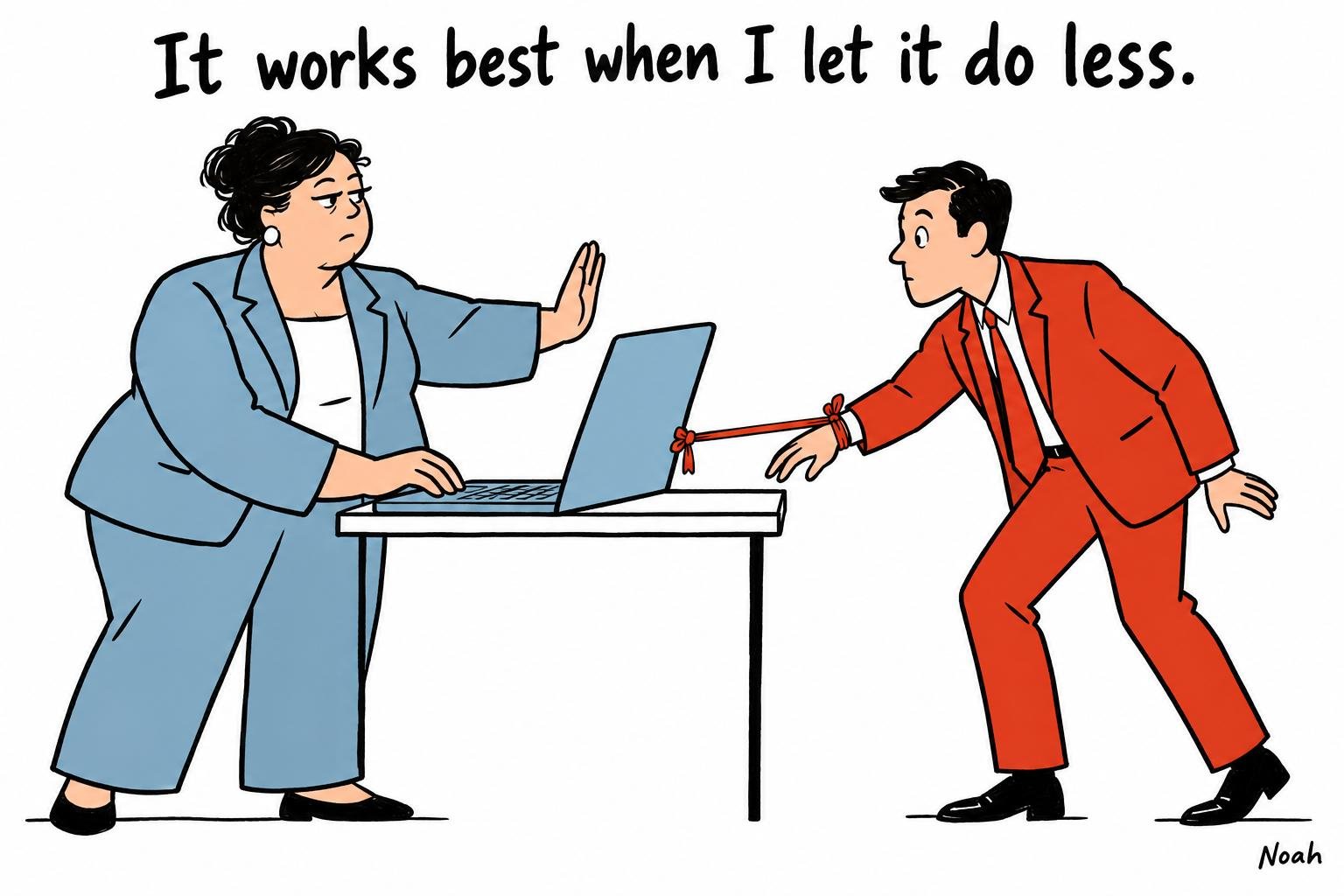
At the Australian publisher Man of Many, the question was what a reliable assistant should be allowed to do. Bell says its internal tool, Otto, cannot send email, publish a story or change a live ad campaign. A wrong answer can be corrected inside the newsroom. A change to a campaign can spend a customer’s money.
In June, WAN-IFRA quoted Fathm co-founder Tom Trewinnard describing about $6,000 a year in subscription savings. He spoke of cutting senior leadership meetings from more than two hours to 15 minutes as a future change. Bell described that reduction as achieved in November. Neither account gives a series of meeting times readers could use to check it.
Man of Many draws a similar boundary around its published journalism. Its public connector lets outside assistants retrieve excerpts and links without an account. The publisher specifies read-only access and bars bulk copying and model training.
For an editor deciding whether to put an assistant to work, Digger and Otto pose two separate questions. Can it produce an answer a reporter can rely on? If the answer is wrong, which decisions still belong to a person?
Sources
Source: Noah Wire Services · Original













Leave a Reply