

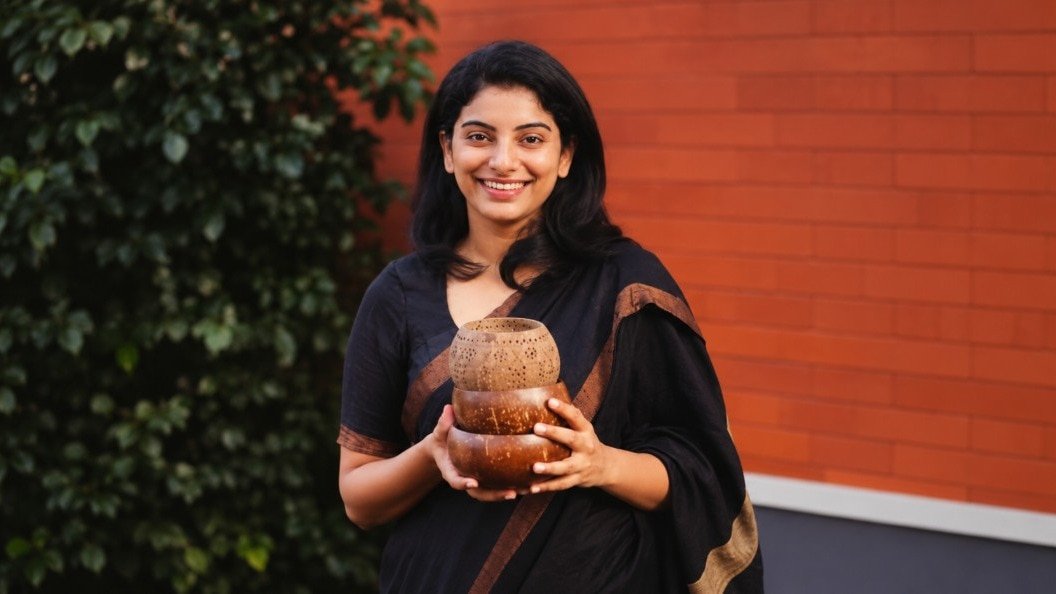
She did not begin with a factory, a large investment or an established product line. Instead, her business idea took shape with discarded coconut shells, sandpaper and a little coconut oil. Maria Kuriakose, an entrepreneur from Kerala, turned that simple experiment into Thenga Coco, a sustainable products business she launched in 2019 with Rs 1 lakh. Today, the company generates annual revenue of over Rs 3.5 crore, according to HerStory.
After completing her MBA in Spain, Maria returned to India determined to build a business that combined profitability with sustainability. She soon decided to move away from her startup job and explore business opportunities that drew on Kerala’s natural resources and traditional skills.
In 2019, she began studying different markets to identify a viable business idea. As reported by Startup Stories by DOC, her initial research covered several product categories. She first considered coconut water, coir and palm leaf products, but found that some markets were already crowded and others offered better competition from suppliers in neighbouring states.
Coconut shell products, meanwhile, were not part of her original business plan. She initially focused on selling palm leaf products, but a chance discovery soon introduced her to an entirely different opportunity and changed the course of her entrepreneurial journey.
HOW DID A DISCARDED COCONUT SHELL BECOME A BUSINESS IDEA?
One day, while exploring business possibilities, Maria noticed a pile of discarded coconut shells and decided to experiment with them. She used sandpaper to smooth their outer surfaces and applied a little coconut oil to see how they would look. The simple experiment revealed something she had not considered earlier: coconut shells could be turned into useful and aesthetically appealing products instead of being thrown away.
This discovery became the foundation of Thenga Coco, which Maria launched in 2019. To find buyers, she reached out to businesses interested in sustainable alternatives across Bengaluru, Delhi and Chennai. Her products received a positive response, and she soon landed her first bulk order for 200 pieces at Rs 60 apiece.
Finding customers was easier than sourcing the right coconut shells and setting up a reliable production process. Maria soon learnt that each product required shells of a specific shape and size. While bowls needed shells with flat bases, teacups required a different structure.
As she gained experience with the material, Maria began improving her manufacturing process, identifying suitable raw materials and gradually revising the prices of her products.
REVIVING KERALA’S TRADITIONAL COCONUT CRAFT
Maria’s venture was not just about creating a sustainable product range. It also became an effort to revive a traditional craft that was gradually being replaced by plastic and metal alternatives.
According to an article published by Sinhgad College of Architecture, the history of coconut shell craft in Kerala can be traced back around 500 years, when Yemeni merchants introduced the practice in Koyilandy.
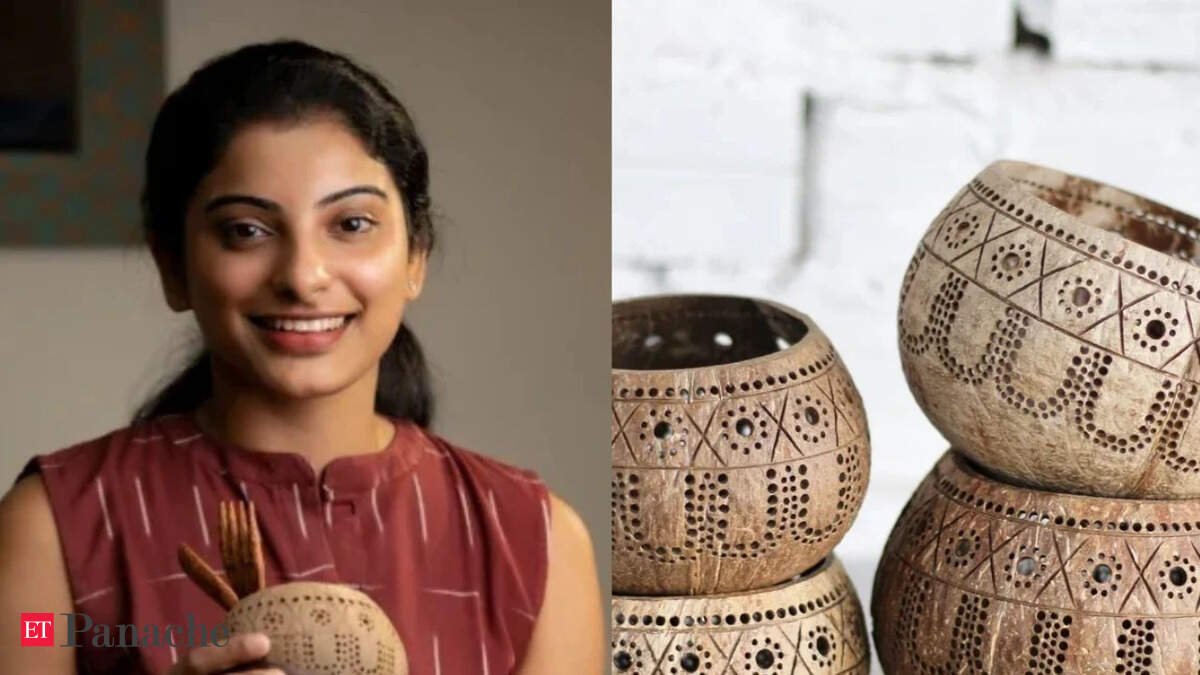
Determined to bring the craft back into focus, Maria began attending agricultural conventions and meeting local artisans. She worked with them to develop contemporary products such as smoothie bowls, teacups and other everyday utility items made from coconut shells.
Her father, an engineer, also played an important role in improving the manufacturing process. He developed tools, including a sanding disc that could be attached to a drill and a cloth wheel for buffing. The shells were then finished using coconut oil and beeswax.
As the business expanded, its product range grew beyond bowls and cups. Ice cream cups, soap dishes, decorative pieces and other lifestyle products gradually became part of the collection.
Today, Thenga Coco offers more than 110 stock-keeping units (SKUs), spanning kitchenware, home dcor, gifting products, candles, storage containers and personalised merchandise for corporate clients. Each product is made using discarded coconut shells.
The company has also collaborated with schools to create badges and medals from coconut shells, demonstrating how the material can be used beyond conventional household products.
HOW MUCH DOES THENGA COCO EARN TODAY?
What began as a small experiment with an investment of Rs 1 lakh has grown into a sizeable sustainable business. According to HerStory, Thenga Coco now generates annual revenue of over Rs 3.5 crore.
The Kerala-based, women-led startup works with skilled artisans in a village in the state, combining traditional craftsmanship with contemporary product design. Its business model also creates livelihood opportunities for local artisans while supporting the agricultural community.
Maria’s academic background in economics and business management has contributed to her entrepreneurial journey. She completed her bachelor’s degree in Economics at St Xavier’s College between 2013 and 2016 before pursuing a diploma in Business at Comillas Pontifical University in Spain from 2016 to 2017.
Through Thenga Coco, Maria has demonstrated how discarded resources can be turned into commercially viable products. By combining Kerala’s traditional craftsmanship with contemporary designs, she has built a business that creates opportunities for local artisans while promoting more sustainable consumption.
– Ends
Join ShopOpen24 Community
Connect with entrepreneurs, discover business ideas and explore a growing business community.
Explore ShopOpen24 →ShopOpen24 | Local Products. Global Reach.












Leave a Reply