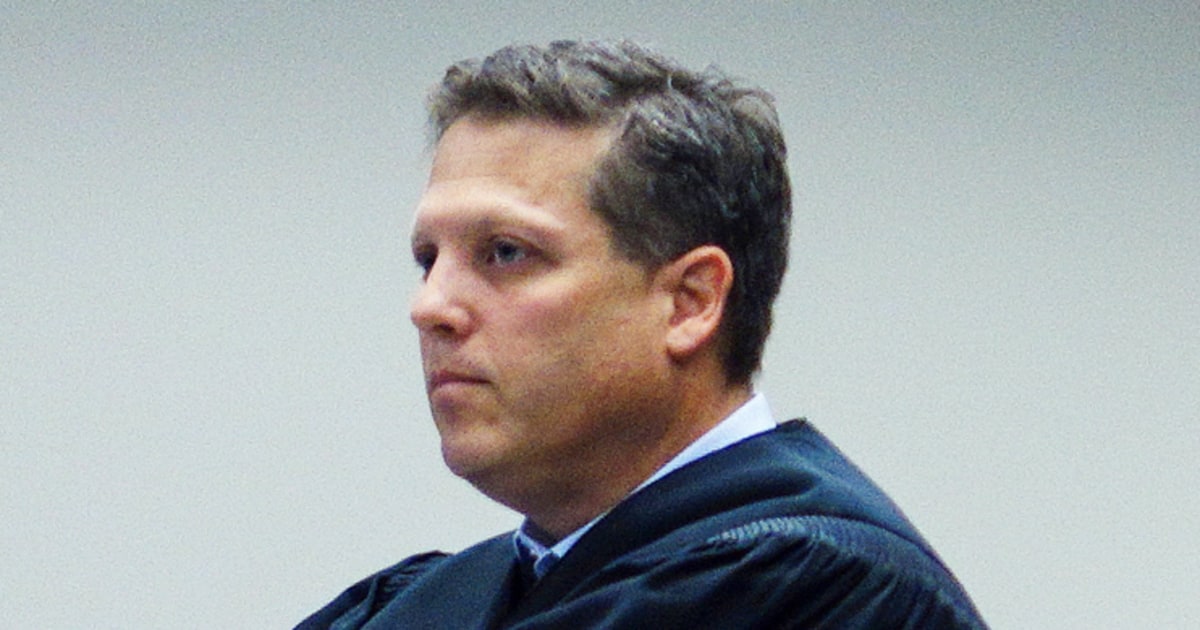
The U.S. attorney who was fired last week after less than an hour on the job sued the Trump administration Tuesday, arguing he should be allowed to serve until a permanent successor is named.
Subscribe to read this story ad-free
Get unlimited access to ad-free articles and exclusive content.

Shortly after he was sworn in last week as the top government attorney in the Western District of Washington, Roger Rogoff was informed that President Donald Trump had fired him.
Rogoff, a former judge who also was a state and federal prosecutor, was unanimously appointed by a panel of federal judges to fill the job, in line with federal law, after the position in Seattle had been vacant for months.
In his lawsuit, which names Trump, acting Attorney General Todd Blanche and the Justice Department as defendants, Rogoff asked a federal judge to declare the firing “unlawful” and allow him to resume his assignment as U.S. attorney until the vacancy is filled by way of presidential nomination and Senate confirmation.
The White House referred questions about the lawsuit to the Justice Department. A spokesperson for the Justice Department said the district court did not follow proper protocol by not consulting the Justice Department on its selection.
“The district court did not coordinate with DOJ on this selection. Consistent with other firings of this type, this is wholly within the President’s authority,” the spokesperson said in a statement.
Blanche said Wednesday on X, “District court judges can appoint a temporary U.S. Attorney, and POTUS can fire them.”
He went on to argue that the panel of federal judges in Rogoff’s case “abandoned the time-honored process of consultation with the administration so that the selected U.S. Attorney is qualified to serve in the administration.”
Rogoff’s attorneys argue that his firing violated federal law, which says a district court can appoint a U.S. attorney if an appointment expires and the role remains vacant. The lawsuit adds that Rogoff’s firing violated the Appointments Clause of the Constitution.
“By purporting to fire Mr. Rogoff — and apparently committing to firing anyone else a district court appoints without ‘the support of POTUS’ — the President has attempted to negate Congress’s exercise of its constitutionally enumerated power,” Rogoff’s attorney Jason A. Rittereiser wrote in the lawsuit.
U.S. attorneys are usually appointed by presidents. After the president nominates a candidate, the position requires Senate confirmation, unless it is a temporary appointment.
Temporary appointees can be named by the U.S. attorney general and are capped at serving 120 days. If the Senate has confirmed no nominee when the appointment period expires, the federal judges in a judicial district can name a U.S. attorney.
Rogoff is the first to sue the Trump administration after having been fired as a U.S. attorney following an appointment by federal judges.
The Justice Department under Trump has tried to leave unconfirmed federal prosecutors in their positions indefinitely. During Trump’s second term, multiple judges have ruled that government attorneys were serving unlawfully after then-Attorney General Pam Bondi appointed them.
Lindsey Halligan, a Trump ally who sought to prosecute his political foes, left her position as acting U.S. attorney in Virginia after a federal judge ruled that she had been unlawfully appointed. A panel of federal judges unanimously appointed longtime litigator James Hundley to replace Halligan, but the Justice Department fired him in February just hours after he was sworn in.
The Trump administration also fired a U.S. attorney whom federal judges appointed for a vacancy in the Northern District of New York in February. Donald Kinsella had been appointed after Trump loyalist John Sarcone III left the position when a federal judge ruled he was serving unlawfully.
In the wake of Hundley’s and Kinsella’s firings, Blanche, who was then deputy attorney general, asserted that Trump maintained the right to appoint U.S. attorneys and federal judges did not.