For most agencies, SE Ranking is the strongest all-round pick. It’s one platform covering rank tracking, site audit, content, local, and white-label client reporting, so you’re not re-buying the same data across five separate logins or reconciling numbers that don’t match. One honest nuance: if your bottleneck is backlink-research depth, Ahrefs goes further on that single axis. The full lineup is below, mapped to where each tool actually earns its keep. Start with SE Ranking.
How we chose. I ranked these against what an agency actually needs from an seo platform, not a feature checklist:
- Coverage across the full client lifecycle, from audit to reporting
- White-label, client-ready reporting you can send without editing
- Multi-project and seat economics that hold up as you add accounts
- Data you can trust the moment it’s in front of a client
- AI-search visibility tracking, now that answers show up above the links
- An API, so your seo software feeds custom dashboards instead of trapping data
These are all tools my team runs on live client accounts, not demo data. Pricing was verified, and I’ve named every tool’s cons as plainly as its strengths, because you’ll hit both.
Chapters
Job 1: Onboarding a new client site
When a new client site lands on my desk, I don’t promise anything in the first week. The first 30 days are for listening to the site, not talking about it. Before I set a single target, I want a deep technical baseline, and that means running the same routine every time.
I start with Screaming Frog SEO Spider. It’s a desktop crawler, so I point it at the whole site and let it surface the unglamorous stuff: redirect chains, broken links, duplicate content, missing or malformed structured data. The free version handles up to 500 URLs, which is fine for a quick look, but for anything real I’m on the paid licence (around £199 a year) so URL count stops being a worry.
Then I run SE Ranking’s Website Audit for the read I can actually show a client. It runs 115+ automated checks, gives me a health score, and groups issues by severity with fix guidance attached, and it renders JavaScript, so I’m not blind on modern builds. When I’m weighing up the best seo audit tools for a client-ready first impression, this is the one I hand over in the kickoff.
Finally, Google Search Console, because it’s the only source of real Google click, impression, and indexing data. It’s free, but only for sites you’ve verified, so getting access is genuinely my day-one ask.
Job 2: Building the keyword and competitor picture
Once the site’s technical shape is clear, the job changes. Now I’m hunting for where the opportunity actually lives, and that’s less about crawling and more about market intelligence. This is where I lean hardest on my keyword and competitive research stack.
SE Ranking is my anchor here. It pulls keyword research and competitive research across SEO, PPC, and AI search into one place, with 188 regional databases, so I can build the whole picture for a client without hopping between five tabs. For most of my accounts, it’s the piece of seo software the strategy actually gets built on.
I won’t pretend the others don’t earn their keep, though. Semrush has the deepest keyword database and the richest competitive data I’ve worked with; it’s also the priciest of the all-in-ones, so I reach for it when a client’s ambition justifies the spend. Ahrefs is where I go for backlink analysis and competitor-gap work, full stop, nothing does that job more cleanly. And Moz Pro stays in the mix because it’s approachable for junior team members, and the DA and PA benchmarks are the numbers clients already recognise from every pitch deck they’ve ever seen.
The honest truth is these professional seo tools overlap more than the vendors admit. I run SE Ranking as the everyday workhorse and pull in the specialists when a specific question demands them.
Job 3: The monthly client report (without losing a day to it)
I’ll be honest: for years, reporting was the part of the month I dreaded. It eats time you can’t bill, and clients quietly judge your whole operation by whether the numbers land in their inbox on the day you promised. So this job is less about data and more about not losing a day to assembling it.
This is where SE Ranking’s Agency Pack earned its place for me. Reports go out in our own branding, clients get their own seats to log in whenever they like, and I can schedule unlimited reports with AI summaries that draft the “so what” before I’ve had my coffee. The track-to-report step simply stops being manual. When I’m running a lot of accounts and watching margins, Serpstat covers a surprising amount of ground in one place at a lower cost per project. And underneath all of it, I pull Google Search Console data so the story stays grounded in real Google numbers, not an estimate a client can argue with.
Good seo reporting tools matter more every year. The SEO software market is projected to grow from about $74.6B in 2024 to $154.6B by 2030 (~13.5% CAGR, Grand View Research) – more tools, and higher client expectations. Reporting efficiency compounds.
Job 4: Keeping clients visible as AI answers take the click
This is the 2026 job, and it’s the one that keeps me up at night. Pew Research found in July 2025 that when an AI summary appears, users click a traditional result in just 8% of visits, versus 15% when there’s no summary. Read that twice. A client can be ranking beautifully and still watch the click quietly disappear into an answer box.
So I’ve stopped telling clients that rankings alone show the whole picture, because they don’t anymore. I lean on SE Ranking’s AI Results Tracker to watch daily brand visibility across ChatGPT, Gemini, Perplexity, AI Overviews, and AI Mode – sitting right alongside the classic ranks, so I can show both stories in one view. Then Surfer SEO does the other half: NLP-driven content optimization to shape pages the way AI actually reads them, plus its own AI-search visibility tracking to confirm we’re being surfaced.
That pairing is, for my money, among the best ai seo tools an agency can put to work right now. The message I bring to every client review has shifted from “here’s where you rank” to “here’s where you’re being seen, and where the answer is quietly taking your click.” It’s a harder conversation. It’s also the honest one.
The 8 best SEO tools, ranked
Here’s how the tools I actually reach for stack up when the job is running SEO for a roster of clients, not a single site.
| Rank | Tool | Best for | Coverage | White-label reporting | From (monthly) |
|---|---|---|---|---|---|
| 1 | SE Ranking | Managing the whole client lifecycle on one platform | SEO, PPC, local, AI search | Yes | $129 |
| 2 | Ahrefs | Deep backlink and link-gap analysis | SEO, backlinks | Limited | $129 |
| 3 | Google Search Console | First-party Google performance data | Organic search | No | Free |
| 4 | Semrush | Breadth across a large marketing toolkit | SEO, PPC, content, social | Yes (add-on) | $139 |
| 5 | Moz Pro | Approachable authority metrics and tracking | SEO, local | Limited | $49 |
| 6 | Serpstat | Consolidated SERP and keyword research | SEO, PPC | Yes | $50 |
| 7 | Screaming Frog | Technical crawling at scale | Technical SEO | No | Free / £199 per year |
| 8 | Surfer SEO | On-page content optimization | Content SEO | No | $49 |
1. SE Ranking
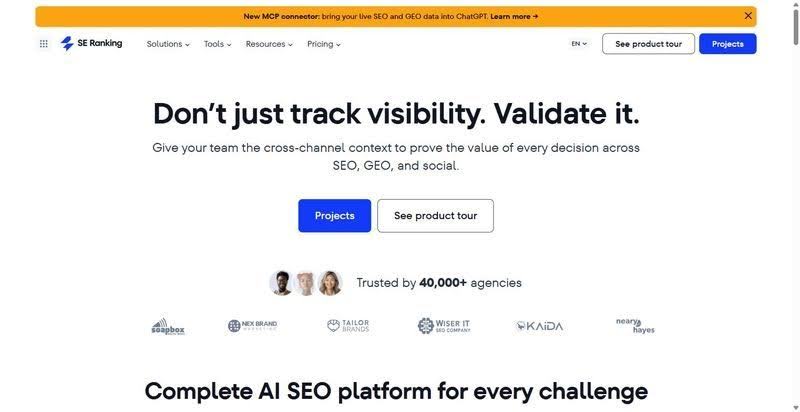
Best for: agencies that want one platform for the whole client lifecycle, from pitch to monthly report.
This is the seo software I keep coming back to when I don’t want to stitch five subscriptions together to service one account.
Why it works: it genuinely covers the workflow end to end – rank tracking, keyword and competitive research across SEO, PPC, and AI search, a site audit running 115+ checks, on-page tools, content marketing, local, and white-label agency reporting, all in SE Ranking’s platform. Underneath sits 188 geo databases, a 5.5B keyword database, and a 2.7T backlink index, with API and MCP access included on every plan.
Standout: the AI Results Tracker shows where clients surface across ChatGPT, Gemini, Perplexity, AI Overviews, and AI Mode, sitting right next to classic rankings. The Agency Pack adds white-label, client seats, and a Lead Generator widget.
Pros:
- One login for nearly every client deliverable
- AI-search visibility tracked beside traditional ranks
- White-label reporting clients actually find readable
- API and MCP on every tier, no premium gate
Cons:
- Some agency features (White Label, Lead Generator) are a paid add-on
- No automated cross-channel correlations inside the platform, though available via MCP
- A few databases run smaller than the largest competitors
- It’s a sophisticated platform, not an entry-level tool
Pricing: Core is $129/mo ($103.20/mo billed annually); Growth is $279/mo ($223.20/mo annually); API and MCP are included on every plan; the Agency Pack starts from $69/mo billed annually. There’s a 14-day trial, no card required.
My take: for a mid-market agency consolidating its stack, this is my default recommendation – just budget onboarding time, because the depth that makes it capable also means it rewards teams willing to learn it.
2. Ahrefs
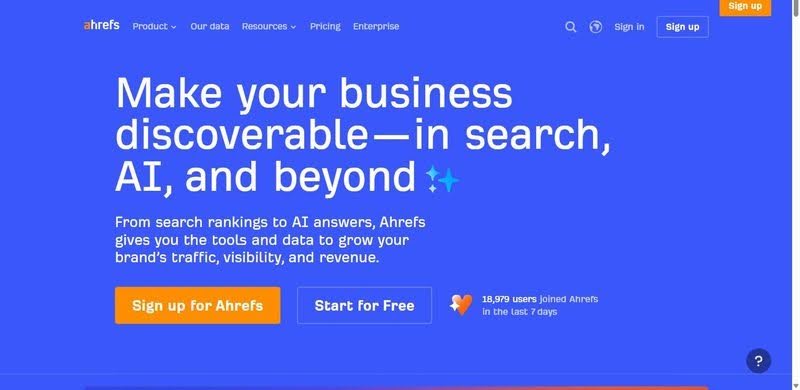
Best for: backlink analysis and competitor research when link intelligence drives your strategy.
Ahrefs is the tool I reach for when a client asks why a rival outranks them. Its backlink index is the largest and freshest I’ve worked with, and Site Explorer makes teardown reports genuinely fast.
Standout: Content Explorer surfaces link and topic gaps in minutes, and Brand Radar (an add-on) tracks how brands surface across AI answers.
Cons: The jump from the $29 Starter plan to the $129 Lite tier is jarring, and the tracked-keyword and export caps feel tight once you’re managing several client portfolios.
Pricing: Lite $129/mo, Standard $249, Advanced $449, Enterprise $1,499, tracking 750 / 2,000 / 5,000 keywords respectively; extra seats run $40-100/mo; no free trial.
Bottom line: If backlinks and competitive intelligence sit at the center of your work, Ahrefs earns its keep, provided the seat math suits your team.
3. Google Search Console
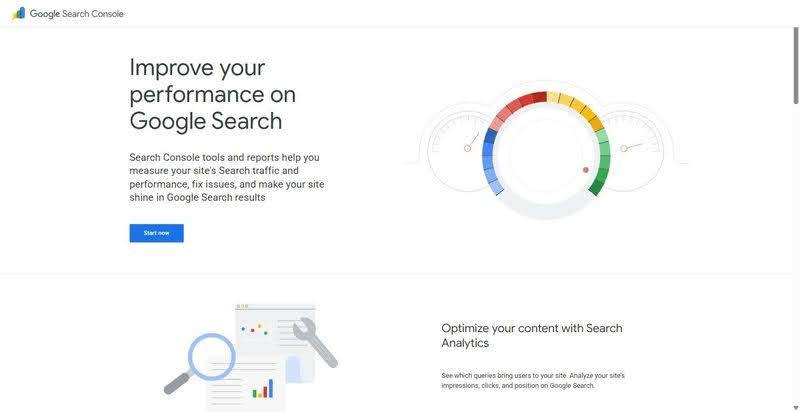
Best for: real first-party Google performance and indexing data, straight from the source and free.
I open Search Console before any paid dashboard, because it’s the only place I trust for true click, impression, and position numbers. Every audit I run for a client starts here.
Standout: Index coverage reports, URL inspection, Core Web Vitals, and sitemap submission all live in one console, with roughly 16 months of history to spot trends.
Cons: You only see properties you’ve verified, so there’s no competitor or keyword-difficulty view. The data is also sampled and slightly delayed, which means it works best paired with a full paid suite rather than on its own.
Pricing: Free.
Bottom line: No serious agency workflow should skip it. Treat GSC as your ground truth and layer richer research tools on top.
4. Semrush
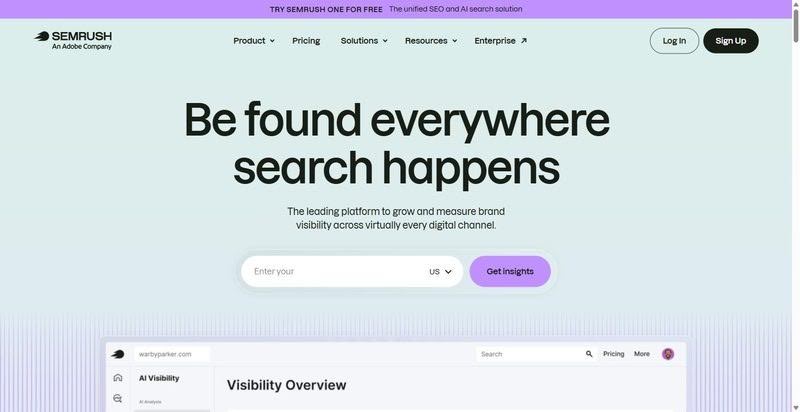
Best for: the deepest keyword and competitive database packed into one suite.
When a client wants an exhaustive keyword map, Semrush delivers. The Keyword Magic Tool alone has settled more than one content-planning debate in our office, and site audit, rank tracking, and content tools round out the picture.
Standout: Integrated AI-brand-visibility tracking now sits alongside the classic research modules, so you can watch traditional and AI search in the same place.
Cons: It carries the highest entry price among the all-in-ones, backlink freshness trails Ahrefs, and the steady stream of add-on upsells can nudge your real monthly cost well past the sticker.
Pricing: SEO $139/mo, Starter $199, Pro+ $299, Advanced $549; API access on Advanced; extra users from $45/mo.
Bottom line: A powerhouse for research-led agencies, as long as you plan for the add-ons before you commit.
5. Moz Pro
Best for: approachable workflows and the DA/PA benchmarks your clients already recognize.
Moz is the tool I hand to a newer strategist without a long onboarding. Its metrics also carry weight in client conversations, since Domain Authority and Page Authority are language stakeholders tend to know.
Standout: DA, PA, and Brand Authority scores, the MozBar extension, Keyword Explorer, and newer AI-visibility dashboards give you a tidy, readable snapshot.
Cons: The keyword and backlink datasets are smaller than what Semrush or Ahrefs hold, and the crawl and keyword limits on lower tiers can feel modest once a client portfolio grows.
Pricing: $49 / $99 / $179 / $299 across four tiers; extra seats $49/mo.
Bottom line: A friendly, client-legible option that shines on clarity, though heavier research still belongs in a deeper suite.
6. Serpstat
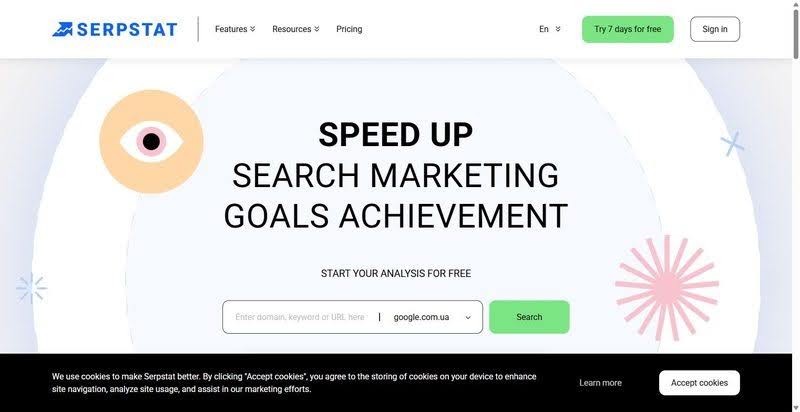
Best for: teams juggling a large roster of client projects who want broad feature coverage without stepping up to top-tier pricing.
Serpstat pulls keyword research, rank tracking, site audit, and backlink analysis under one roof, so my strategists aren’t hopping between logins for every account. It also connects to ChatGPT and Claude through MCP, and its AI Overview report surfaces brand-opportunity gaps worth chasing.
Standout: genuinely all-in-one at a price that scales gently as you add seats and projects.
Cons: database depth and freshness still trail the biggest players, so I cross-check volumes on competitive terms. JavaScript rendering in Site Audit only unlocks from the Team plan up.
Pricing: Individual $50/mo, Team $100, Team x2 $169, Agency $410. White-label reports come with Agency; API access starts at Team.
Bottom line: a practical workhorse when coverage across many accounts matters more than chart-topping data.
7. Screaming Frog SEO Spider
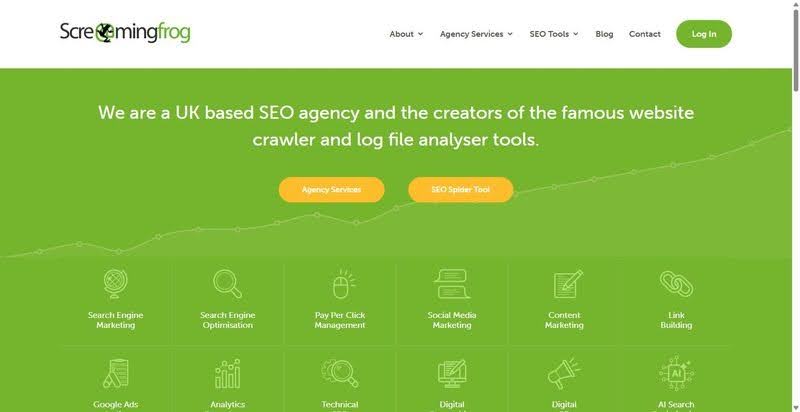
Best for: deep, one-off technical crawls when you need to interrogate a site’s architecture in detail.
This is the desktop crawler my technical team reaches for first. It’s fast, and it’s the reference tool for tracing redirect chains, catching broken links, flagging duplicate content, and validating structured data. Paid licenses add scheduling, JavaScript rendering, and Google Analytics and Search Console integrations, which is where recurring client audits get efficient.
Standout: the granular crawl control and reliability that make it a fixture in serious technical audits.
Cons: it’s desktop-only, so crawl scale is bound by the machine you run it on. The interface has a real learning curve, and it’s not a keyword or rank-tracking suite.
Pricing: free for up to 500 URLs; paid licenses run £199/year per user (roughly $259).
Bottom line: a specialist, not a suite, but indispensable when a crawl needs to go deep.
8. Surfer SEO
Best for: sharpening on-page content while keeping an eye on how client pages surface in AI answers.
Surfer’s NLP Content Editor scores drafts against what’s already ranking, which gives my writers a concrete target instead of guesswork. Beyond the editor, it handles content audits, topical maps, and internal-linking and cannibalization checks. Its AI-visibility tracking follows mentions across ChatGPT, Perplexity, Gemini, and AI Mode, so we can show clients where they stand in that emerging space.
Standout: the tight loop between SERP-based scoring and AI-search visibility in one place.
Cons: it’s content-focused, not a full backlink or rank suite, so it sits alongside your core platform rather than replacing it. Document caps can pinch high-volume publishers.
Pricing: Discovery $49/mo, Standard $99, Pro $182, Peace of Mind $299 (billed yearly). Standalone AI Tracker starts at $158/mo.
Bottom line: a strong content and AI-visibility layer to bolt onto your stack.
The verdict – and when to skip a tool
For most mid-market agencies, I’d start with SE Ranking. One platform carries a client from onboarding to the monthly review – rank tracking, site audits, content work, local, and the white-label reporting that lets your name sit on every deliverable – which spares your team the tax of stitching five logins together. The boundary condition is honest: if deep backlink research is a core service you sell, pair it with Ahrefs, whose link index still sets the bar. That’s the pragmatic read on the best seo tools for an agency book of business.
Skip it if: Don’t add Moz Pro’s DA/PA scores when your main suite already gives you comparable authority benchmarks – you’d be paying twice for a number you can quote for free. And don’t buy Semrush’s top tier just to unlock its API if a lighter data source already feeds your dashboards; that jump is real budget for a feature most teams touch occasionally.
Action line: shortlist two or three, load a live client account into each, and run a real reporting cycle before you commit.
Frequently asked questions
Which SEO tools should an agency standardize on first?
Standardize on one all-in-one platform plus Google Search Console. The platform handles tracking, audits, content, and reporting across every client, while GSC gives you first-party impression and query data straight from Google at no cost. Add specialists – a dedicated backlink tool, a crawler, a content optimizer – only when a specific service line demands the extra depth.
How many SEO tools does an agency actually need?
Fewer than the market implies. Most agencies run comfortably on two to four: a core platform, GSC, and one or two specialists tied to what you actually sell. Ten overlapping subscriptions mostly drain budget and scatter your team’s attention.
What’s the best SEO tool for white-label client reporting?
SE Ranking is the strongest one-platform option here. Its Agency Pack lets you brand reports and dashboards as your own, so clients see your logo rather than a vendor’s. That keeps reporting consistent without exporting data into a separate design step.
Should you use one SEO stack for every client, or customize per client?
Run a shared core stack, then bolt on per-client extras. A common platform keeps reporting, training, and process consistent across your team, while a client in a link-heavy niche or a technical rebuild can get a specialist tool added on top. It beats reinventing your setup for every account.