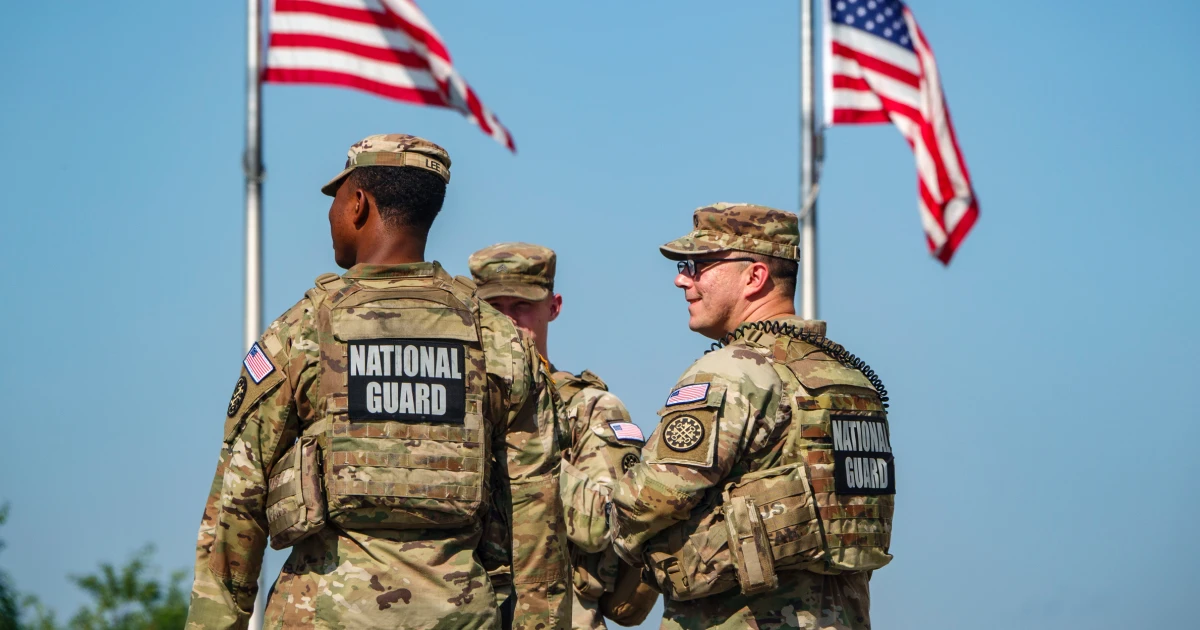
Trump has touted the deployment as a success, saying it has made the city safer. “People who haven’t gone out to dinner in D.C. for two years are going out to dinner,” the president said one week into the takeover.
The District has had a robust restaurant trade, particularly since the end of Covid, and there is little evidence of Trump’s claim.
Crime rates in the District were already at a 30-year-low before the takeover, the Justice Department announced in January 2025. That follows a national trend, significantly, including a decline in the most serious crimes, such as homicides.
The Metropolitan Police Department’s crime statistics, which show violent crime has been relatively unchanged year to date, have been called into question. A recent internal affairs investigation found a pattern of crime statistics being misclassified as lesser offenses, leading to potential terminations and an inspector general investigation.
The mayor’s response
While Washington isn’t the only city that has seen a National Guard deployment in Trump’s second term, its unique status has made it particularly vulnerable to a federal takeover.
Though Washington was granted autonomy under the Home Rule Act passed by Congress in 1973, the federal government maintains oversight of the city and the president has exclusive command of the D.C. National Guard. Washington residents also have no elected representatives in the House or Senate. And there are also multiple federal police and other law enforcement units operating in the city: the Secret Service, Park Police, Amtrak police and Capitol Police, all with different jurisdictions that don’t report to the local government.
It’s against that backdrop that Mayor Bowser has accepted the presence of the National Guard and federal law enforcement in the city, a marked shift from her adversarial relationship with the White House during Trump’s first term.
Before the deployment, Bowser emphasized that “we are not experiencing a spike in crime” to merit a takeover, calling it “unsettling and unprecedented” and “an authoritarian push.”
But it soon became clear that the strategy to prevent, in her words, “complete disaster” was to cooperate.
Two weeks in, Bowser told reporters, “We greatly appreciate the surge of officers” to combat crime in D.C.
Shortly after, she issued an order dubbed “a framework for how we will exit the emergency” declared by the president, which required indefinite local coordination with federal law enforcement “to the maximum extent allowable by law within the District.”
In a statement Monday, Browser defended her handling of the surge. “We preserved our autonomy, we saved lives by keeping our focus on public safety, and throughout the surge, we ensured DC residents were able to peacefully exercise their First Amendment rights,” she said.
But she called “unmitigated ICE activity” and the continuing presence of out-of-state National Guard troops “problematic.”
Bowser’s approach has frustrated local activists.
“Yeah, I think if this is what success looks like, where our people are getting attacked day after day, I don’t think that that’s necessarily a win the way that our mayor currently thinks that it is,” Dodds said. “The strategy that our current mayor is using is not the one that we want to see moving forward.”
Now completing an unusual third term, Bowser, at age 53, did not seek re-election this year. City councilmember Janeese Lewis George, a Democratic Socialist, won the Democratic nomination to replace her, promising to take a more combative approach with the White House. Given the city’s heavy Democratic tilt, she will almost certainly be elected mayor in November.
Trump has threatened to respond in kind.
Asked in June how he’d feel about a Mayor Lewis George, Trump said: “Well, I wouldn’t like it, and maybe we’ll take back Washington and run it on the federal basis.”
A shift in immigration enforcement
While the White House was in charge of the Metropolitan Police under the 30-day crime emergency declaration, then-Chief Pamela Smith ordered the department to allow officers making traffic stops to notify ICE about undocumented immigrants they encounter.
This move toward cooperation marked a significant shift for a city that had long employed policies friendly to undocumented immigrants.
Immigration advocates were quick to describe the shift — and the federal takeover broadly — as “another front in the Trump administration’s war on immigrants and the communities that welcome them.”
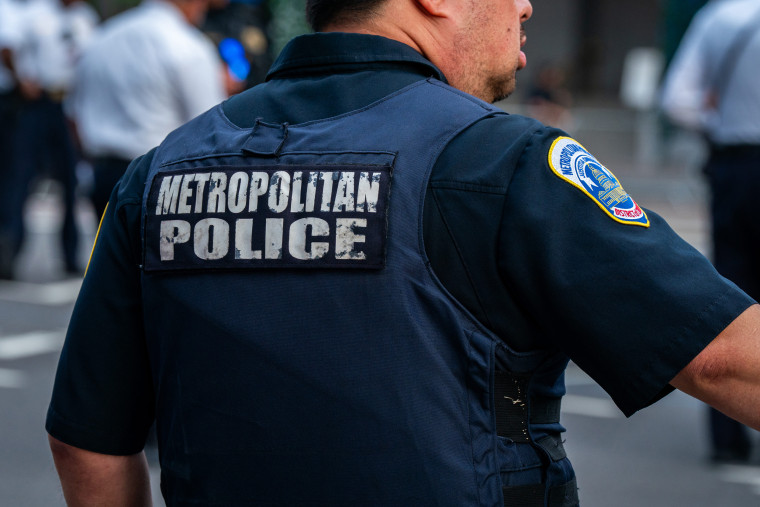
Bowser has expressed opposition to the Metropolitan Police Department conducting immigration enforcement and cooperating with ICE, but Smith’s order remains in effect and videos and reports of police traffic stops last year leading to the arrest of undocumented immigrants have continued to anger many residents.
In December, a federal judge ordered that federal agents could not make immigration arrests without a warrant in Washington, though in May the same judge issued an opinion finding that the administration had been violating that order and continued to conduct warrantless arrests.
Challenges in court
Litigation continues over the presence of thousands of National Guard members from around the country.
In November, a federal judge ordered the Trump administration to end its monthslong deployment in Washington, finding it is illegally intruding on the authority of local officials to control law enforcement activities within the District of Columbia. The ruling came in response to a lawsuit filed by Washington Attorney General Brian Schwalb.
U.S. District Judge Jia Cobb’s ruling was put on hold by a three-judge panel on the D.C. Circuit Court of Appeals in December, while the appeals process plays out. A ruling could come within weeks.