
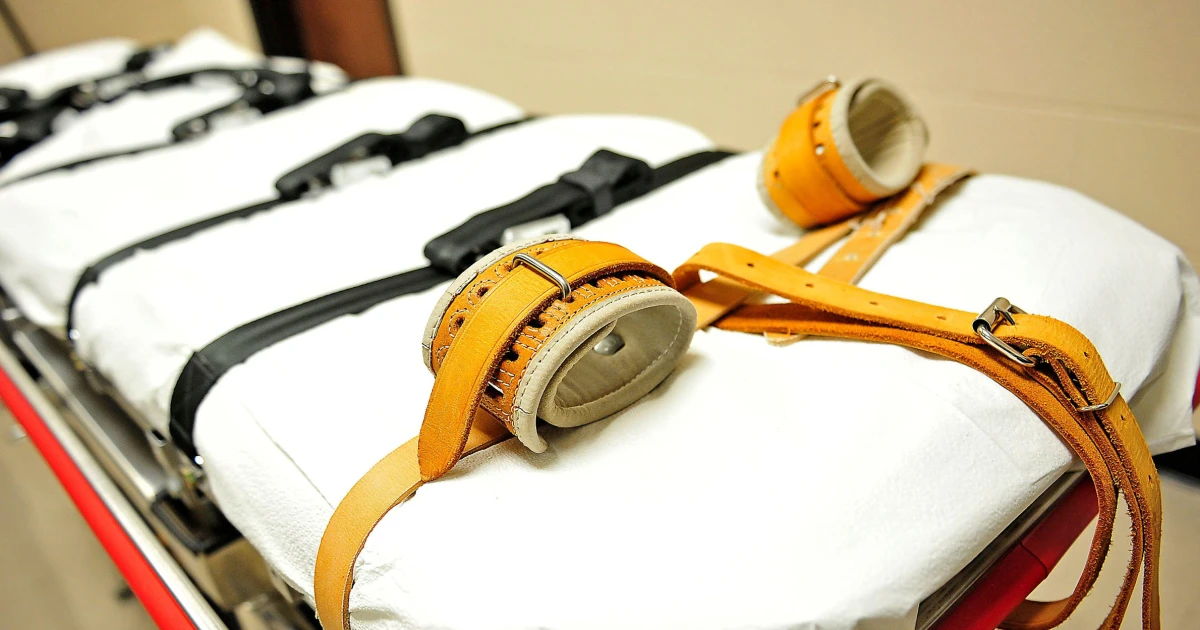
Tennessee and Oklahoma put inmates to death within 30 minutes of each other Thursday and Alabama followed suit hours later as U.S. states executed three men by lethal injection in one day for the first time since 2010.
The Tennessee man was executed for killing a motel maid in 1985 and the Oklahoma man for killing his girlfriend in 2003. In Alabama, a man was put to death for killing a 5-year-old girl he had offered to pay her mother to abuse.
Having three executions in one day was a coincidence in scheduling, but reflected a trend of increased executions in the U.S. Eleven states executed a total of 47 people in 2025, the highest number since 2009. With Thursday’s injections, 22 executions have been carried out this year in the U.S. with nearly a dozen more scheduled.
The last time three executions were carried out on the same day was on Jan. 7, 2010, when Louisiana, Ohio and Texas put inmates to death. Three executions were scheduled on the same day in 2018, but only one went forward after a Texas man was reprieved and Alabama prison officials had problems with the IV line.
Florida executed two men the same day in July and has executed 31 overall since the start of 2025.
Oklahoma prisoner said he regretted killing his girlfriend
Carlos Cuesta-Rodriguez, 70, received an injection at the state penitentiary in McAlester in Oklahoma’s third execution this year.

Cuesta-Rodriguez turned his head toward two relatives watching and mouthed “I love you” but had no last statement. He was declared dead at 10:13 a.m. after several minutes of labored breathing.
Convicted of murdering his girlfriend at their Oklahoma City home in 2003, Cuesta-Rodriguez had said he regretted killing Olimpia Fisher and told a board he didn’t want clemency. Fisher, 43, planned to leave Cuesta-Rodriguez when he shot her.
Fisher’s daughters, Cinthya Allen and Katya Wallis, said in a statement they hoped the execution brings awareness to preventing domestic violence, adding they are “raising our families to reflect the love and faith in God that she taught us.”
Tennessee man challenged execution after previous one was halted
Anthony Darrell Hines was executed in Tennessee for the 1985 stabbing death of Catherine Jean Jenkins, 54, as she worked as a motel maid in Kingston Springs.
Hines said “not right now, thank you” when asked if he had final words, then said, “Tell my son hello.”

Hines’ son witnessed the execution. He reconnected with his father four days earlier after not seeing him since he was 3 years old.
Minutes after the execution chamber curtain opened, Hines asked his spiritual adviser: “How long do I have?” Soon afterward, witnesses heard groans and heavy breathing while the adviser put her hands on his shoulders and prayed. Hines was pronounced dead at 10:43 a.m.
Afterward, Jenkins’ son said his mother had only a plastic spray bottle to defend against Hines’ knife.
“I hope he felt severe pain because what he did to my mother is nothing compared to what he may have just gone through,” Dennis Jenkins said.
Hines’ execution comes three months after another man’s attempted lethal injection was stopped after medical staff couldn’t establish a backup IV line for over an hour.
Hines, 66, appealed unsuccessfully, saying the doctor who oversaw the May execution was unqualified and likely to botch his execution as well.
Alabama man asked to be executed swiftly
Alabama executed Jeremy Williams for the 2021 rape and murder of the young Georgia girl.
“I want to thank God for forgiving me for my sins so I can meet him in peace,” Williams said on the gurney. He rocked his head back and forth, smiled and appeared to sing or speak before becoming still. A member of his family cried quietly throughout, and Williams was pronounced dead at 6:16 p.m.

Williams, who pleaded guilty to killing Kamarie Holland, had written the Alabama attorney general’s office seeking an immediate execution date so his victim’s family “may have some type of closure.”
The 42-year-old raped and strangled Holland after offering her mother $2,500 for the child to perform a sex act, prosecutors said, adding he filmed his attack.
“The unspeakable nature of this crime is exactly why we have the death penalty statute,” Gov. Kay Ivey said in a statement afterward.
The mother is serving a 20-year prison sentence after pleading guilty to sex trafficking.
Russell County District Attorney Richard Chancey described Kamarie’s final moments as “horrific.”
“That baby didn’t die in peace,” he said at a later news conference, recalling Williams’ last words about dying in peace.
Russell County Sheriff Heath Taylor, who called the case the worst he’d investigated in 39 years of law enforcement, said he believed Williams sought swift execution over worries about how he would be treated in prison.
“He didn’t want to look over his shoulder for 30 years, in my opinion,” Taylor said.
It was Alabama’s first execution this year. A nitrogen gas execution was blocked in June after a federal judge ruled the method unconstitutional.
Williams also was a suspect in the 2005 death of his infant daughter in Alaska, but charges weren’t filed until 2022.
Corey Holland, Kamarie’s father, had said she was an exuberant child who loved princesses and made people laugh.
“She loved playing dress-up, all her little Halloween costumes and her princess stuff I got her,” he said.













Leave a Reply