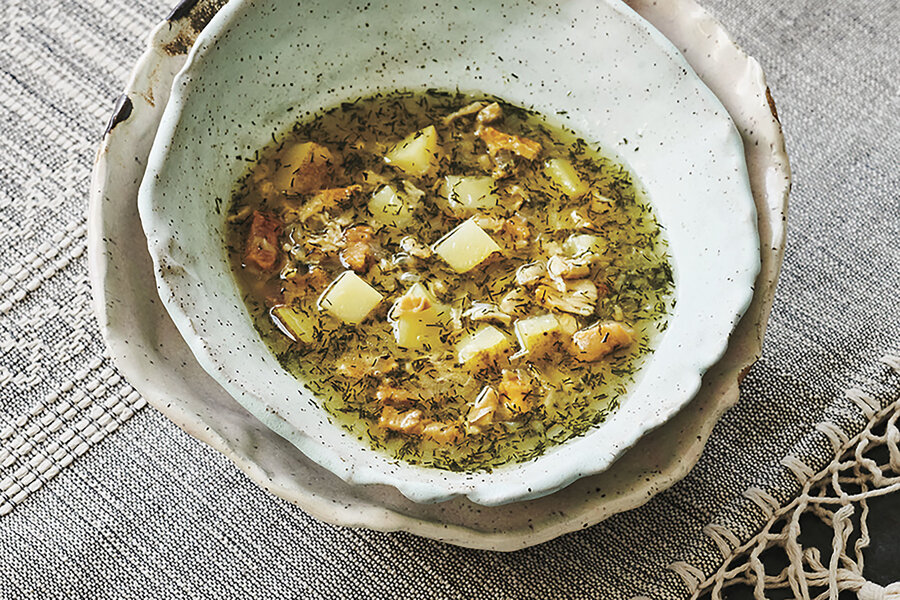
The cultivation and consumption of shellfish have long been part of New England culinary traditions. Their evolution has incorporated practices from both Native Americans and European colonists, as well as later regional preferences.
Consider clam chowder. In the coastal villages of France, a centuries-old tradition of tossing a share of a fisherman’s daily catch into a huge communal copper pot – la chaudière – was later shortened to become “chowder” as it made its way to Canada and down into New England. There, it met with the abundant native, hard-shelled quahog clams, which were stirred with onions, potatoes, and salt pork or bacon – a staple on European sailing ships. If dairy cows were available, milk, cream, and butter were added.
But not all East Coast “chowderheads” like dairy mixed with their clams. Manhattan clam chowder has no dairy and adds tomatoes. A Maine state representative once found this so infuriating that he drafted a bill in 1939 to criminalize mixing tomatoes and clams in the same pot. Rhode Island and Connecticut clam chowder bans both tomatoes and dairy from the clear broth soup in those states. This aligns with what some culinary historians maintain is the preferred clam chowder practice of Native peoples, allowing the briny taste of quahogs to shine more intensely.
Why We Wrote This
Parts of Boston Harbor are clean enough for recreational shellfishing for the first time in a century. To mark the moment, we dig into the history and debates around New England clam chowder.
Jessica B. Harris shares the following recipe in “Braided Heritage: Recipes and Stories on the Origin of American Cuisine” and notes, “The chowder is made with a base of fish stock, and tastes of the salt air that surrounds Aquinnah,” a town on Martha’s Vineyard in Massachusetts that is the ancestral home of the Aquinnah Wampanoag.
Some New Englanders may be able to harvest their own clams for this recipe. Parts of Boston Harbor are clean enough for recreational shellfishing for the first time in a century. For those without easy access to fresh clams, canned clams will work just as well.
Clear broth clam chowder
Serves 6 to 8
6 ounces salt pork, rinsed and cut into ½-inch cubes
1 medium onion, finely chopped
½ teaspoon fennel seeds, crushed
2 cups chopped canned clams
1 ½ pounds russet potatoes, peeled and cut into ½-inch cubes
2 cups fish stock, store-bought or homemade
1 ½ cups bottled clam juice
2 tablespoons minced fresh dill
Kosher salt and freshly ground black pepper
1. In a Dutch oven, cook the salt pork over medium heat, stirring regularly, until browned and crisp, about 15 minutes. Using a slotted spoon, transfer the pork to a small bowl.
2. Remove all but 2 tablespoons of the rendered fat from the pot. Add the onions and fennel seeds, and cook, stirring occasionally, until the onions are softened, 10 to 15 minutes.
3. Increase the heat to high. Add the clams and cook, stirring constantly, for 2 minutes. Add the potatoes, fish stock, clam juice, 1 tablespoon of the dill, and reserved salt pork. Bring to a boil; then, reduce the heat to maintain a simmer and cook until the potatoes are tender, about 15 minutes.
4. Taste and season with salt and pepper, if needed. Ladle into bowls, garnish with the remaining dill, and serve with crackers.
Recipe adapted with permission from Clarkson Potter/Publishers, an imprint of Penguin Random House.