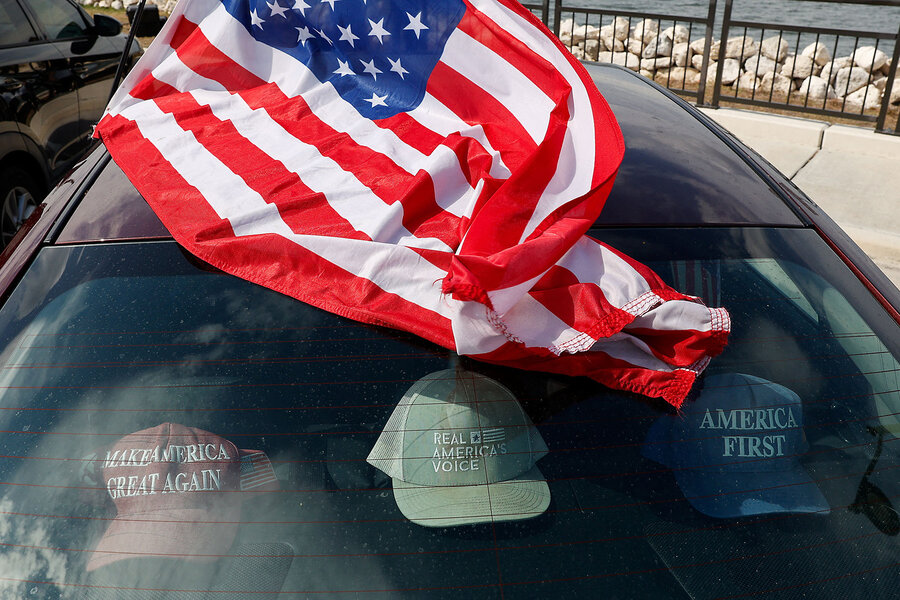
President Donald Trump, who has vowed to end America’s involvement in foreign wars since his first campaign a decade ago, is now engaged in the biggest military campaign of his presidency – and some of his most prominent supporters are not happy about it.
“There are massive divisions over what we have done here,” said former Fox News host Megyn Kelly this week. “This looks like an open betrayal of the MAGA base,” said Curt Mills, executive director of the American Conservative. “With this Iran thing, I don’t see how the math works in our favor. … I can’t take the gaslighting, guys,” right-wing podcast host and filmmaker Matt Walsh wrote on X in a series of critical posts that prompted a 300-word response from White House press secretary Karoline Leavitt.
With the administration warning that the Iran conflict could last weeks or more, it is creating an unusual degree of tension between President Trump and a number of MAGA commentators, many of whom were already upset about the Epstein files controversy. Frustrated Trump supporters are saying the president has lost touch with what his voters care about – and what “America First” really means. As the Republican Party begins looking ahead toward a post-Trump era, the Iran conflict might crack Mr. Trump’s MAGA coalition in ways that could profoundly shape the 2026 and 2028 elections.
Why We Wrote This
The Iran conflict is generating strong criticism from many prominent MAGA commentators, who say President Donald Trump has lost touch with what his voters really want. As the Republican Party starts looking toward a post-Trump era, it has the potential to reshape the MAGA coalition.
“Whatever Trump’s new twisted perversion of MAGA is, is going to LOSE in the midterms,” former GOP Rep. Marjorie Taylor Greene, who left Congress in January after a falling-out with the president, posted on X on Wednesday. “We voted for America FIRST.”
To be sure, many of Mr. Trump’s supporters – including Laura Loomer, Mark Levin, and Ben Shapiro – have praised the Iran operation to their millions of followers since the United States and Israel launched their joint attack almost a week ago. And Republicans in Congress are largely backing the president. On Wednesday, all GOP senators except for Rand Paul voted against a war powers resolution that would have constrained the president’s ability to wage war against Iran. On Thursday, the House voted down a similar measure.
The president has brushed off the criticism from conservative influencers, telling journalist Rachael Bade that people like Tucker Carlson and Ms. Kelly don’t speak for MAGA and that his voters love “every aspect” of what he is doing.
“President Trump is MAGA and MAGA is President Trump,” White House spokesperson Olivia Wales tells the Monitor in a statement.
Polling suggests there is some truth to that. While several early polls show a majority of Americans oppose the strikes on Iran, they also have found a majority of Republicans are supportive. An NBC poll released on Wednesday found that 9 in 10 self-identified MAGA Republicans backed the strikes.
Yet much of Mr. Trump’s success over the past decade has come from his ability to attract not just core conservatives but independent voters and nontraditional Republicans, with a coalition bound together by a few core principles. One of them: a promise to focus on domestic issues and stop spending taxpayer dollars on endless overseas wars aimed at regime change.
“The movement will split if this is an extended conflict, because many supporters will feel like the promise of ‘no new foreign wars’ was violated,” says Brian Darling, former counsel to Senator Paul, a Kentucky Republican. “The midterms will be a referendum on the Republican Party, and if it goes poorly, this conflict will be one of the issues that will be pointed at.”
America First?
Mr. Trump laid out his America First agenda on the 2016 campaign trail before he had even secured the GOP nomination. “America First will be the major and overriding theme of my administration,” he said in an April 2016 speech, adding that U.S. goals in the Middle East should be to “promote regional stability, not radical change.” Throughout his first term, and again leading up to 2024, Mr. Trump reiterated this “America First” vision as one that would prioritize Americans’ daily struggles at home over faraway lands.

Some members of his current administration were even blunter on that point. Director of National Intelligence Tulsi Gabbard, who represented Hawaii in Congress as a Democrat, joined the Republican Party and endorsed Mr. Trump in 2024 because he “pledged to end wars, not start them,” she said. During her own presidential campaign in 2020, Ms. Gabbard sold T-shirts that read: “No war with Iran.”
Likewise, Vice President JD Vance praised Mr. Trump’s avoidance of foreign entanglements during the president’s first term, when endorsing the Mr. Trump in 2023. “My entire adult lifetime has been shaped by presidents who threw America into unwise wars,” Mr. Vance wrote in a Wall Street Journal commentary. “Not starting wars is perhaps a low bar, but that’s a reflection of the hawkishness of Mr. Trump’s predecessors and the foreign-policy establishment they slavishly followed.”
This vision spoke to Trump voters, many of whom were frustrated about declining manufacturing jobs and the rising cost of living at home even as the U.S. spent trillions of dollars on wars in the Middle East.
Some of Mr. Trump’s supporters are now struggling to reconcile his past statements with more recent ones – such as a Truth Social post this week about how “Wars can be fought ‘forever.’”

Controversy around Israel
The blowback from MAGA influencers went into overdrive this week after Secretary of State Marco Rubio told reporters that the administration decided to strike “proactively in a defensive way” after learning that Israel planned to attack Iran and that Iran would likely retaliate against the U.S., making it an “imminent threat.”
“[Rubio]’s flat out telling us that we’re in a war with Iran because Israel forced our hand,” posted Mr. Walsh. “This is basically the worst possible thing he could have said.”
“This happened because Israel wanted it to happen,” said Mr. Carlson.
Israel has become an increasingly divisive issue within the GOP in recent years, as conservative commentators have debated the country’s influence in American politics, with some verging into explicit antisemitism and Jewish conspiracy theories. Last fall, Mr. Carlson set off a firestorm when he interviewed Nick Fuentes, a far-right influencer who promotes white nationalism and has praised Adolf Hitler.
Mr. Fuentes, who has more than 1.2 million followers on X, is now one of the loudest voices expressing opposition to the Iran war – and to Mr. Trump. “This is a war of aggression for Israel,” he wrote.

Julia Demaree Nikhinson/AP
In the Oval Office on Tuesday, Mr. Trump denied that Israel had forced his hand on Iran, saying it might have been the other way around. But that has not alleviated the complaints.
“Make America Great Again was supposed to be America First – not Israel first, not any foreign country first, not any foreign people first, but the American people first and our problems,” said Ms. Greene on Ms. Kelly’s podcast. She later lamented the cost of the war to American taxpayers – some estimates put it at $1 billion a day – at a time of dwindling Social Security funds and unaffordable health insurance. “Incredible MAGA priorities,” she wrote.
Ms. Greene highlighted the primary election turnout in Texas this week, in which more Democrats turned out to vote than Republicans, as a precursor of what’s to come. White House Deputy Chief of Staff James Blair noted on social media that all of the president’s endorsed candidates won on Tuesday or advanced to a runoff – a reminder, he said, that “your algorithm and/or favorite ‘influencer’ may not reflect real life.”
Still, public polling and history suggest Republicans will face an uphill battle in November to hold on to their narrow majorities in the House and Senate. The president’s party typically loses seats in midterm elections, and many of Mr. Trump’s own supporters say the Iran conflict might weigh the GOP down even more.
Blake Neff, producer of “The Charlie Kirk Show,” wrote on X that some of his right-leaning friends have texted that they plan never to vote again. “The midterms are going to be ugly,” posted Ann Vandersteel, a far-right media figure, in response to a post about young conservatives’ waning enthusiasm. “We’re going to bleed support,” predicted Steve Bannon, a chief strategist during Mr. Trump’s first term, on his “War Room” podcast.
Late Thursday, Mr. Trump shared an article on Truth Social about how “Ex-MAGA influencers” have lost their clout.