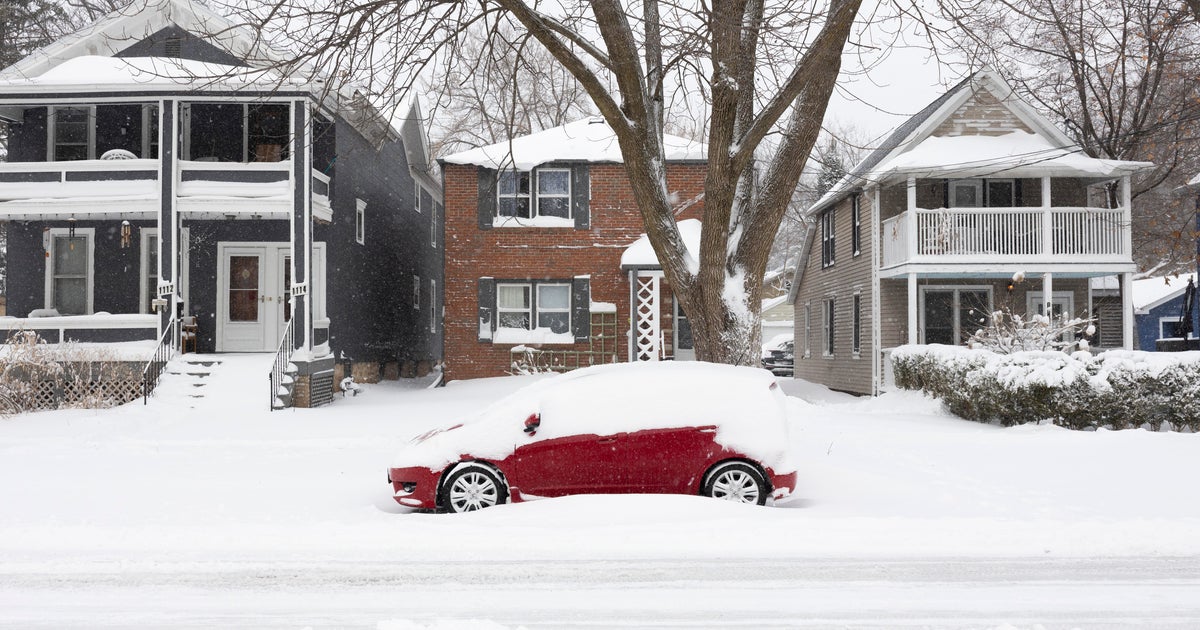
From a surprising heatwave in California to blizzards burying parts of the Midwest and storms rolling over the East Coast, chaotic weather put more than half the nation’s population in the path of extreme conditions Monday.
Airport delays and cancellations piled up in some of the nation’s largest airports, with more than 4,700 flights canceled across the U.S., and many schools closed early in the mid-Atlantic states, where high winds were in the forecast.
On Tuesday, tracking service FlightAware said that as of 6 a.m., more than 2,100 flights were canceled or delayed. In addition, travelers were facing jams at airport security checkpoints as a partial government shutdown continued to strain screener staffing.
Poweroutage.com said more than a half-million homes and businesses were in the dark early Tuesday, mainly in Michigan, Pennsylvania, New York and Massachusetts.
Torrential rains flooded homes and washed out roads in Hawaii, while dry and windy conditions were charging the largest wildfire in Nebraska’s history.
In Washington, the House and Senate postponed votes and federal agencies told workers to go home early. But by late afternoon, the expected rough weather had failed to develop and a tornado watch expired.
The private weather service AccuWeather calculated that more than 200 million people were under threat Monday of some kind of dangerous weather.
Those ranged from extreme heat and wildfire advisories to flood and freeze watches from the National Weather Service.
The storm system that dropped snow by the foot in the Midwest, causing whiteout conditions in some areas, barreled toward the East Coast, dropping heavy rain, threatening high winds and prompting multiple tornado warnings.
The biggest threat for severe weather stretched from New Jersey to Virginia.
In New York City, officials warned of the potential for swift wind gusts that could knock down tree limbs.
Four people, including a child, died Monday afternoon in New York City after a fire in a three-story apartment building spread during heavy winds.
The National Weather Service confirmed four tornadoes in Missouri on Sunday that caused roof and tree damage. No injuries were reported.
Blizzard conditions continued in the Upper Midwest and Great Lakes on Monday after the storm walloped parts of Wisconsin and Michigan with several feet of snow.
Joe Timmerman / Wisconsin Watch via Getty Images
Since Saturday, nearly 3 feet had fallen in the northern Wisconsin town of Mountain.
A heat dome over the Southwest will push temperatures well into the triple digits in Arizona most of the week, much earlier than normal.
California is starting to feel like summer, too. The San Francisco Bay Area and Sacramento will see temperatures pushing toward 90 degrees by midweek.
“This is technically still winter,” L.A. Mayor Karen Bass said Monday. “This is not normal for March, obviously, but it is a sign of how climate change is impacting our city.”
While temperatures are expected to reach 100 degrees, the threat of wildfires around Los Angeles is relatively low because winds will be light.
Phoenix is expected to have five straight days of triple-digit temperatures this week — only once before, in 1988, has the city recorded a 100 degree day in March, DePodwin said.
“This is a heat wave that we have not seen before in recorded history in the Southwest,” said AccuWeather meteorologist Dan DePodwin.
Dry and windy conditions were charging the largest wildfire in Nebraska’s history. Three fires in the state have consumed more than 1,140 square miles of mostly grassland.
“Mother Nature is throwing a doozy at us,” Gov. Jim Pillen said Monday.
Unrelenting rains triggered landslides, washed away roads and flooded homes and farmland in Hawaii over the weekend.
All of Hawaii’s islands had spots with more than 15 inches of rain while parts of Maui were overwhelmed with double that amount, the weather service said.
While the worst of the storm has passed, more heavy rain is expected later this week. Maui Mayor Richard Bissen said there were no reports of injuries or deaths and crews were assessing damage.
Forecasters said the East Coast storms were expected to leave sharply colder weather in their wake.
The storm stuck around parts of the Northeast until Tuesday morning. Wind chills below freezing were expected to reach the Gulf Coast and the Florida Panhandle with warnings in effect across the Southeast and in parts of Arkansas, Oklahoma, Louisiana, and Texas, forecasters warned.
To the north, rain was expected to change over to snow behind the cold front with heavy snow possible in the central Appalachians of West Virginia.