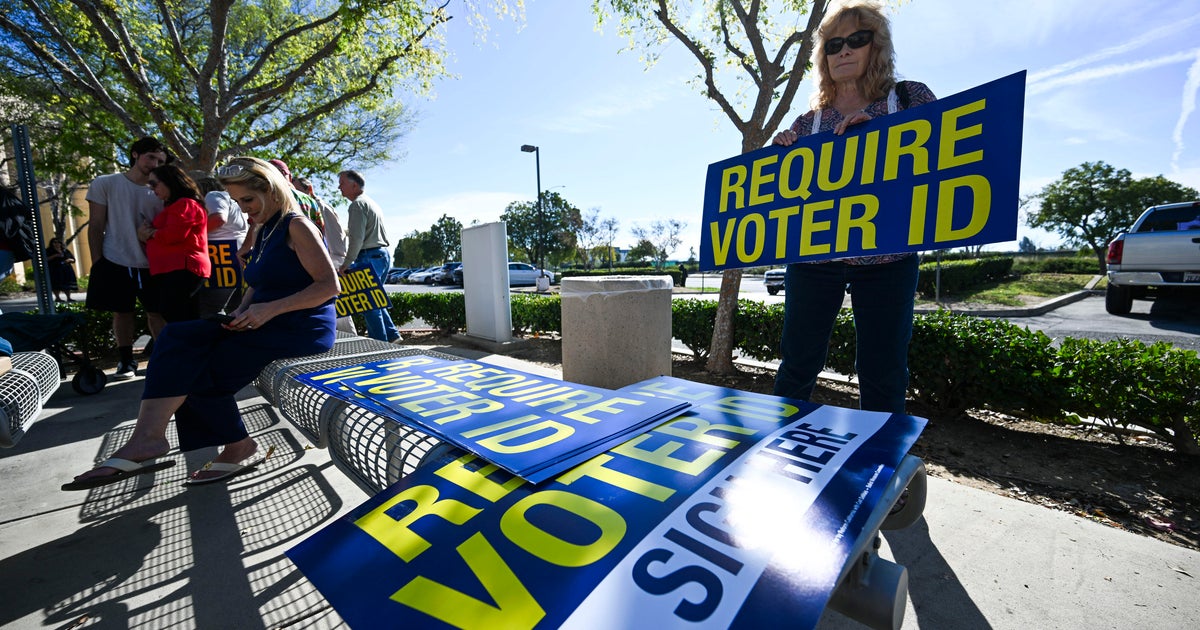
Requiring photo ID to vote and proving citizenship to register both find wide and often bipartisan support.
But that doesn’t mean everyone sees problems with the current voting system.
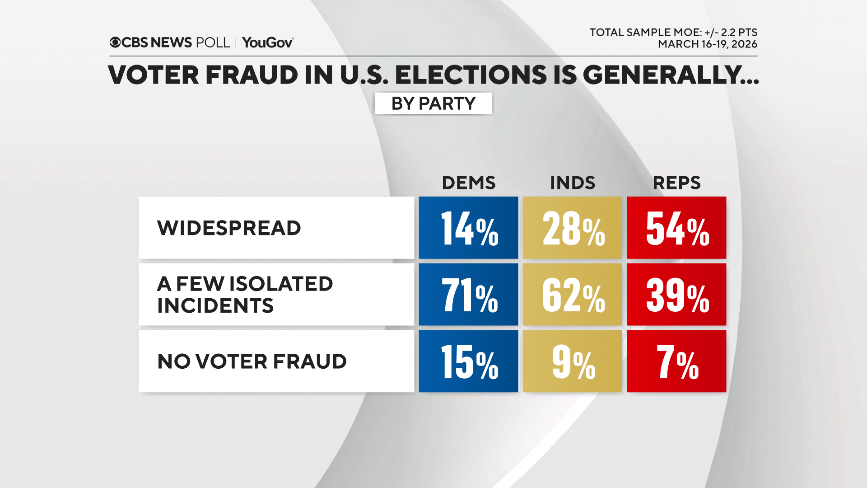
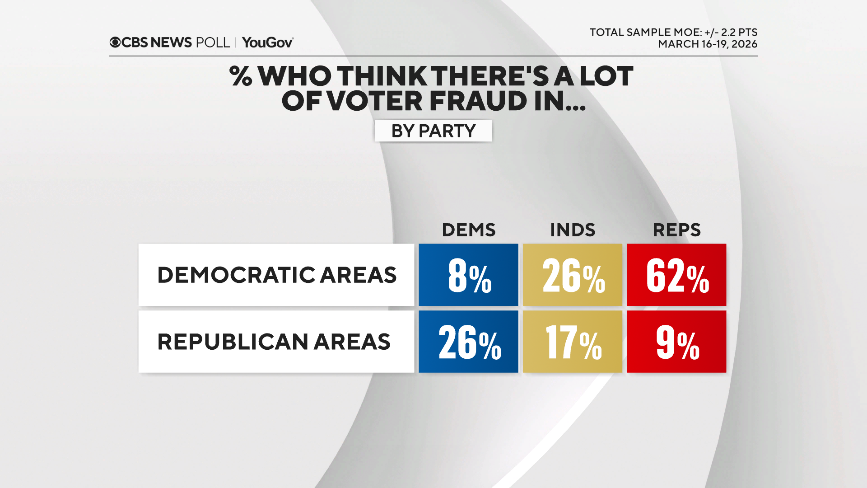
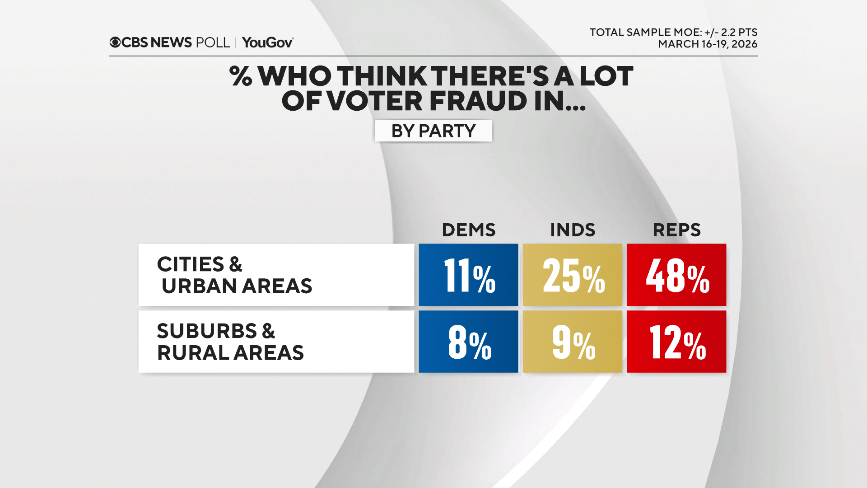
It is often Republicans driving the percentages of those who think there is widespread fraud — and often think it’s specifically in cities and Democratic areas — but even then, it’s not an overwhelming majority of them.
Elsewhere, including among many Democrats, there’s concern that proof of citizenship requirements will prevent eligible citizens from voting.
And there’s still a local-first perspective on running elections: Most Americans would have their own states, rather than the federal government, have the final say in how elections are run.
Most Americans also say voting by mail is ok. And people who vote that way are especially inclined to say so.
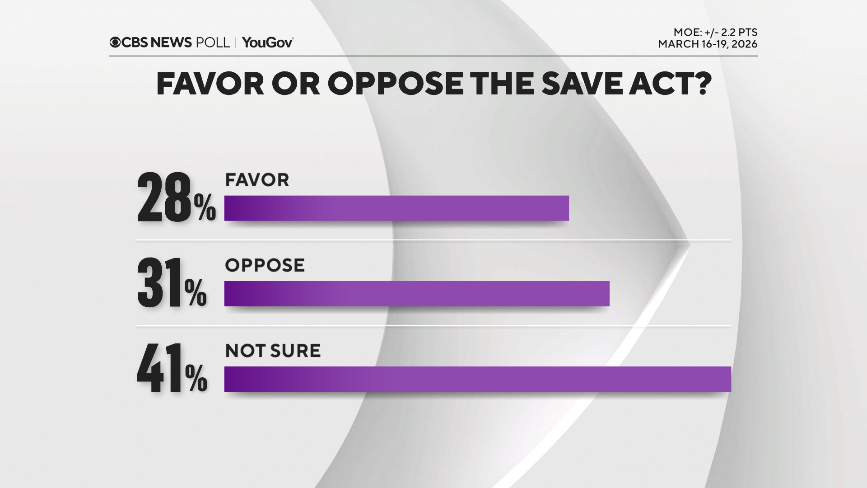
In all, few Americans feel they know a lot of specifics about what’s in the SAVE Act.
Photo ID and proof of citizenship
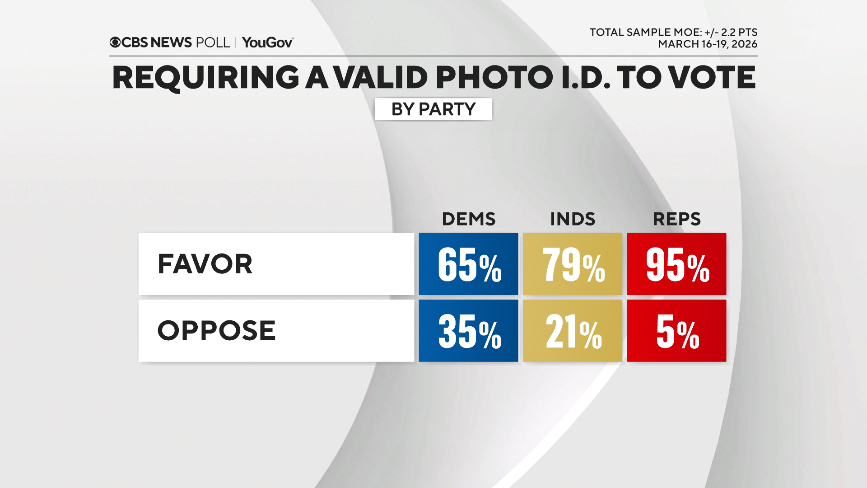
The idea of showing photo ID to vote gets support across party lines.
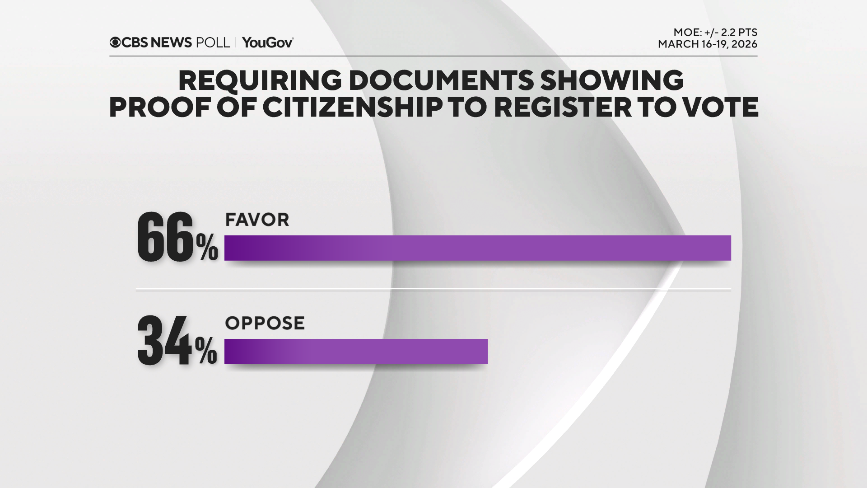
Proving citizenship to register also gets majority backing, if relatively less than a photo ID to vote.
Specifically, in the minds of many, identification requirements to vote would need to be more than things like student IDs or just a signature.
What happens if proof is required?
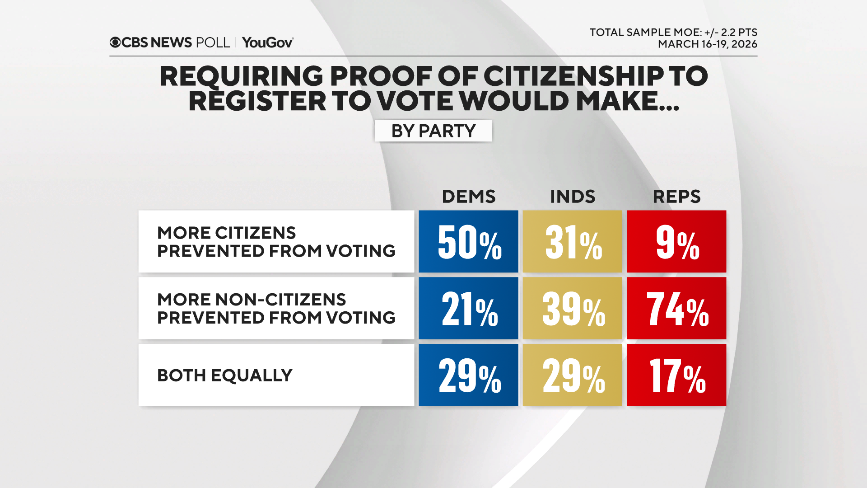
The perceived implications of needing to prove citizenship are sharply partisan, though: Democrats are more inclined to say it’ll prevent US citizens from being able to vote, while more Republicans say that it will block non-citizens from doing so.
The big picture: How Americans feel about the voting process
Partisanship steers where people think the problems are, if any.
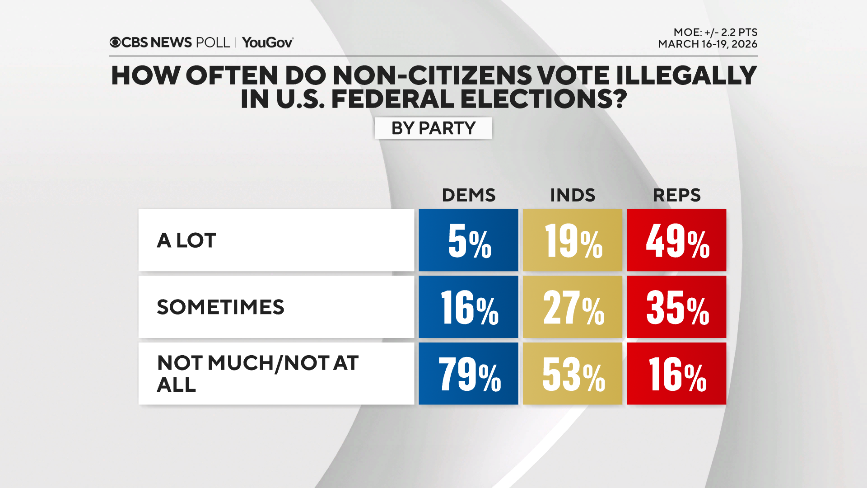
The notion that there is widespread fraud in the system is far more prevalent among the Republican rank and file, more so than others.
But that said, it’s not an overwhelming majority, at just over half of Republicans.
And this is not a new development: in the years since the 2020 election, most Republicans routinely felt former President Joe Biden had not been legitimately elected.
More specifically, Republicans think that when there is fraud, it tends to come from urban areas, more so than suburban or rural places and from Democratic states, not Republican ones.
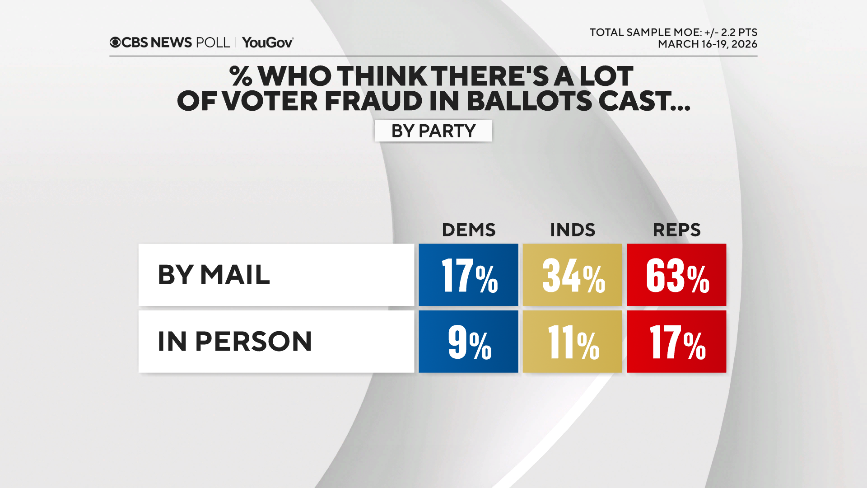
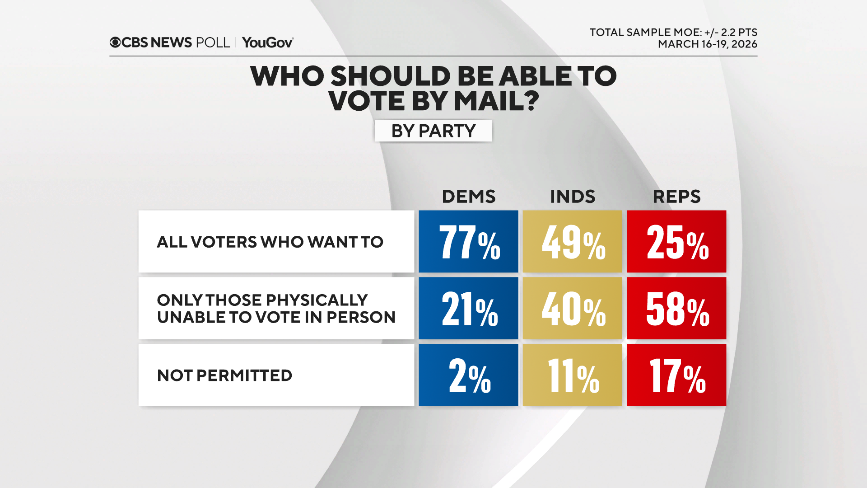
Mail voting — which, in many states, is a substantial or even entirely the way they vote — draws mixed views. Most Republicans feel it should only be available to those unable to physically vote.
Republicans also tend to feel mail balloting brings more fraud.
But views on mail voting also change depending on the manner in which people cast their own ballots.
Most of those who report voting by mail in 2024 say it should be available to all voters, and this includes about half of the mail-in voters who report having voted for President Trump.
Republicans are far more likely to believe it happens a lot that non-citizens illegally vote in federal elections. But even then, it’s not all Republicans who think so.
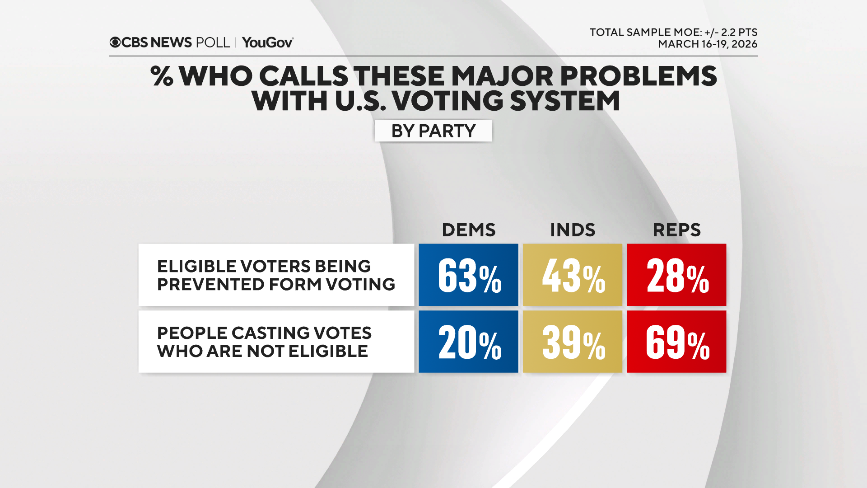
More broadly, most Republicans say a major problem is people casting votes who are ineligible to do so.
Democrats see something of the opposite issue — that eligible people being prevented from voting is a major problem.
But views on all this don’t necessarily connect to the SAVE Act. Many who favor ID and proof of citizenship requirements aren’t sure about the SAVE Act, and say they don’t know the specifics of what’s in it.
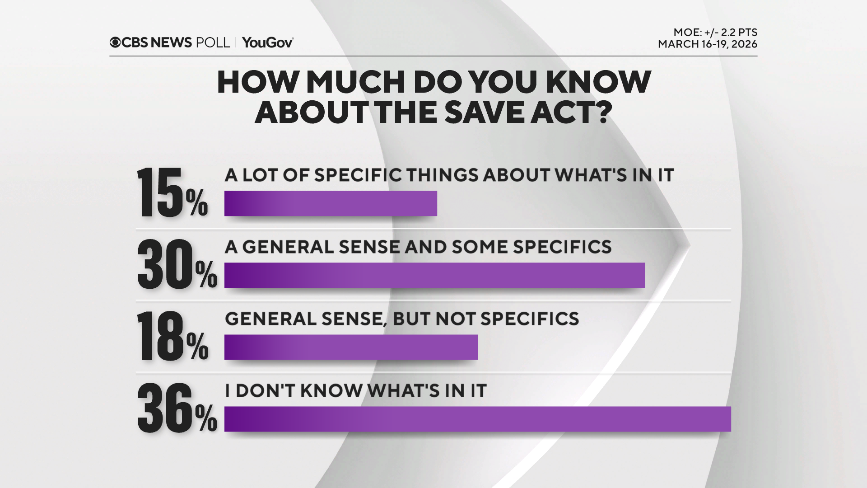
Are elections a federal matter?
Most feel it is their state — not the federal government — that ought to have a final say in how elections are administered.
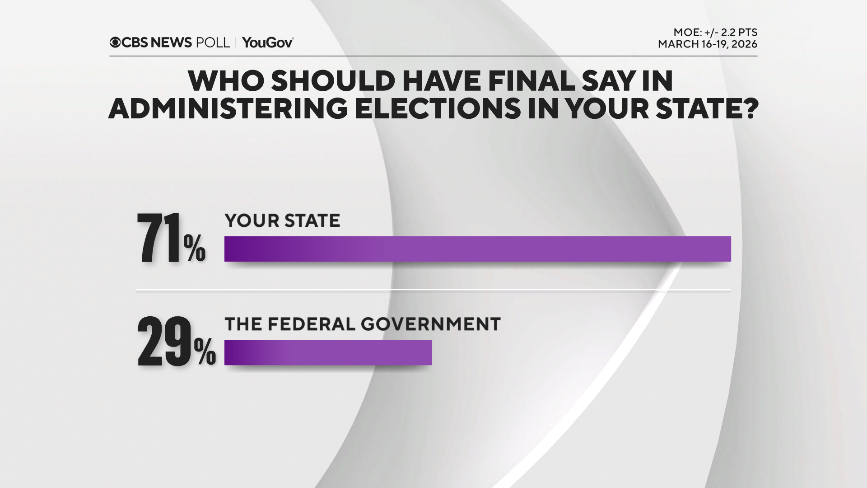
In terms of oversight, it may have more to do with who is in power than with abstract views of governance. Today, most Republicans want more federal oversight over their states’ elections, while most Democrats do not. Back in 2021, during the Biden administration, it was the reverse: Democrats wanted more federal oversight, while Republicans did not.
In all, across party lines, Americans already tend to voice at least some confidence (if not a lot) in their local and state elections administration.
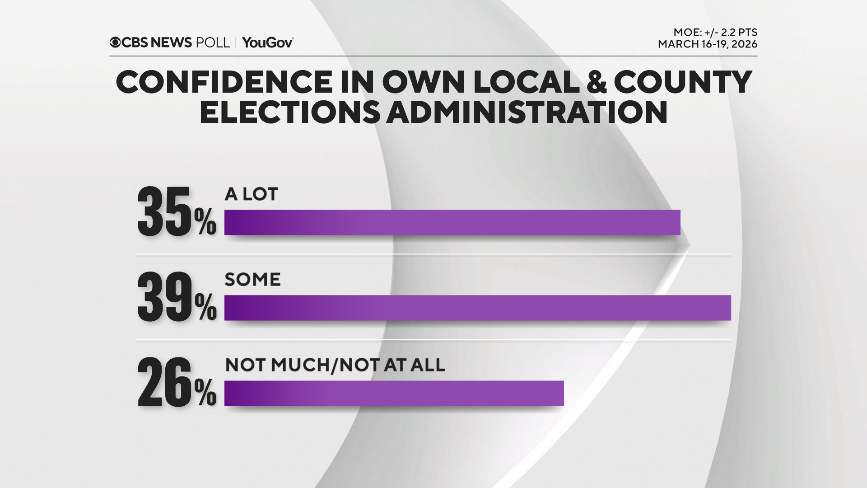
They tend to think their own votes will be counted correctly.
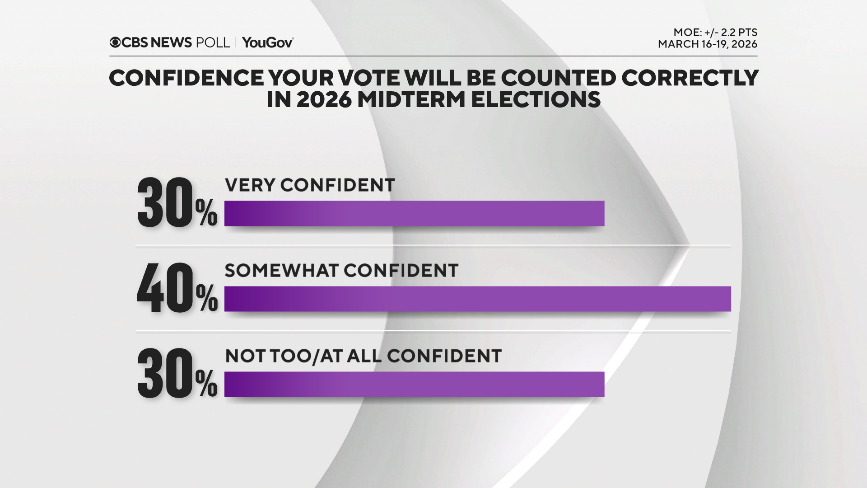
Even as they see widespread fraud – primarily in cities and Democratic places – most Republicans are confident that their OWN vote will be counted and recorded correctly.
This CBS News/YouGov survey was conducted with a nationally representative sample of 2,500 U.S. adults interviewed between March 16-19, 2026. The sample was weighted to be representative of adults nationwide according to gender, age, race, and education, based on the U.S. Census American Community Survey and Current Population Survey, as well as 2024 presidential vote. The margin of error is ±2.2 points.